
Table of Contents
- Why Chimney Flue Cleaning Matters for Your Home Safety
- Sign 1: Visible Creosote Buildup in Your Fireplace
- Sign 2: Reduced Draft and Poor Fireplace Performance
- Sign 3: Unusual Odors Coming from Your Chimney
- Sign 4: Visible Soot Stains Around Your Fireplace Opening
- Sign 5: It's Been Over a Year Since Last Cleaning
- How Our Professional Flue Cleaning Process Protects Your Home
- The Cost of Ignoring These Warning Signs
- Schedule Your Professional Chimney Flue Cleaning with Go Chimney Sweep
- Frequently Asked Questions (FAQ)
Why Chimney Flue Cleaning Matters for Your Home Safety
Your chimney flue is the backbone of your fireplace system. It’s the passage that carries smoke, gases, and byproducts safely out of your home and into the atmosphere. When that flue stays clean, your fireplace works efficiently and safely. When it doesn’t, you’re looking at potential fire hazards, carbon monoxide risks, and reduced heating performance.
We’ve worked with hundreds of Texas homeowners who didn’t realize their flue needed attention until a problem became serious. Creosote, a sticky and highly flammable substance, builds up naturally inside every flue when you burn wood. Over time, this accumulation restricts airflow, reduces efficiency, and increases the risk of a chimney fire. The good news is that regular flue cleaning prevents these issues entirely.
Professional chimney flue cleaning removes creosote, debris, and blockages so your system operates at peak safety and performance. It’s one of the simplest investments you can make to protect your home and family.
Sign 1: Visible Creosote Buildup in Your Fireplace
Look inside your fireplace and inspect the flue opening. If you see a black, tarry, or shiny substance coating the interior walls, that’s creosote. Even a thin layer signals that buildup is progressing inside the rest of your flue where you can’t see it.
Creosote forms whenever wood burns incompletely. It condenses on the flue walls as smoke cools and rises, and it gets thicker with every fire you light. We’ve removed creosote deposits as thick as an inch in some chimneys. That level of buildup doesn’t happen overnight, but it does happen faster than many homeowners expect, especially if they use their fireplace regularly during Texas winters.
The danger is real: creosote is extremely flammable. If the temperature inside your flue reaches around 1,100 degrees Fahrenheit, a creosote-filled flue can ignite and create a dangerous chimney fire. Even a small amount of visible creosote deserves professional attention.
What to do next: Schedule a professional chimney inspection to assess creosote depth and determine whether flue cleaning is necessary. Don’t attempt to clean it yourself, as improper technique can actually dislodge creosote and cause blockages further up the flue.
Sign 2: Reduced Draft and Poor Fireplace Performance
A well-functioning fireplace draws air up and out efficiently. When you light a fire, flames should burn steadily with good color, and smoke should exit quickly without billowing back into your home.
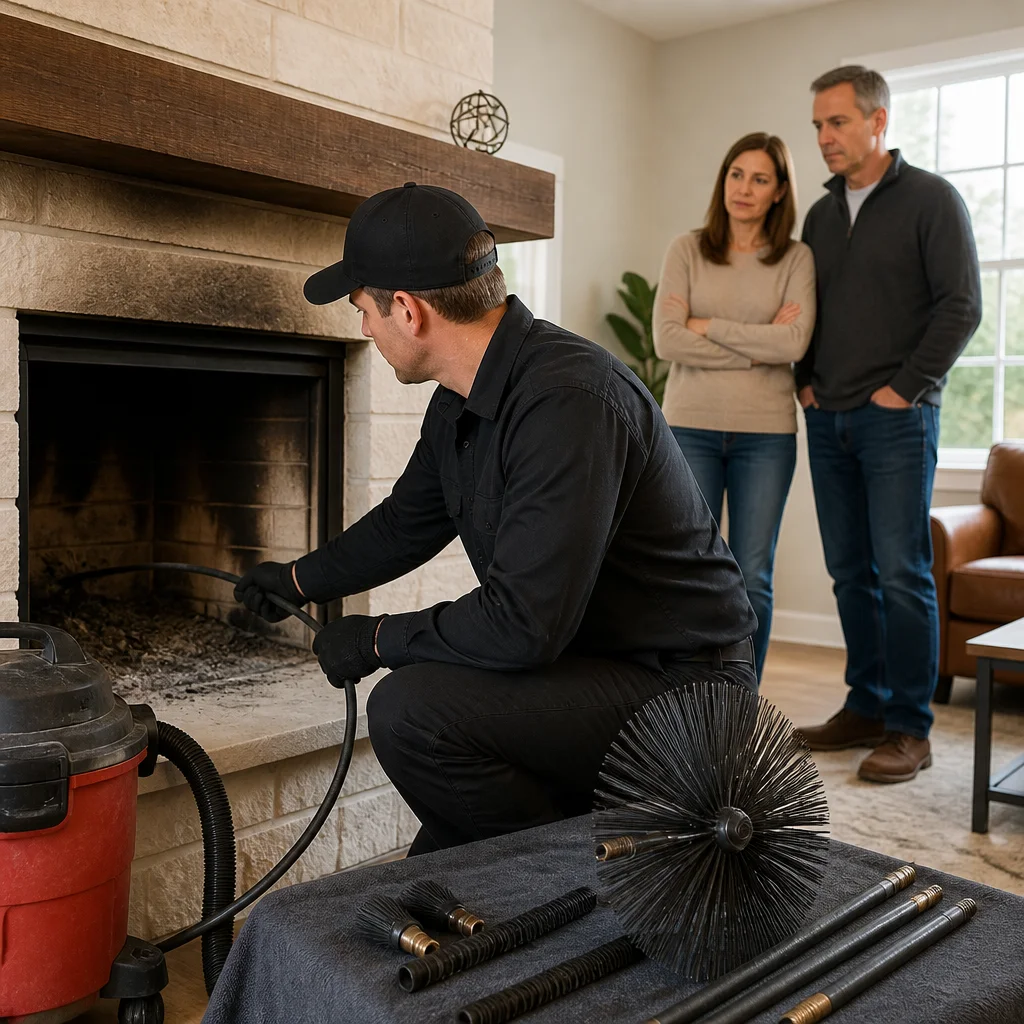
If your fireplace suddenly produces less heat, requires constant tending, or sends smoke into your living room, a clogged flue is often the culprit. Creosote and debris restrict the passage, preventing proper draft. You might notice that your fireplace works fine on a cold day when the temperature difference creates stronger natural draft, but struggles on milder days. That inconsistency points to partial blockage.
Some homeowners compensate by building bigger fires or burning more frequently, which actually accelerates creosote buildup and makes the problem worse. The real fix is removing what’s blocking the flue so your natural draft can return.
What to do next: Before assuming you need a new fireplace insert or damper, have us evaluate your flue. Often a professional cleaning restores performance immediately and costs a fraction of other solutions.
Sign 3: Unusual Odors Coming from Your Chimney
A musty or smoky smell near your fireplace, especially during summer months when you’re not using it, suggests creosote and debris are sitting in your flue. This is particularly common in Central Texas, where humidity can trigger odors even when your fireplace is dormant.
Sometimes the smell is faint and seems to come from the chimney itself. Other times it’s stronger and smells like old wood smoke mixed with something unpleasant. We’ve also encountered situations where animals nested in the flue, adding another source of odor.
Unusual chimney smells aren’t just unpleasant. They’re a signal that something needs cleaning or clearing. Moisture combined with creosote creates an environment where odors develop and intensify. Professional flue cleaning eliminates both the buildup and the smell.
What to do next: Don’t mask the odor with air freshener. Open windows for ventilation and contact us for a cleaning. If the smell is accompanied by visible damage or debris around your chimney cap, we’ll check for animal blockages during our visit.
Sign 4: Visible Soot Stains Around Your Fireplace Opening
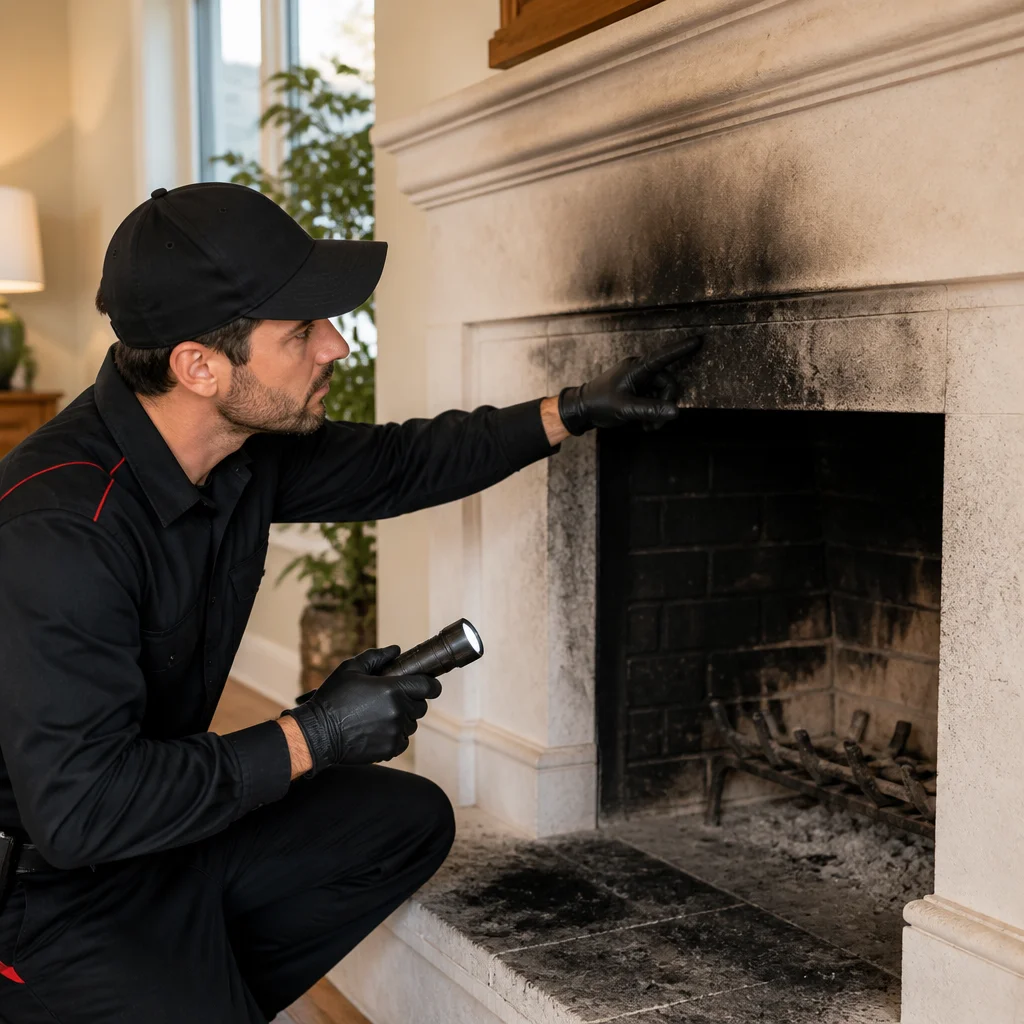
Soot stains on the brick, stone, or trim around your fireplace opening are another red flag. These dark, sooty marks indicate that smoke isn’t exiting cleanly through your flue. Instead, it’s escaping around the edges of your fireplace opening or leaking through damper seals.
This happens when flue blockages force smoke back toward the hearth. The soot settles on surfaces near the opening, creating visible discoloration. You might notice stains that weren’t there before, or that appear worse as the season progresses.
Beyond being unsightly, soot stains suggest your flue isn’t performing its job. This means creosote is accumulating somewhere, and your fireplace isn’t operating at safe capacity.
What to do next: Schedule a professional cleaning to clear your flue and restore proper draft. Once the flue is clean, you can assess whether stains are cosmetic or indicate underlying moisture or structural issues.
Sign 5: It’s Been Over a Year Since Last Cleaning
The National Fire Protection Association recommends chimney inspection and cleaning at least once per year, ideally before the heating season begins. If you can’t remember the last time your flue was professionally cleaned, it’s overdue.
In Texas, where many homeowners use fireplaces seasonally or occasionally, it’s easy to lose track of maintenance. But creosote doesn’t take a break. If you burned wood even a handful of times in the past year, your flue has accumulated deposits that need removal.
Regular annual cleaning is the most effective way to prevent creosote fires, maintain fireplace efficiency, and catch any structural issues early. We recommend cleaning before fall arrives, so your system is ready for the cooler months.
What to do next: Check your fireplace maintenance records or contact your previous service provider to confirm when your last cleaning occurred. If it’s been more than twelve months, book your appointment now before the season gets busy.
How Our Professional Flue Cleaning Process Protects Your Home
Our flue cleaning process combines modern equipment with trained expertise. We start by assessing your system, then use professional-grade brushes and high-powered dust control vacuums to remove creosote and debris thoroughly from your entire flue.
We employ advanced inspection cameras to verify that the flue is clear and to identify any structural damage that might need repair. This dual approach means you’re not just getting a clean flue, you’re getting peace of mind and a detailed understanding of your system’s condition.
Our technicians are trained in safety protocols and local building codes. We protect your home during the process with drop cloths and containment systems, so cleaning doesn’t create mess inside your living space. Everything we remove is properly disposed of, and we leave your fireplace ready to use safely.
The difference between DIY flue cleaning attempts and professional work is significant. We have the equipment, knowledge, and liability insurance to do the job right and address any complications that arise during cleaning.
The Cost of Ignoring These Warning Signs
Delaying professional flue cleaning creates escalating risks. The most immediate danger is a chimney fire. These burn intensely, reach extreme temperatures, and can damage your flue liner, masonry, and even ignite structural components of your home. Even a flue fire that’s quickly contained can cause costly repairs.
Beyond fire risk, a clogged flue prevents your fireplace from heating your home effectively. You burn more wood to achieve the same warmth, which costs more and accelerates creosote buildup. Over months or years, that adds up.
Unaddressed creosote and moisture can also damage your flue liner and masonry. Repairs become necessary when flue liners crack or masonry deteriorates. Those repairs cost significantly more than preventive cleaning.
Carbon monoxide is another serious concern. If your flue is severely blocked, exhaust gases can back up into your living space instead of venting outside. While fireplaces don’t produce the same carbon monoxide volume as gas furnaces, exposure over time can cause health issues.
Professional flue cleaning costs a fraction of what you’ll spend on fire damage restoration, flue liner replacement, or masonry repairs. It’s a straightforward investment in safety and efficiency.
Schedule Your Professional Chimney Flue Cleaning with Go Chimney Sweep
If you’ve noticed any of these five warning signs, or if it’s simply been a year since your last cleaning, we’re ready to help. We serve the Greater Austin area and surrounding Central Texas communities with professional, thorough service that prioritizes your home’s safety.
Our team will inspect your flue, clean it properly with modern equipment, and answer your questions about fireplace maintenance. We’re straightforward about what we find and what we recommend, without pressure or fear-based upselling.
Reach out to us today to schedule your professional chimney flue cleaning. A clean, well-maintained flue means a safe and efficient fireplace for years to come. We look forward to serving your home.
Frequently Asked Questions (FAQ)
How often should we have our chimney flue cleaned?
We recommend professional chimney flue cleaning at least once per year for homes that use their fireplace regularly. If you burn wood frequently during winter months, we may suggest cleaning every six months to prevent dangerous creosote buildup that increases fire risk. Our team can assess your specific usage patterns and help you determine the ideal schedule for your home.
What makes creosote buildup so dangerous?
Creosote is a highly flammable byproduct of wood burning that accumulates inside your flue, and when it builds up excessively, it can ignite and cause a chimney fire that spreads to your home’s structure. We’ve seen how quickly this can escalate, which is why we take creosote removal seriously as a critical safety measure. Even small amounts matter, so we use professional-grade equipment to ensure complete removal during our cleaning service.
How much does professional chimney flue cleaning typically cost?
Our chimney flue cleaning pricing depends on factors like your chimney’s height, accessibility, and the level of buildup we find during inspection. We always provide transparent estimates before beginning work so there are no surprises. We encourage calling us at your earliest convenience to discuss your specific situation and get an accurate quote for our services.
