
Table of Contents
- 1. Understanding Creosote Buildup and Why It Causes Smoking
- 2. Professional Chimney Sweeping: The Gold Standard Solution
- 3. Advanced Inspection Cameras Reveal Hidden Creosote Deposits
- 4. High-Powered Vacuum Systems Remove Creosote Effectively
- 5. Flue Repairs Address Underlying Draft Issues
- 6. Chimney Cap Installation Prevents Future Creosote Problems
- 7. Safety Inspections Ensure Your Fireplace Works Properly
- Frequently Asked Questions (FAQ)
1. Understanding Creosote Buildup and Why It Causes Smoking
Creosote forms every time wood burns. As smoke rises through your chimney, it cools and condenses on the flue walls, leaving behind a dark, tar-like substance that hardens over time. The thicker this layer becomes, the narrower your chimney opening grows, restricting airflow and forcing smoke back into your home.
This buildup happens in stages. Light creosote appears as a thin, powdery coating. Over weeks and months, it thickens into a sticky glaze. Eventually, it can harden into a crusty, almost cement-like deposit that requires serious removal effort. The stage of creosote in your chimney directly affects how much smoke escapes into your living room instead of up the flue.
Several factors accelerate creosote accumulation. Using wet or unseasoned wood is a major culprit because it burns cooler and produces more smoke. Poor airflow caused by a blocked damper, undersized chimney, or missing cap also slows smoke movement, giving creosote more time to condense. A fireplace with draft problems will struggle to pull smoke upward, letting it linger and deposit more residue on the flue.
Understanding what’s actually happening inside your chimney is crucial because it changes your approach to fixing the problem. A smoking fireplace isn’t random. It’s a signal that creosote has progressed to a point where it’s physically blocking the flue. Your next step is getting accurate visibility into how much buildup you’re dealing with.
Actionable takeaway: Before attempting any removal method, identify whether your smoking issue stems from creosote buildup specifically or from a broader draft problem. This distinction determines your solution path.
2. Professional Chimney Sweeping: The Gold Standard Solution
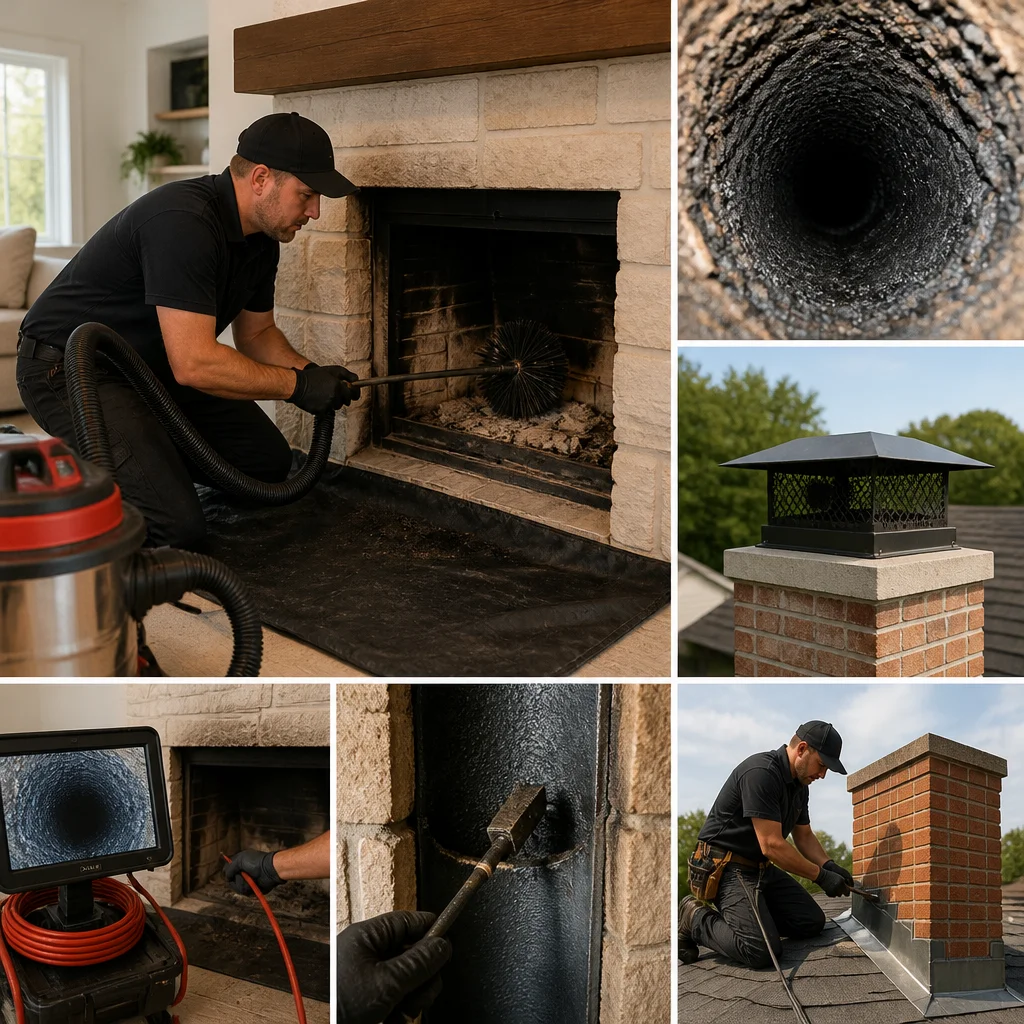
We consider professional chimney sweeping the foundation of any creosote removal strategy because it’s the most thorough and reliable method available. When we perform a sweep, we use specialized rods, brushes, and equipment designed specifically to dislodge creosote at every stage of buildup, from light powder to hardened glaze.
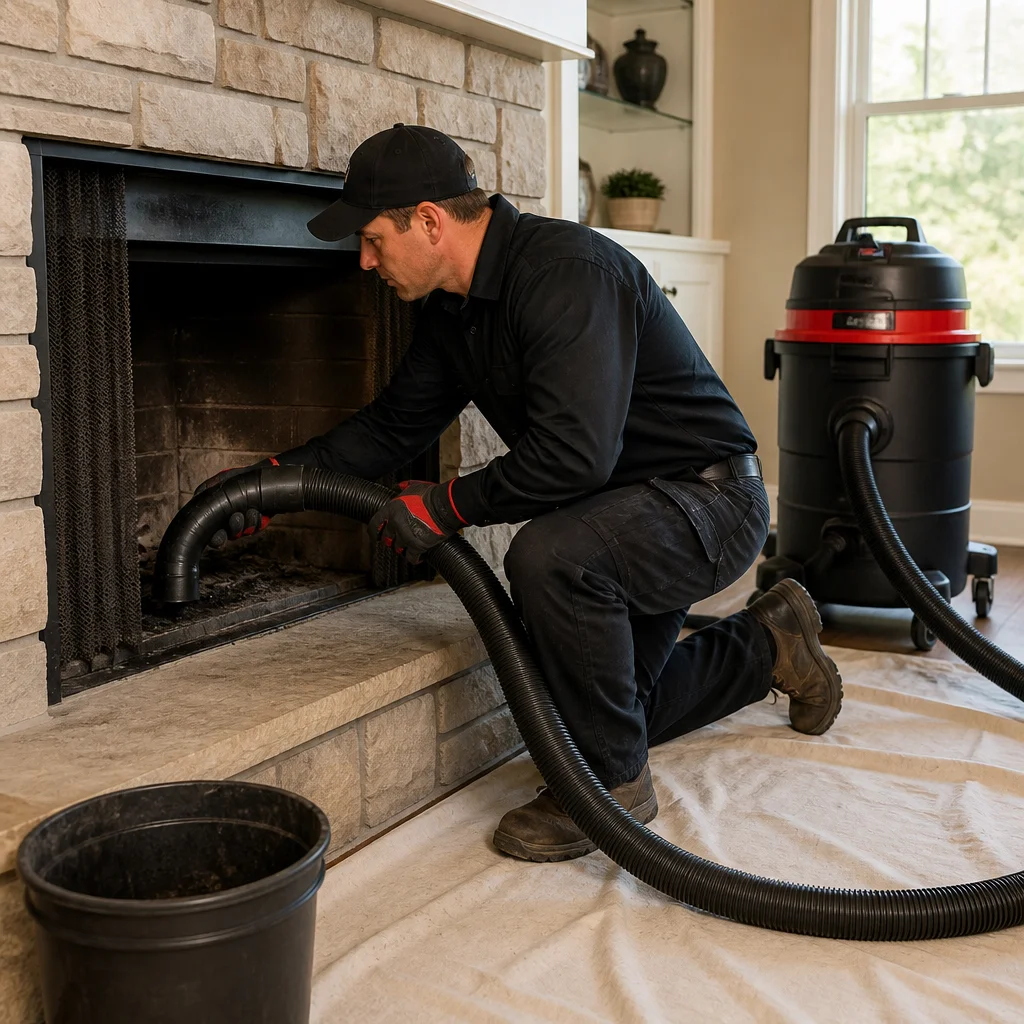
The process starts with protecting your home. We seal your fireplace opening and use high-powered vacuum systems to contain debris. Our technicians then work from the top of your chimney down, using appropriately sized brushes that match your flue dimensions. As we brush, the creosote loosens and falls into collection equipment at the base, never entering your living space.
What makes professional sweeping superior to rental brush kits or DIY attempts is our training and equipment quality. Undersized brushes won’t make full contact with the flue walls, leaving creosote behind. Oversized brushes can damage the flue liner. We know the exact specifications for your chimney and use the right tools from the start. We also recognize when creosote has hardened to a point where aggressive scrubbing alone won’t work, and we adjust our technique accordingly.
Professional sweeping typically removes 95-98% of creosote buildup in a single service. Most homeowners notice an immediate improvement in draft and a significant reduction in smoke spilling into the home. For ongoing maintenance, we recommend annual sweeping if you use your fireplace regularly, especially in Texas where cold snaps make fireplaces appealing in winter.
Actionable takeaway: Schedule professional chimney cleaning annually to prevent creosote from reaching the hardened stages where removal becomes far more difficult and costly.
3. Advanced Inspection Cameras Reveal Hidden Creosote Deposits
Before we aggressively clean, we need to see exactly what we’re dealing with. This is where advanced inspection cameras transform the entire process. We use high-resolution video cameras mounted on flexible cables that can navigate the entire length of your flue, showing us creosote buildup in real time.
The camera reveals information that visual inspection from the roof cannot provide: the precise thickness of creosote in different sections, whether deposits are glaze or crusty buildup, any damage to the flue liner, and whether obstructions beyond creosote are causing your draft problems. On your monitor, you watch us conduct a complete visual survey of your chimney interior.
This visibility prevents guesswork and wasted effort. Sometimes a homeowner assumes their smoking fireplace is purely a creosote issue, but the camera reveals a cracked flue liner that’s leaking smoke sideways, or a collapsed section that’s blocking airflow. In these cases, creosote removal alone won’t fix the problem. You’ll also need flue repairs or replacement.
The camera also helps us determine the best removal strategy. Light creosote responds well to standard brush sweeping. Heavy glaze might require chemical treatments or specialized scraping equipment. Crusty, hardened deposits often need multiple approaches. By seeing the situation first, we avoid the trial-and-error that turns a simple cleaning into a frustrating, costly project.
Actionable takeaway: Invest in a professional camera inspection before agreeing to any creosote removal work. The $200-300 cost typically pays for itself by preventing unnecessary repairs or incomplete solutions.
4. High-Powered Vacuum Systems Remove Creosote Effectively
High-powered vacuum systems are essential to professional creosote removal, yet they’re often overlooked by homeowners considering DIY approaches. These aren’t standard household vacuums. Our equipment uses industrial-grade suction power with specialized HEPA filtration to capture fine creosote particles as they fall during the sweeping process.
The vacuum serves multiple critical functions. First, it contains the dust and debris so your home stays clean and creosote particles don’t escape into your living space. Second, it captures loosened creosote at the chimney base before it settles. Third, it removes fine particles that brushes alone can’t dislodge, especially from glaze-stage buildup that clings to the flue walls.
Rental brush kits and consumer-grade vacuums lack the suction power and filtration capacity to handle this job effectively. They often leave 30-40% of creosote behind, particularly in the more stubborn glaze stage. You might feel like you’ve cleaned, but smoke returns within weeks. Commercial-grade vacuums combined with proper brushing techniques achieve near-complete removal in one service.
Our equipment also protects your health. Creosote particles, especially from heavily treated wood or treated materials that occasionally end up in fireplaces, should never be inhaled. The HEPA filtration in our systems captures 99.97% of particles, keeping everyone safe during and after the cleaning.
Actionable takeaway: If considering any creosote removal service, ask specifically about the vacuum equipment being used. Industrial HEPA-filtered systems are non-negotiable for complete and safe removal.
5. Flue Repairs Address Underlying Draft Issues
Sometimes creosote accumulation is a symptom, not the root problem. If your chimney has poor draft, creosote will build up faster because smoke lingers longer in the flue. Addressing the underlying draft issue prevents rapid creosote re-accumulation after cleaning.
Common draft problems include damaged or missing flue liners, which create leaks that allow air to escape sideways rather than flowing straight up. Cracks in the liner develop over years as the chimney experiences temperature swings and settling. We use the camera inspection to identify these issues and recommend repairs.
Another frequent culprit is improper chimney height or construction. If your chimney is too short relative to your roof line, or if nearby trees or structures block wind flow above the chimney, draft suffers. These structural issues require professional evaluation, but solutions exist for most situations.
Damaged chimney crowns, which cap the top of the masonry structure, also compromise draft by allowing rainwater to enter and damage the interior structure. As the interior deteriorates, airflow becomes inconsistent. Flue repairs or relining can restore proper draft so creosote doesn’t accumulate as quickly after cleaning.
Actionable takeaway: If your fireplace has recurring creosote buildup even after professional cleaning, have us perform a complete flue inspection to identify draft problems that cleaning alone won’t solve.
6. Chimney Cap Installation Prevents Future Creosote Problems
A properly installed chimney cap protects your chimney and contributes to better draft, which indirectly reduces creosote accumulation. Caps keep rain, snow, leaves, and animals out of your flue. They also prevent downdrafts caused by strong winds, which can push smoke back into your home.
Better draft means smoke exits more efficiently, giving creosote less time to condense on the flue walls. A cap paired with regular sweeping significantly slows creosote buildup compared to an unprotected chimney. Over time, this extends the interval between professional cleanings and reduces your maintenance costs.
Caps come in various styles and materials. We recommend stainless steel designs that resist rust and last 15-20 years. The cap should allow ample airflow while excluding debris. Some poorly designed caps actually restrict airflow and make draft worse, so professional selection and installation matter.
If you’ve had creosote problems in the past, installing a cap if you don’t already have one should be part of your prevention strategy. It’s one of the most cost-effective investments in long-term chimney health.
Actionable takeaway: When scheduling your next professional cleaning, ask us to evaluate whether a cap would improve your chimney’s performance and help prevent future creosote issues.
7. Safety Inspections Ensure Your Fireplace Works Properly
Professional safety inspections go beyond creosote assessment. They evaluate your entire chimney system for hazards that could endanger your family or home. We examine the structural integrity of the masonry, check for cracks or deterioration, verify that all components are properly secured, and confirm that your system meets current safety standards.
Safety inspections follow NFPA (National Fire Protection Association) guidelines, which are recognized industry standards for chimney and venting system safety. A comprehensive inspection catches problems like creosote-related fire risk before they become dangerous, but also identifies masonry damage, improper ventilation, leaks, and other issues that could develop into costly repairs.
Many homeowners discover during a safety inspection that their smoking fireplace stems from a combination of factors: creosote buildup plus a cracked flue liner plus improper damper operation. Our inspectors provide a complete picture so you can prioritize repairs in order of safety importance and budget accordingly.
After we address creosote removal and any associated repairs, we document the work and provide you with a clear record of your chimney’s condition. This documentation is valuable if you ever sell your home, as it demonstrates proper maintenance and care.
Actionable takeaway: Schedule a professional safety inspection annually if you use your fireplace regularly. Early detection of problems prevents dangerous situations and keeps repair costs reasonable.
For further reading: Chimney Cleaning Round Rock.
Frequently Asked Questions (FAQ)
How often should we have our chimney professionally cleaned?
We recommend having your chimney swept and inspected at least once a year, ideally before the start of your heating season. If you use your fireplace frequently or burn wood regularly, we may suggest more frequent cleanings to prevent dangerous creosote accumulation. During our inspection, we can assess your specific usage patterns and recommend the best cleaning schedule for your home.
What causes that smoking smell even after we’ve cleaned our fireplace?
Creosote buildup is usually the culprit, but smoking can also result from draft problems caused by structural issues in your flue or an improperly installed chimney cap. We use advanced inspection cameras to identify exactly where the problem originates, whether it’s residual creosote deposits, damaged masonry, or airflow obstructions. Once we pinpoint the cause, we can address it directly rather than just treating the symptom.
Can we prevent creosote buildup in the future?
Absolutely. Beyond regular professional cleanings, we recommend installing a quality chimney cap to keep moisture and debris out of your flue, which significantly slows creosote formation. We also suggest burning only seasoned hardwood and ensuring your damper closes completely when your fireplace isn’t in use. Our team can assess your current setup and recommend preventive measures tailored to your specific fireplace.
