
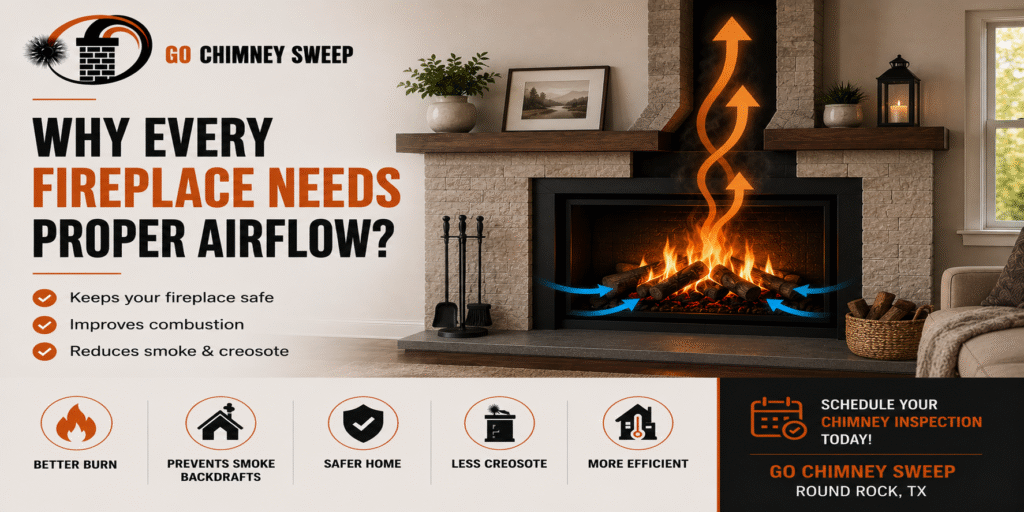
A fireplace adds warmth, comfort, and character to a home, but its performance depends on more than just the fire itself. One of the most important factors in keeping a fireplace safe and efficient is proper airflow. Whether you have a traditional wood-burning fireplace or a modern gas fireplace, adequate airflow allows smoke, combustion gases, and excess heat to exit the home safely through the chimney.
When airflow is restricted, your fireplace may not operate as intended, leading to poor performance, unpleasant odors, smoke entering the home, and potential safety concerns. Understanding why proper airflow matters can help homeowners keep their fireplace and chimney system in excellent condition.
What Is Fireplace Airflow?
Fireplace airflow refers to the movement of fresh air into the firebox and the flow of smoke and combustion gases up through the chimney. This natural movement, often called “draft,” allows the fire to burn efficiently while carrying smoke and harmful gases safely outside.
A properly functioning chimney creates a steady upward draft that supports clean combustion and consistent fireplace performance.
Better Airflow Creates a Better Fire
A fire needs oxygen to burn properly. Without enough airflow, flames may become weak, produce excessive smoke, or struggle to stay lit.
Proper airflow allows fuel to burn more completely, producing:
- Stronger, steadier flames
- Less smoke inside the home
- Better heating performance
- More efficient fuel consumption
Whether you’re burning firewood or using a gas fireplace, sufficient airflow helps the system perform as designed.
Prevents Smoke From Entering Your Home
One of the most obvious signs of poor chimney airflow is smoke backing into the room instead of rising through the chimney.
Restricted airflow may be caused by:
- Debris inside the flue
- Animal nests
- Creosote buildup
- Damaged chimney liners
- Closed or partially closed dampers
Routine chimney inspections help identify these issues before they affect your fireplace.
Helps Remove Harmful Combustion Gases
Every fireplace produces combustion gases that must be safely vented outdoors.
Proper airflow helps remove:
- Carbon monoxide
- Water vapor
- Smoke particles
- Other combustion byproducts
A properly maintained chimney allows these gases to exit efficiently, supporting a healthier indoor environment.
Reduces Creosote Buildup
For wood-burning fireplaces, poor airflow often causes incomplete combustion, producing more smoke and increasing creosote deposits inside the chimney.
Creosote is highly flammable and one of the leading contributors to chimney fires. Improving airflow through regular chimney maintenance helps reduce creosote accumulation and keeps the chimney cleaner for longer.
Prevents Unpleasant Fireplace Odors
Poor airflow can trap smoke, soot, moisture, and other contaminants inside the chimney. During warm or humid weather, these odors may be pushed back into your home.
Maintaining proper airflow and scheduling regular chimney cleanings can significantly reduce unpleasant fireplace odors throughout the year.
Improves Energy Efficiency
A fireplace with proper airflow burns fuel more efficiently, allowing it to produce consistent heat while reducing waste.
Good airflow also minimizes unnecessary strain on the fireplace system, helping it operate reliably during the colder months and improving overall heating performance.
Chimney Components Affect Airflow
Several chimney components work together to maintain proper airflow, including:
- Chimney cap
- Damper
- Flue
- Chimney liner
- Chimney crown
- Masonry structure
If any of these components become damaged or blocked, airflow may be reduced, affecting both fireplace performance and safety.
Annual Maintenance Keeps Airflow at Its Best
Regular chimney maintenance is one of the most effective ways to ensure consistent airflow. During a professional inspection, technicians check for blockages, creosote buildup, damaged liners, moisture issues, and other conditions that could interfere with proper ventilation.
Annual inspections help identify minor problems before they develop into larger repairs while ensuring your fireplace continues operating efficiently.
Don’t Ignore Signs of Poor Airflow
Several warning signs may indicate your fireplace is not receiving proper airflow, including excessive smoke, difficulty starting fires, unusual odors, weak flames, or soot accumulating around the fireplace opening. Addressing these issues early can improve safety, prevent costly repairs, and extend the life of your chimney system.
Keeping the chimney clean and ensuring all venting components remain in good condition are simple steps that help maintain reliable airflow throughout every season.
Professional Chimney Services in Round Rock, TX
If your fireplace isn’t performing as efficiently as it should, improper airflow could be the cause. Go Chimney Sweep Round Rock proudly provides professional chimney inspections, chimney sweeping, chimney maintenance, and venting system evaluations throughout Round Rock, TX. Our experienced team can identify airflow problems, remove chimney blockages, and help ensure your fireplace operates safely and efficiently. Contact Go Chimney Sweep Round Rock today to schedule your professional chimney service and keep your fireplace performing at its best all year long.
