
Table of Contents
- Why Fireplace Soot Buildup Threatens Your Texas Home
- The Hidden Dangers of Creosote and Soot Accumulation
- How Our Advanced Soot Removal Process Works
- Professional Inspection Technology We Use to Detect Soot Issues
- Why DIY Soot Removal Falls Short of Professional Standards
- Our Complete Fireplace Cleaning and Safety Inspection
- Protecting Your Home from Future Soot and Creosote Buildup
- Schedule Your Professional Soot Removal Service Today
- Frequently Asked Questions (FAQ)
Why Fireplace Soot Buildup Threatens Your Texas Home
If you’ve noticed black residue around your fireplace or a sooty smell lingering in your home, you’re not alone. Many Texas homeowners with wood-burning fireplaces face soot and creosote buildup, which directly impacts both safety and efficiency. At Go Chimney Sweep, we understand the unique challenges that come with maintaining fireplaces in our climate, and we’re here to help you protect what matters most.
Soot isn’t just an unsightly nuisance. When wood burns incompletely, it creates fine particles that escape up the chimney and accumulate on interior surfaces. Over time, this buildup can restrict airflow, reduce heating efficiency, and create maintenance headaches that extend beyond your fireplace.
Texas humidity and temperature fluctuations actually accelerate soot accumulation. When moisture meets warm flue gases, condensation forms, allowing soot particles to stick more readily to chimney walls. This means your fireplace works harder to draft properly, wasting energy and driving up heating costs.
Beyond efficiency concerns, excessive soot signals that something in your burning process isn’t optimized. It could indicate wet firewood, inadequate oxygen supply, or problems with your chimney’s draft system itself. Addressing soot buildup early prevents these issues from snowballing into expensive repairs.
What to do next: If you can see visible soot stains around your fireplace opening or on nearby walls, schedule a professional inspection to identify the root cause rather than assuming it’s a simple cleaning issue.
The Hidden Dangers of Creosote and Soot Accumulation
Creosote is the real concern hiding beneath surface-level soot. When wood burns, flammable vapors rise through your chimney. As these vapors cool and condense, they form a dark, sticky substance called creosote that adheres to flue walls. Unlike soot, creosote poses a serious fire hazard.
Creosote accumulation happens in three stages. First-stage creosote appears as light dust and poses minimal risk. Second-stage creosote becomes sticky and tar-like, reducing draft efficiency and increasing fire risk significantly. Third-stage creosote is a dense, glassy coating that’s extremely flammable and nearly impossible to remove without professional equipment.
Here’s what makes creosote particularly dangerous: it can ignite at lower temperatures than wood itself. A chimney fire burning creosote reaches temperatures exceeding 2,000 degrees Fahrenheit. At those temperatures, the mortar between bricks deteriorates, cracks develop in the flue, and the fire can spread to your home’s structure.
We’ve seen cases where homeowners didn’t realize they had dangerous creosote levels until they experienced warning signs like a strong chemical smell, reduced draft, or small fires in the chimney that they initially dismissed as normal popping sounds. By then, structural damage was already underway.
What to do next: Don’t wait for warning signs. Annual professional inspections catch creosote at manageable stages before it becomes a chimney fire risk.
How Our Advanced Soot Removal Process Works
Our professional fireplace soot removal process combines proven techniques with modern equipment designed specifically for thorough, controlled cleaning. Here’s how we tackle the job:
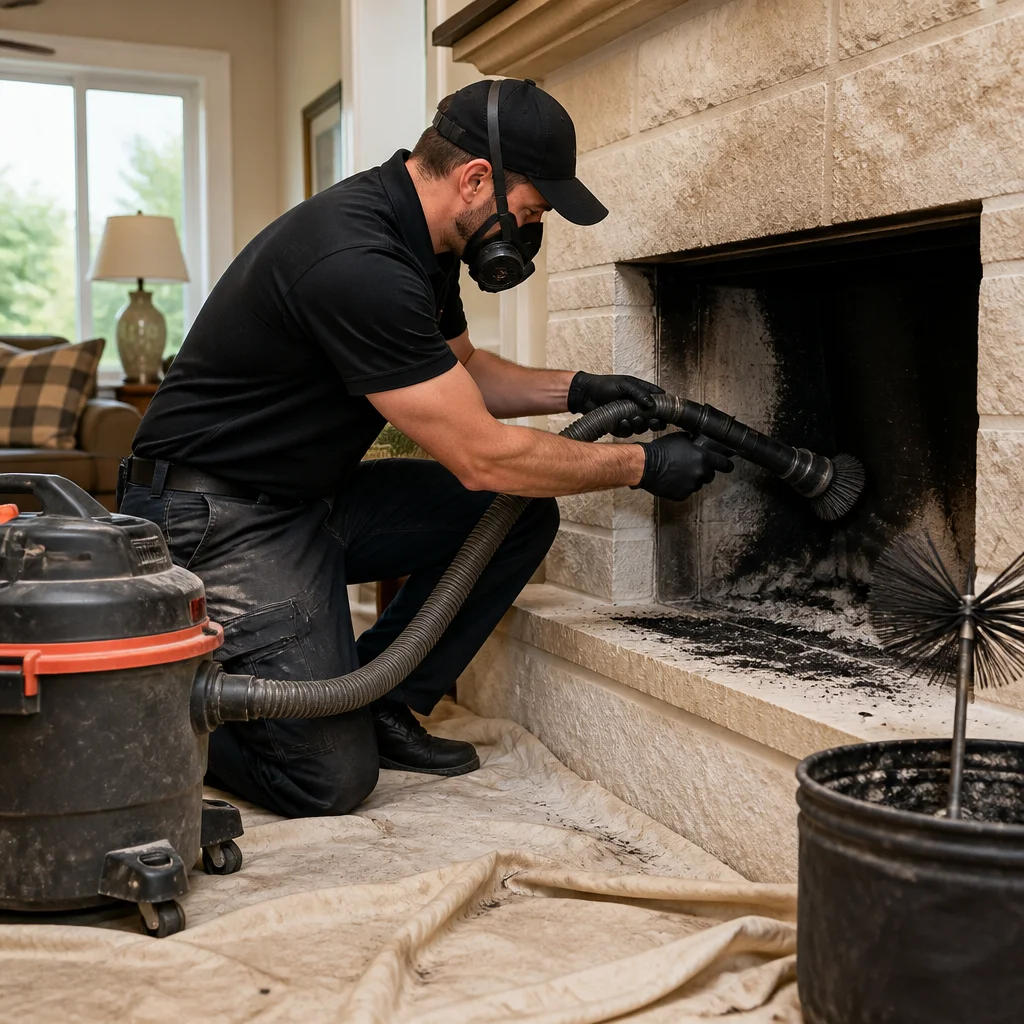
We begin by protecting your home. We seal your fireplace opening and use high-powered dust control vacuums that capture soot at the source rather than allowing it to spread throughout your living spaces. This containment step makes a real difference in your home’s cleanliness during service.
Next, we systematically clean the entire flue using specialized brushes sized to your chimney’s dimensions. Our brushes scrub creosote and soot buildup while our vacuum system captures loosened particles. We work methodically from top to bottom, ensuring we address every inch of the interior surface.
For stubborn second and third-stage creosote, we employ rotary cleaning systems that break apart dense deposits without damaging the flue liner. This mechanical action combined with our vacuum systems removes buildup that simple brushing alone cannot address.
Finally, we clean the smoke chamber and firebox thoroughly, removing ash and soot that accumulate in these critical areas. We also inspect and clean your damper to ensure it operates smoothly.
What to do next: When you call for service, let us know if you’ve noticed any performance issues or unusual odors. This information helps us determine whether standard cleaning or more intensive removal is needed.
Professional Inspection Technology We Use to Detect Soot Issues
We rely on advanced inspection cameras to see exactly what’s happening inside your chimney and identify soot problems you can’t detect with the naked eye. Our video inspection system captures high-definition footage of the entire flue, revealing creosote thickness, cracks, deterioration, and blockages.
This technology eliminates guesswork. Rather than describing what we think might be wrong, we show you visual proof of conditions. Homeowners can see the before-and-after difference cleaning makes, which helps you understand exactly where their money is going.
Our inspections follow the National Fire Protection Association (NFPA) standards, which define three levels of inspection. Level 1 assessments examine accessible interior and exterior areas during routine cleaning. Level 2 inspections, which we typically recommend annually for active wood-burning fireplaces, include video camera examination of the entire flue system and exterior evaluation. Level 3 inspections involve removing portions of the chimney structure when we suspect serious problems.
The camera inspection also catches issues beyond soot. We identify loose flue tiles, cracks in liners, missing mortar, and structural damage that needs attention. Addressing these problems alongside soot removal prevents future efficiency loss and safety risks.
What to do next: Ask your technician to walk you through the inspection footage. Understanding your chimney’s condition empowers you to make informed maintenance decisions.
Why DIY Soot Removal Falls Short of Professional Standards
We understand the temptation to save money by tackling soot removal yourself. However, DIY chimney cleaning creates several problems that ultimately cost more to fix.
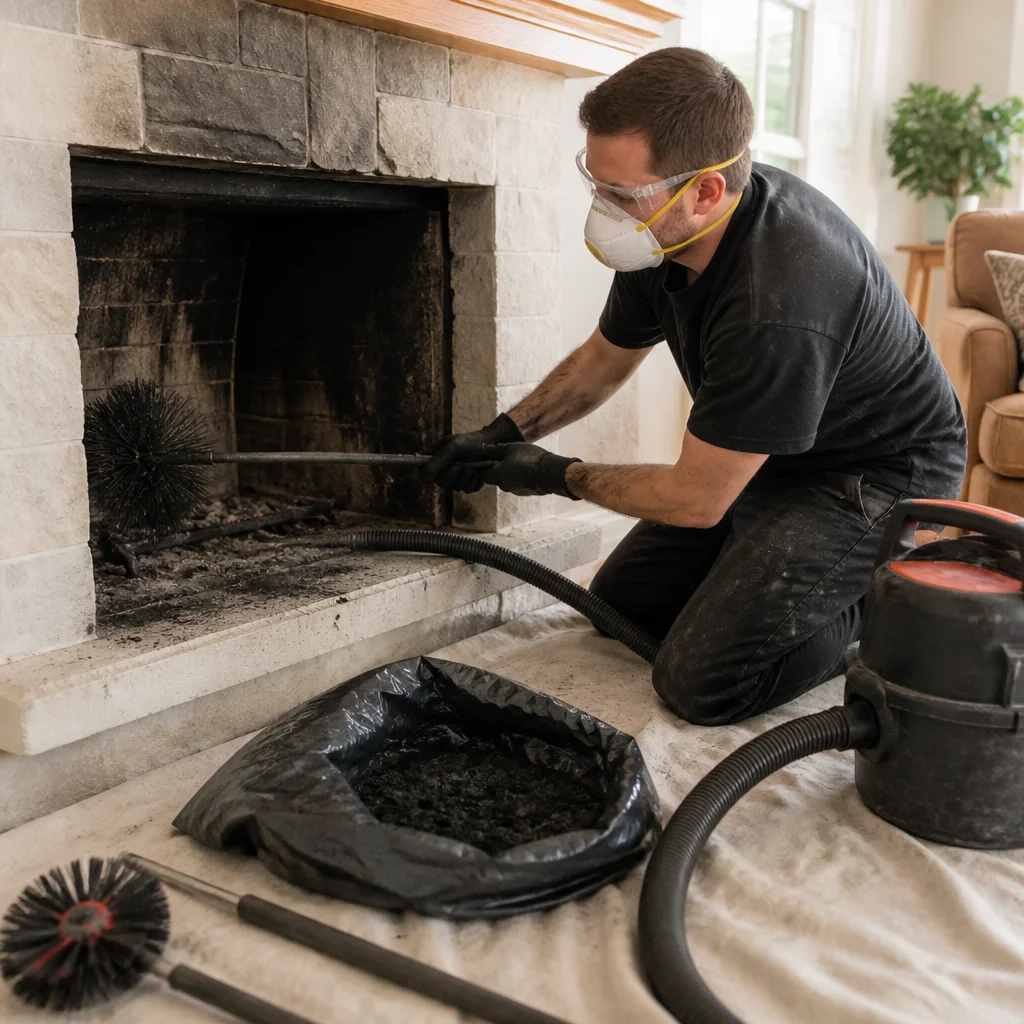
First, consumer-grade equipment simply cannot match professional systems. Household vacuums lack the sealed filtration and suction power needed to contain fine soot particles. Attempting to clean with a regular vacuum spreads soot throughout your home and can clog the vacuum permanently. Cheap brushes don’t have the bristle configuration or weight to break apart creosote effectively.
Safety is a bigger concern. Climbing onto your roof creates fall risk, especially on Texas heat-reflective surfaces where footing becomes unpredictable. Improperly anchored ropes and makeshift equipment cause accidents we’ve seen too many times. Professional technicians use safety harnesses rated for rooftop work and follow OSHA standards.
Additionally, incomplete cleaning creates a false sense of security. Many DIY efforts remove visible soot but miss creosote deeper in the flue. This leads homeowners to believe they’ve addressed the problem when dangerous accumulation remains. Professional inspection technology confirms that cleanup was thorough.
We’ve also encountered damage caused by incorrect brush sizes that scrape mortar joints, water damage from improper sealing after cleaning, and chimney fires sparked by unknowingly disturbing creosote during amateur removal attempts.
What to do next: Consider professional cleaning an investment in safety, not an expense. The cost of addressing DIY damage or recovering from a chimney fire far exceeds the price of thorough professional service.
Our Complete Fireplace Cleaning and Safety Inspection
When you schedule chimney cleaning services, we deliver a comprehensive package that addresses soot removal and identifies underlying issues. Our service includes a detailed expert chimney inspection that ensures your entire system operates safely and efficiently.
We begin with a thorough examination of your fireplace exterior, checking the chimney structure, chimney cap condition, and flashing integrity. Water intrusion is a common Texas issue, and we identify problem areas before they cause interior damage.
Moving inside, our inspection examines the smoke chamber, damper operation, and firebox condition. We look for cracks, deterioration, and any signs of previous fires or heat damage. The video camera inspection follows, providing detailed documentation of flue conditions from bottom to top.
Our cleaning process then removes all accumulated soot and creosote using the methods and equipment described earlier. We focus on restoring your flue to original condition, ensuring maximum draft efficiency.
The inspection concludes with a detailed report documenting our findings and recommendations. If we identify concerns like missing chimney caps, cracked flue liners, or damaged mortar joints, we explain what’s needed and why. We never pressure you into repairs you don’t need, but we’re transparent about safety issues that require attention.
What to do next: Schedule an annual inspection and cleaning, ideally before winter when you’ll rely most on your fireplace. Regular maintenance prevents emergency situations.
Protecting Your Home from Future Soot and Creosote Buildup
Once we’ve removed soot and creosote, maintaining your fireplace becomes the key to preventing rapid reaccumulation. Several practical steps extend the time between professional cleanings and maximize your fireplace’s efficiency.
Burn only properly seasoned hardwood. Wet or green wood creates incomplete combustion, producing excessive creosote and soot. Seasoned wood should sit for at least six to twelve months and have a moisture content below 20 percent. This single factor dramatically reduces buildup.
Maintain consistent airflow by keeping your damper fully open during fires and ensuring nothing blocks your chimney cap. Restricted airflow slows draft, increasing creosote formation. We can install or repair chimney caps and dampers to ensure they function properly.
Have your chimney swept annually if you use your fireplace regularly. This schedule prevents accumulation from reaching dangerous levels and allows us to catch structural issues early. High-use fireplaces might need cleaning more frequently.
Use fireplace grates rather than andirons to improve airflow around burning wood. Position logs to encourage complete combustion and move ash out of the firebox after each fire.
What to do next: Keep a maintenance log noting when fires are used and when cleaning occurs. This helps establish patterns and informs cleaning frequency going forward.
Schedule Your Professional Soot Removal Service Today
Your fireplace should provide warmth and comfort, not worry. At Go Chimney Sweep, we’re committed to keeping your chimney clean, safe, and efficient. Our professional soot removal services and comprehensive inspections give you confidence that your fireplace system is operating at its best.
We serve the Greater Austin area and surrounding Central Texas communities with the expertise and equipment your home deserves. Our technicians arrive prepared with high-powered dust control systems, advanced inspection cameras, and years of experience handling Texas fireplaces.
Ready to protect your home? Contact us today to schedule your professional fireplace soot removal and safety inspection. We’ll show you exactly what’s happening inside your chimney and get your fireplace running safely and efficiently.
Frequently Asked Questions (FAQ)
How often should we have our chimney professionally cleaned?
We recommend having your chimney inspected and cleaned at least once per year, ideally before the heating season begins. If you use your fireplace frequently or burn wood regularly, we suggest scheduling service more often, as creosote buildup accelerates with heavy use. Our inspection will help us determine if your specific situation requires additional cleanings beyond the annual standard.
Why can’t we just clean the soot out ourselves?
While it might seem straightforward, DIY soot removal misses critical safety issues that our professional process catches. We use advanced inspection cameras and high-powered dust control systems that prevent harmful creosote particles from spreading throughout your home, which standard household tools cannot accomplish safely. More importantly, we can identify structural damage, blockages, or hazardous conditions that require professional repair before they become dangerous fire risks.
What happens if we ignore soot and creosote buildup?
Accumulated soot and creosote significantly increase your risk of chimney fires, which can spread rapidly to your home’s structure and cause extensive damage. We’ve seen neglected chimneys develop cracks in the flue lining and deteriorating mortar that compromise the entire system’s integrity. Regular maintenance through our professional cleaning and inspection services protects both your home’s safety and helps your fireplace operate efficiently for years to come.
