
Table of Contents
- Why Creosote Buildup Threatens Your Texas Home
- How Professional Creosote Removal Differs from DIY Approaches
- Our Advanced Creosote Removal Process and Technology
- Safety Standards We Follow During Removal Services
- Chimney Inspection Methods That Detect Creosote Problems
- Pricing and Service Packages We Offer
- Preventive Maintenance Plans to Avoid Future Buildup
- Customer Success Stories from Greater Austin Area
- Why Go Chimney Sweep Is Your Best Choice
- How to Schedule Your Creosote Removal Service Today
- Frequently Asked Questions (FAQ)
Why Creosote Buildup Threatens Your Texas Home
If you’ve been enjoying cozy fires in your Texas home this winter, creosote buildup is likely happening inside your chimney right now. This sticky, flammable substance accumulates every time your fireplace burns, and without proper removal, it becomes a genuine safety hazard that puts your home and family at risk.
We’ve helped hundreds of Greater Austin homeowners address creosote problems before they became emergencies. This guide explains what creosote does, why professional removal matters, and how we approach the job with precision and care.
Creosote is a dark, sticky byproduct of burning wood. As smoke travels up your chimney, it cools and condenses, leaving creosote deposits on the flue walls. Over time, these layers build up and create several serious problems.
The most critical threat is chimney fires. Creosote is highly flammable, and when it ignites inside your flue, the fire burns at extreme temperatures. Many homeowners don’t realize a chimney fire is happening until they smell smoke or see flames shooting from the top of the chimney. These fires can crack flue liners, damage masonry, and spread to the surrounding structure.
Beyond fire risk, thick creosote reduces chimney draft efficiency. Your fireplace won’t draw smoke properly, which means smoke backs up into your living space. This reduces heat output and fills your home with unhealthy fumes. Texas humidity also accelerates creosote adhesion, making regular removal especially important in our climate.
What to do next: If you’ve used your fireplace regularly this season without a professional cleaning, schedule a creosote assessment right away.
How Professional Creosote Removal Differs from DIY Approaches
We understand the temptation to tackle chimney maintenance yourself, especially when you’re managing household expenses. The reality, though, is that creosote removal requires specialized equipment, training, and safety precautions that DIY approaches simply can’t match.
Many homeowners attempt removal with basic brushes or rods purchased online. These tools can dislodge surface creosote but rarely address the stubborn, tar-like deposits that form in harder-to-reach areas of the flue. Incomplete removal leaves dangerous buildup behind, giving a false sense of security.
Safety is another major concern. Working at heights on a roof or chimney without proper harnesses and experience creates serious injury risk. Improper technique can also damage the flue liner, which costs significantly more to repair than professional cleaning would have cost upfront.
We use industrial-grade equipment and established protocols refined over years of service. Our technicians understand chimney acoustics, proper brush selection for different flue types, and how to detect when additional issues like cracks or deterioration need attention. We also protect your interior with dust containment systems that professional-grade vacuums are designed to handle safely.
What to do next: Get a professional quote and compare it against the hidden costs of incomplete DIY work or emergency chimney fire damage.
Our Advanced Creosote Removal Process and Technology
Our creosote removal process starts with a detailed inspection using advanced camera technology to assess buildup severity and identify any structural concerns. This helps us determine the best approach for your specific chimney.
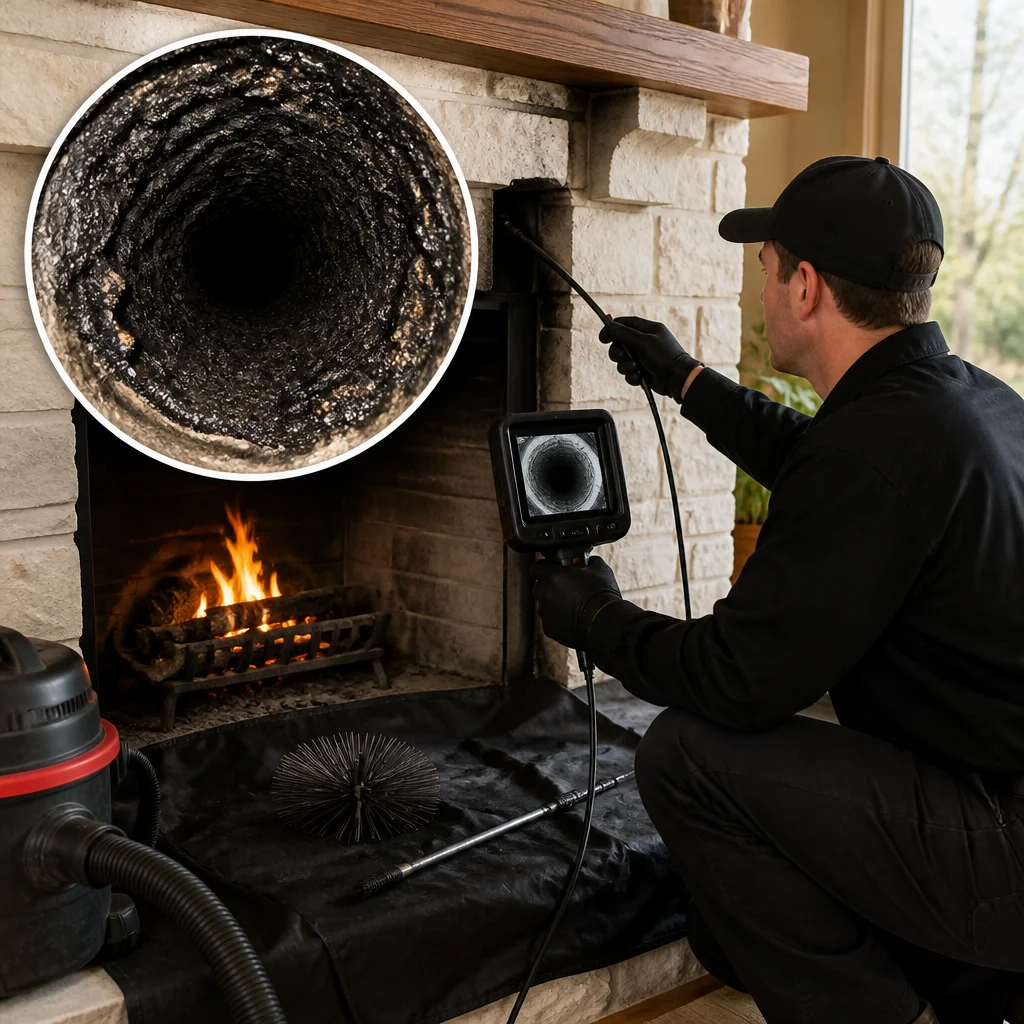
We use high-powered, truck-mounted vacuum systems that capture dust and particles before they enter your home. Paired with specialized brushes sized for your flue, this combination removes creosote efficiently while maintaining cleanliness throughout the job. Our equipment operates with negative air pressure, meaning all debris flows away from living spaces.
For stubborn, hardened creosote layers, we apply targeted techniques that break deposits loose without causing flue damage. Our technicians understand the difference between different creosote stages, from light film to heavy glaze accumulation, and adjust their approach accordingly.
Throughout the process, we monitor air quality and flue integrity. Once cleaning is complete, we verify the chimney draft is working properly and document the results with photos and inspection reports you can keep on file.
What to do next: Ask us about our inspection-first approach when you call. This ensures we’re not overselling services your chimney doesn’t need, while catching problems that do require attention.
Safety Standards We Follow During Removal Services
Your family’s safety is non-negotiable during our work. We follow the National Fire Protection Association (NFPA) standards for chimney cleaning and inspection, which guide proper procedures, equipment use, and documentation.
Our team uses fall protection equipment, roof harnesses, and safe ladder practices every time we’re on height. We also verify that all electrical equipment is properly grounded and that ventilation is adequate during work. If we identify structural concerns during cleaning, we stop and advise you before proceeding further.
We protect your home interior with professional-grade tarps, floor coverings, and containment systems. Our vacuums have HEPA filtration, meaning fine particles don’t escape into your HVAC system or living areas. Before leaving, we clean up thoroughly and verify your fireplace is safe to use.
Documentation matters too. We provide detailed reports showing what was removed, the condition of your flue, and any recommendations for additional work. This creates a safety record for your home and helps you track maintenance over time.
What to do next: Request our safety protocols documentation to review before scheduling. Knowing how we protect your home will give you confidence in our approach.
Chimney Inspection Methods That Detect Creosote Problems
Not all creosote problems are visible from outside. Our chimney inspection services use video camera technology to examine the entire interior flue, revealing buildup severity, cracks, deterioration, and blockages that might otherwise go undetected.
We insert a high-resolution camera through the cleanout access at the base of the chimney, recording the full flue length. This shows us the exact thickness and stage of creosote buildup, whether the flue liner is intact, and if any masonry is damaged or deteriorating. The video recording becomes part of your maintenance file.
Older chimneys sometimes have unlined flues, which absorb creosote into the masonry itself. Our inspection identifies this issue early, since standard cleaning alone won’t solve the underlying problem. We can then discuss flue liner installation as a solution.
We also check for obstructions like bird nests, debris, or collapsed sections that might be contributing to draft problems. Some issues only become apparent once we see them on camera, which is why annual inspections are valuable even if you think your chimney is fine.
What to do next: Schedule an inspection even if you’re not ready for cleaning. This baseline documentation helps track changes and prevents costly surprises later.
Pricing and Service Packages We Offer
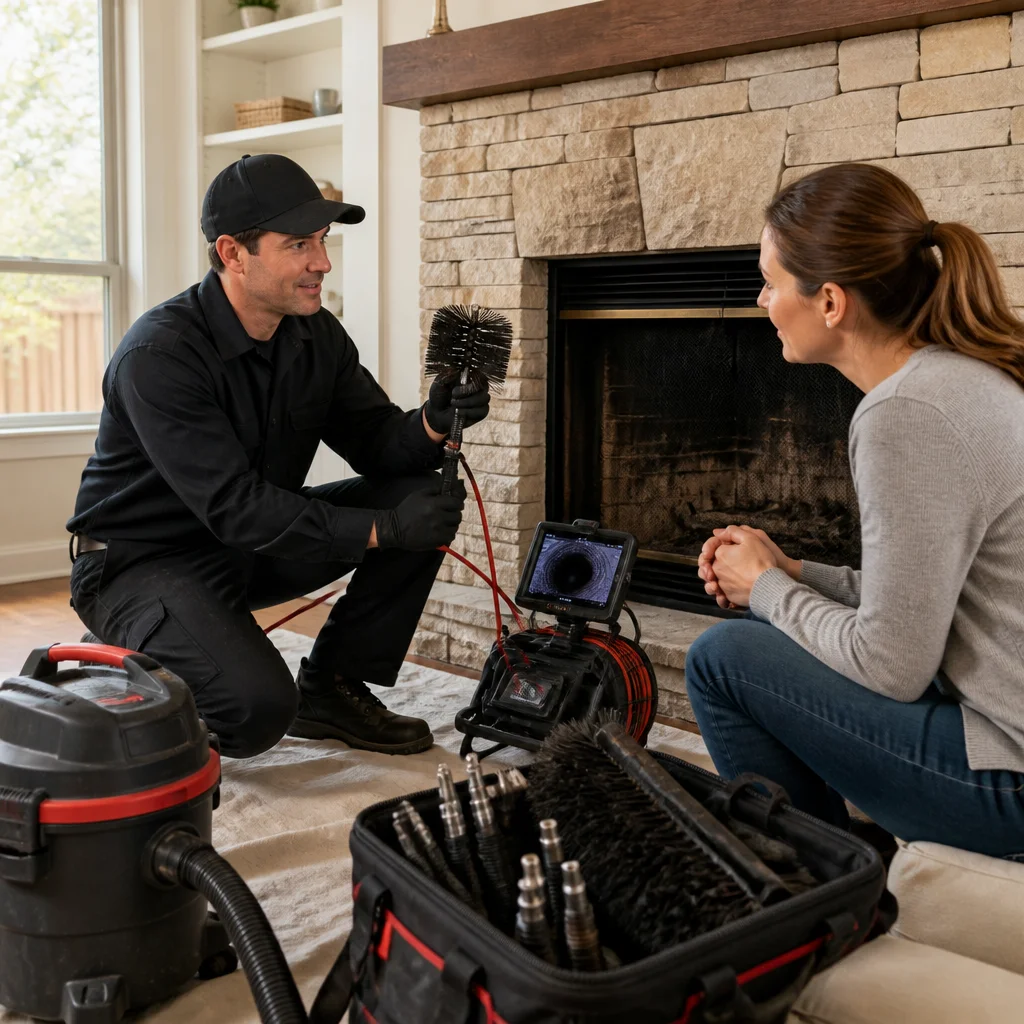
Our creosote removal pricing starts at a reasonable rate for standard chimney cleaning, with adjustments based on flue size, buildup severity, and any additional repairs needed.
We offer several service tiers:
- Standard Cleaning: Professional creosote removal with video inspection and draft verification. This covers most regularly maintained fireplaces.
- Deep Clean with Repair Assessment: Includes cleaning plus detailed evaluation of flue integrity, masonry condition, and any damage requiring follow-up work.
- Full System Service: Combines cleaning, inspection, minor repairs (like chimney cap installation), and preventive recommendations tailored to your home.
Our pricing is transparent upfront. We never add surprise charges or pressure you into unnecessary work. If your inspection reveals additional issues, we discuss options and costs before proceeding.
We also offer seasonal packages for homeowners who burn wood frequently. These multi-visit agreements reduce per-visit costs and ensure your chimney stays in top condition throughout the heating season.
What to do next: Contact us for a free estimate. We’ll discuss your fireplace use and recommend the package that matches your actual needs and budget.
Preventive Maintenance Plans to Avoid Future Buildup
Prevention is always more cost-effective than dealing with emergencies. We recommend annual creosote removal for homeowners who use their fireplaces regularly during heating season. Some homes with heavy use benefit from semi-annual cleaning.
Our preventive maintenance plans include scheduled cleanings, annual inspections with camera documentation, and priority service scheduling. Members also receive discounts on repairs and first notification if we identify developing problems.
Beyond professional cleaning, creosote buildup slows when you burn properly seasoned hardwood, maintain good chimney draft, and avoid burning treated wood or trash. We provide guidance on wood selection and burning techniques that minimize creosote formation.
Installing a chimney cap is another preventive measure we often recommend. Caps reduce moisture intrusion and debris entry, both of which contribute to chimney deterioration and creosote accumulation. A quality cap can extend your flue liner life significantly.
What to do next: Ask about our maintenance plan options when you schedule. The small annual investment prevents the larger expenses that come with deferred maintenance.
Customer Success Stories from Greater Austin Area
Maria from North Austin had been using her fireplace several times weekly through winter but hadn’t had it professionally cleaned in years. When we inspected her chimney, we found heavy stage-three creosote buildup that DIY brushing would never have removed. After our deep cleaning and video inspection, she was shocked to see how much material we extracted. “I had no idea it was that bad,” she told us. “I’m glad we got it done before something worse happened.” She’s now on our annual maintenance plan.
Another client in Cedar Park called after noticing smoke backing up into his den. His fireplace had become inefficient due to creosote constriction. Our cleaning and draft verification restored proper airflow, and he immediately noticed the difference. “The fire actually pulls correctly now, and the room stays warmer,” he reported.
These situations remind us why thorough, professional creosote removal matters so much. When families invest in their homes and take fireplace safety seriously, we’re honored to help them maintain that safety year after year.
Why Go Chimney Sweep Is Your Best Choice
We’ve built our reputation in the Greater Austin area by combining professional expertise with genuine care for each customer’s safety and satisfaction. Our advantage isn’t just equipment or pricing, though both are competitive.
We invest in training our technicians continuously. Our team understands Texas climate challenges, older masonry chimneys common in our region, and how to diagnose problems quickly without guesswork. We’re also transparent about what we find, which means you get honest recommendations you can trust.
Our inspection-first approach means you’re never paying for unnecessary cleaning. We document everything with photos and reports, so you have proof of work completed and a record to show future buyers or insurance companies. This transparency builds confidence.
We also stand behind our work with proper licensing, insurance, and warranties on repairs. If something doesn’t perform as promised, we make it right.
For creosote removal services, Go Chimney Sweep combines safety-focused protocols, advanced technology, and genuine customer care. We’re not the cheapest option available, but we’re the most reliable choice for protecting your home and family.
How to Schedule Your Creosote Removal Service Today
Scheduling is straightforward. Visit our website at https://gochimneysweep.com/ or call us directly to discuss your fireplace use and arrange an appointment that fits your schedule.
During your initial conversation, let us know how often you use your fireplace and whether you’ve noticed any performance changes. This helps us prioritize your needs and prepare the right equipment for your job.
When we arrive, we’ll conduct a thorough inspection before beginning any work. You’ll see exactly what we’re removing and understand our recommendations. We handle the entire project professionally and leave your home clean and ready to enjoy your fireplace safely.
Don’t wait for a chimney emergency to address creosote. Contact Go Chimney Sweep today and invest in the professional cleaning that protects your home, improves efficiency, and gives you peace of mind.
Frequently Asked Questions (FAQ)
How often should we have our chimney professionally cleaned for creosote removal?
We recommend annual chimney cleaning and inspection for most wood-burning fireplace owners in Texas, especially if you use your fireplace regularly during the heating season. If you burn wood frequently or notice heavy creosote buildup during inspections, we may suggest cleaning twice per year to maintain optimal safety and efficiency. Our advanced inspection cameras help us determine the exact buildup level in your chimney so we can provide personalized recommendations for your specific situation.
What makes professional creosote removal better than doing it ourselves?
We use specialized equipment like high-powered dust control vacuums and advanced inspection cameras that homeowners typically don’t have access to, which allows us to safely remove creosote buildup without spreading particles throughout your home. Our team follows strict safety standards and can identify structural damage or other chimney issues that DIY approaches often miss. Attempting creosote removal without proper equipment and training can actually damage your chimney or create safety hazards, so we strongly encourage leaving this work to our certified professionals.
How can we prevent creosote from building up in the future?
We recommend burning only seasoned hardwood (dried for at least 6-12 months) and ensuring your chimney has proper ventilation and a secure chimney cap, which we can install if needed. Regular annual cleanings combined with our preventive maintenance plans are your best defense against dangerous creosote accumulation. We also suggest having your fireplace and chimney inspected annually so we can catch any issues early before they become costly repairs.
