
Table of Contents
- Why Birds Nest in Chimneys and the Dangers They Create
- Signs Your Chimney Has a Bird Problem
- Health and Safety Risks of Bird Nests in Chimneys
- Why DIY Bird Removal Can Make Things Worse
- Our Professional Bird Debris Removal Process
- Advanced Inspection Technology We Use to Locate Nests
- Chimney Cap Installation to Prevent Future Nesting
- How Regular Chimney Maintenance Protects Your Home
- What to Expect During Your Inspection and Removal Service
- Protecting Your Family and Fireplace Efficiency
- Frequently Asked Questions (FAQ)
Why Birds Nest in Chimneys and the Dangers They Create
Birds can turn your chimney into an unintended home, and while we appreciate wildlife, a nest in your flue creates real problems for your fireplace system and your safety. We’ve helped many Texas homeowners deal with chimney bird debris removal, and we know that swift, professional action makes all the difference. This guide walks you through what’s happening in your chimney, why DIY removal backfires, and how we approach bird nest removal safely.
Chimneys are attractive real estate for birds because they offer warmth, shelter from predators, and protection from weather. Sparrows, starlings, and swifts particularly favor chimneys as nesting sites during spring and summer. Once a bird establishes a nest, it can quickly become a substantial structure made of twigs, leaves, feathers, and other debris that blocks your flue.
The immediate concern is airflow obstruction. Your chimney needs to draft properly to safely vent combustion gases and smoke out of your home. When nesting materials accumulate, that system collapses. A blocked chimney doesn’t just stop your fireplace from working; it creates backdrafting, where dangerous gases like carbon monoxide seep into your living space instead of exiting outside. This is a silent hazard that affects your family’s health without obvious warning signs.
Beyond blockage, bird nests pose fire risk. Nesting materials are highly flammable, and if you attempt to use your fireplace with a nest in place, you’re looking at a potential chimney fire. Even birds still present in the chimney during removal attempts can create panic, injury, and further complications.
Signs Your Chimney Has a Bird Problem
The most obvious indicator is hearing chirping or fluttering sounds coming from your chimney, especially during morning hours or at dusk. You might also notice birds landing near your chimney cap more frequently than normal.
Look for these additional red flags:
- Smoke backing up into your fireplace or home when you light a fire
- Unusual odors coming from the chimney, particularly foul or ammonia-like smells from bird droppings
- Visible debris falling into your fireplace or accumulating around the hearth
- A sudden decrease in draft when your fireplace used to work fine
- Nesting material visible at the top of the chimney when viewed from outside
Many homeowners don’t connect these symptoms to birds at first, attributing them to other problems. If multiple signs appear during spring or early summer, bird nesting is a likely culprit. Trust your instincts; if something feels off with your chimney’s performance, it’s worth having it inspected before the problem worsens.
Health and Safety Risks of Bird Nests in Chimneys
Beyond the immediate fire hazard, bird nests introduce health concerns. Bird droppings carry histoplasmosis, a fungal infection that can affect your respiratory system. When contaminated droppings dry out and become airborne particles, they pose inhalation risk to anyone in your home, particularly children and those with compromised immune systems.
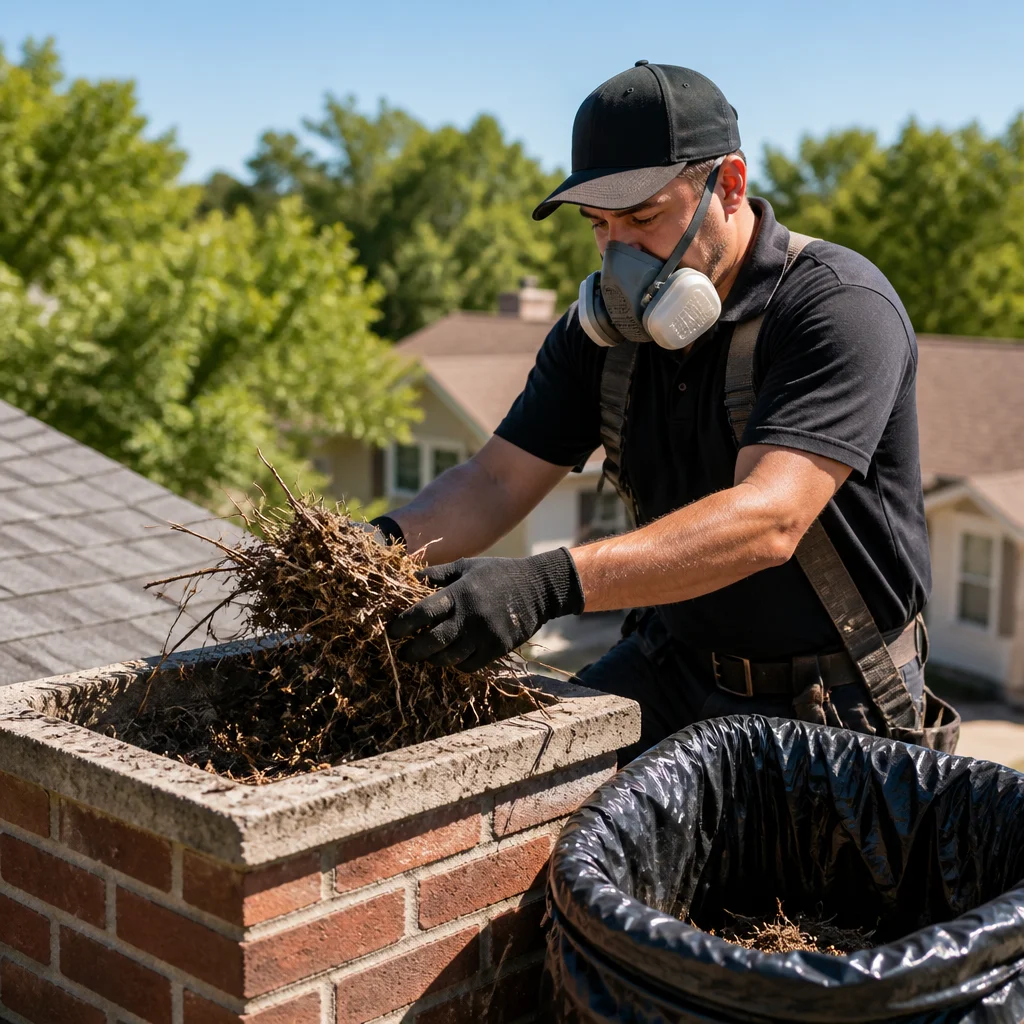
Carbon monoxide poisoning is the most serious safety issue. When your chimney is blocked and you use your fireplace, combustion byproducts can’t escape properly. Carbon monoxide, an odorless, colorless gas, accumulates and enters your living space. Symptoms include headaches, dizziness, nausea, and confusion, but they’re often mistaken for flu or fatigue. Prolonged exposure causes serious health consequences.
Chimney fires present another grave risk. The flammable nesting materials ignite when exposed to the intense heat of an active fire. These fires burn hot and fast, potentially damaging your chimney structure, roof, and home itself. Even a “small” chimney fire can cause cracks in your flue liner that compromise safety for years to come.
Why DIY Bird Removal Can Make Things Worse
We understand the temptation to handle this yourself. Bird nest removal seems straightforward, but it’s genuinely more complicated and dangerous than it appears.
Here’s what goes wrong with DIY attempts:
- Disturbing nesting birds causes them to panic and scatter, making removal messier and potentially allowing birds into your living space
- Climbing on your roof without proper safety equipment creates fall risk, which causes more home injuries annually than most people realize
- Pushing debris down the chimney without proper containment spreads contaminated material into your home or fireplace
- Using makeshift tools or methods can damage your flue liner, damper, or chimney structure itself
- Incomplete removal leaves nesting materials or eggs behind, inviting birds back shortly after
- Working without understanding your chimney’s layout risks damaging connections or creating new problems
Many homeowners who attempt this discover halfway through that they’ve actually made the situation worse. Then they call us to fix both the original bird problem and the damage caused by improper removal. Professional removal costs less than it costs to repair DIY damage plus pay for a professional fix anyway.
Our Professional Bird Debris Removal Process
When you contact us about chimney bird debris removal, we start with a thorough inspection using advanced imaging technology. This tells us exactly what we’re dealing with: nest size, bird species, whether eggs or chicks are present, and the extent of blockage.
Our removal process follows these steps:
- Safety containment – We set up dust control systems and protective barriers to prevent nesting material and droppings from entering your home
- Careful extraction – We remove nesting materials methodically from top to bottom, collecting debris safely rather than pushing it down
- Chimney vacuuming – We use high-powered, HEPA-filtered vacuum systems to eliminate remaining particles and dust
- Damage assessment – We inspect your flue liner, damper, and chimney structure for any damage caused by the nest or blockage
- Debris disposal – All contaminated material is disposed of properly according to local regulations
This approach is thorough, safe, and actually faster than amateur methods. You avoid health risks, property damage, and the frustration of incomplete removal.
Advanced Inspection Technology We Use to Locate Nests
We rely on chimney inspection cameras to see exactly what’s happening inside your flue without guesswork. These high-resolution cameras transmit real-time video, allowing us to navigate through your chimney’s length and identify nest location, size, and composition precisely.
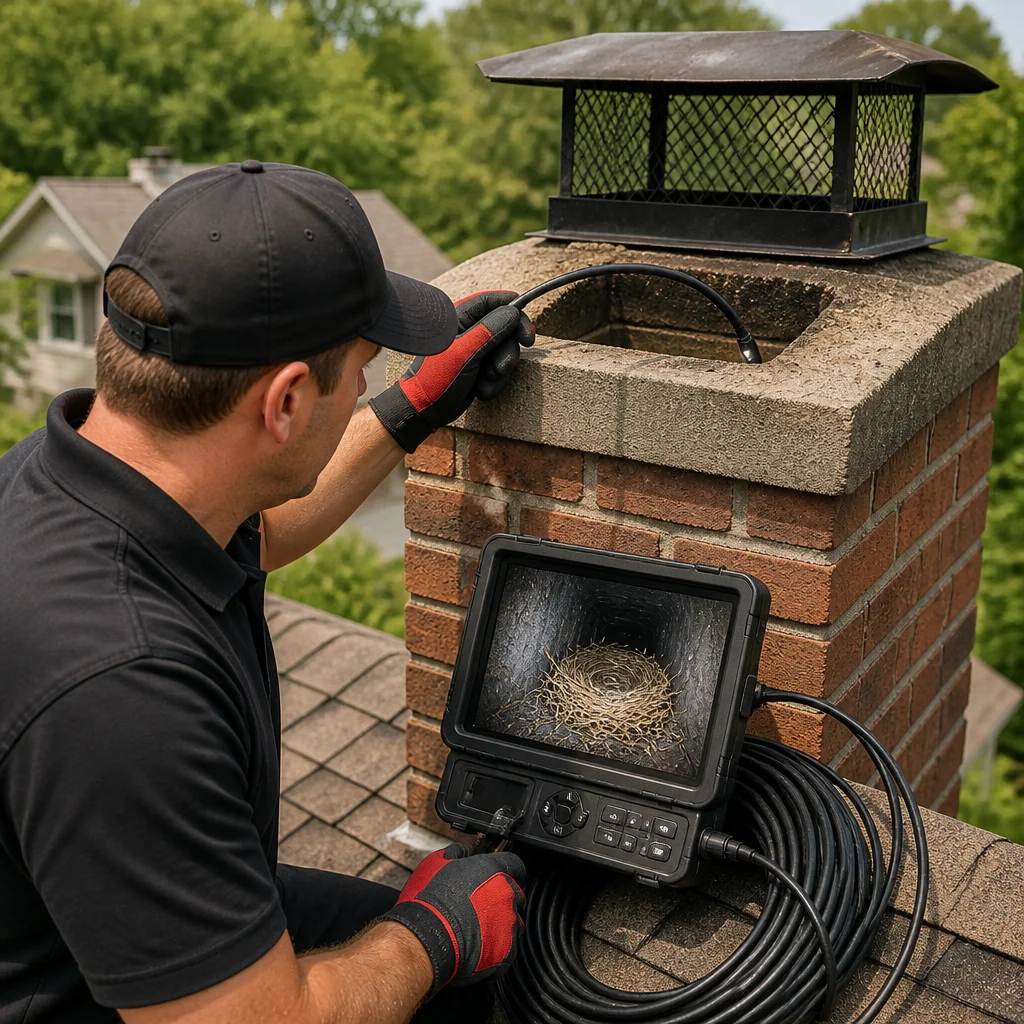
Camera inspection reveals information that’s impossible to gather from outside:
- Exact positioning of nesting material relative to your damper and flue
- Presence of eggs or young birds requiring special handling considerations
- Structural damage to your chimney liner or brickwork
- Creosote buildup or previous damage we need to address simultaneously
- Confirmation that blockage is actually bird-related and not another issue
Having this visual certainty before we begin removal means we work efficiently and make informed decisions about the safest removal approach. It also protects you because we can honestly tell you if your chimney needs repair work beyond nest removal.
Chimney Cap Installation to Prevent Future Nesting
Once we’ve removed the nesting materials, the best defense against repeat problems is chimney cap installation. A properly installed cap prevents birds and other wildlife from entering your chimney while still allowing smoke and gases to escape freely.
Quality chimney caps feature mesh screening designed to keep birds out without restricting airflow. They also keep rain, leaves, and debris out of your flue, reducing overall maintenance needs. Installing a cap is a one-time investment that saves you from potential future bird problems, water damage, and other blockage issues.
We recommend caps for every chimney, particularly if you’ve already experienced a bird problem. Once birds know your chimney is accessible, they remember. A cap makes your chimney an unappealing option compared to natural nesting sites.
How Regular Chimney Maintenance Protects Your Home
Consistent maintenance is your best long-term protection. Chimney cleaning services aren’t just about creosote removal; they include inspections that catch problems before they escalate.
During regular maintenance visits, we:
- Remove creosote and soot that accumulates from fireplace use
- Inspect for damage, deterioration, or structural issues
- Check that your cap, damper, and flue liner are functioning properly
- Spot early signs of animal activity or blockage
- Verify that your chimney system is draft properly
A well-maintained chimney performs better, requires fewer emergency repairs, and is less attractive to nesting birds. Birds prefer neglected chimneys where debris and deterioration have already started problems. Keeping your system in good condition discourages them naturally.
What to Expect During Your Inspection and Removal Service
When you schedule a bird nest removal with us, here’s your timeline. We typically arrive within a few days of your call during busy seasons.
Our technician will:
- Ask about when you first noticed signs and what symptoms you’ve experienced
- Perform the camera inspection we discussed
- Explain findings and answer your questions honestly about what we found
- Discuss whether any additional repairs are needed beyond nest removal
- Outline our removal approach and timeline
- Perform the removal work, which usually takes 2-4 hours depending on nest size and location
- Perform final inspection to confirm complete debris removal
- Recommend preventive measures, particularly cap installation
- Discuss maintenance scheduling to keep problems from recurring
We keep you informed throughout the process. You’re welcome to watch the camera footage and understand exactly what was in your chimney. Transparency is part of our approach; we want you to understand what happened and why professional removal was necessary.
Protecting Your Family and Fireplace Efficiency
Addressing bird nests promptly protects both your family’s immediate health and your fireplace system’s long-term function. A blocked chimney can’t draft properly, meaning your fireplace either won’t work at all or will create dangerous backdrafting situations.
Your fireplace should be a source of comfort and ambiance, not a health concern. Taking action when birds nest in your chimney keeps your family safe and your fireplace ready to use whenever you want it.
If you’ve noticed signs of bird activity in your chimney, don’t delay. Reach out to us for a professional inspection. We’ll identify the problem, remove nesting materials safely, and discuss prevention strategies so this doesn’t happen again. Your home’s safety and your fireplace’s efficiency depend on keeping your chimney clear and functioning properly.
Frequently Asked Questions (FAQ)
Why should we hire professionals instead of removing bird nests ourselves?
When you attempt DIY removal, you risk damaging your chimney’s flue lining, spreading nesting materials deeper into the system, or injuring yourself working at heights. We’ve seen homeowners accidentally create blockages that cost far more to repair than professional removal would have. Our team has the specialized equipment and training to safely extract nests while protecting your chimney’s structural integrity.
How do we prevent birds from nesting in our chimney after removal?
We install chimney caps designed to block bird entry while maintaining proper ventilation for your fireplace. These caps are one of the most effective preventative measures we recommend, and we can install them during your removal service. Without a cap, we find that birds often return to the same chimney within a few months.
What signs should prompt us to call for professional help?
If you hear chirping or scratching sounds from your chimney, notice reduced draft, smell unusual odors, or see nesting materials around your fireplace opening, contact us right away. We use advanced inspection cameras to confirm whether birds are present and assess any damage they’ve caused. The sooner we address the problem, the less likely you’ll experience fire hazards or complete chimney blockages.
