
Table of Contents
- Why Regular Chimney Cleaning Protects Your Home and Family
- Understanding Creosote Buildup and Fire Hazards
- How We Inspect Your Chimney Before Professional Cleaning
- Our Multi-Stage Chimney Sweeping Process
- The Smoke Chamber: Why This Area Demands Special Attention
- Advanced Tools and Techniques We Use for Complete Removal
- What to Expect During Your Professional Cleaning Appointment
- How Our Dust Control System Keeps Your Home Clean
- Signs Your Smoke Chamber Needs Professional Attention
- Why DIY Chimney Cleaning Falls Short of Professional Standards
- Protecting Your Investment: Maintenance After Professional Cleaning
- Schedule Your Professional Chimney Cleaning Today
- Frequently Asked Questions (FAQ)
Why Regular Chimney Cleaning Protects Your Home and Family
Your fireplace brings warmth and ambiance to your home, but it only works safely when your chimney is clean. We’ve seen countless Texas homeowners who didn’t realize how much buildup was happening inside their flues until a professional inspection revealed the problem. Regular chimney and smoke chamber cleaning prevents dangerous conditions from developing silently behind your walls.
When you use your fireplace, combustion byproducts travel up through your chimney. Over time, these deposits accumulate and restrict airflow, which reduces heating efficiency and creates fire hazards. A clean chimney ensures proper draft, better fireplace performance, and most importantly, protection against chimney fires that can damage your home’s structural integrity.
Beyond safety, regular cleaning extends the lifespan of your entire chimney system. When creosote and debris buildup puts pressure on your flue liner and masonry, repairs become more expensive and invasive. Scheduling annual professional cleaning is the most cost-effective way to maintain your investment and keep your family safe during the heating season.
What to do next: If you haven’t had your chimney professionally cleaned in over a year, or if you use your fireplace regularly, schedule a cleaning before winter arrives.
Understanding Creosote Buildup and Fire Hazards
Creosote is the dark, tar-like substance that accumulates inside your chimney. It’s a natural byproduct of burning wood, and it hardens as it cools against your chimney walls. Understanding creosote helps explain why professional chimney and smoke chamber cleaning isn’t optional for safety-conscious homeowners.
There are three stages of creosote buildup:
- Stage 1: A light, flaky deposit that’s easier to remove but still reduces airflow.
- Stage 2: A thick, sticky coating that requires specialized tools and techniques to dislodge.
- Stage 3: A hard, glazed layer that clings to your flue and can only be removed through professional scrubbing methods.
The danger escalates with each stage. Stage 2 and Stage 3 creosote can ignite if temperatures inside your chimney reach the ignition point, potentially causing a chimney fire that spreads to surrounding wood framing and roofing materials. Many homeowners don’t realize a chimney fire has occurred until they notice the damage afterward.
Burning seasoned hardwood and maintaining proper airflow helps minimize creosote formation, but it never eliminates it entirely. Professional removal is the only reliable way to prevent dangerous accumulation.
What to do next: Have a professional inspect your chimney to assess your creosote level. We use advanced cameras to show you exactly what’s inside.
How We Inspect Your Chimney Before Professional Cleaning
We never start a cleaning without understanding the full condition of your chimney system. Our chimney inspection services use advanced camera technology to examine every section of your flue, from the firebox to the top of the chimney.
During our inspection, we look for:
- Creosote thickness and stage of buildup
- Cracks, gaps, or separation in the flue liner
- Blockages from debris, animal nests, or fallen bricks
- Signs of previous chimney fires
- Missing or damaged chimney caps
- Deterioration of mortar joints in masonry chimneys
This detailed assessment allows us to recommend the right cleaning approach and alert you to any repairs needed before or after cleaning. Sometimes we discover that a chimney cap replacement or flue liner repair is necessary before we proceed, and we’ll discuss those options with you clearly.
The inspection video also serves as your before-and-after documentation, so you can see the difference our professional cleaning makes.
What to do next: Ask for a video inspection during your appointment. Seeing the inside of your chimney gives you confidence in the work being done.
Our Multi-Stage Chimney Sweeping Process
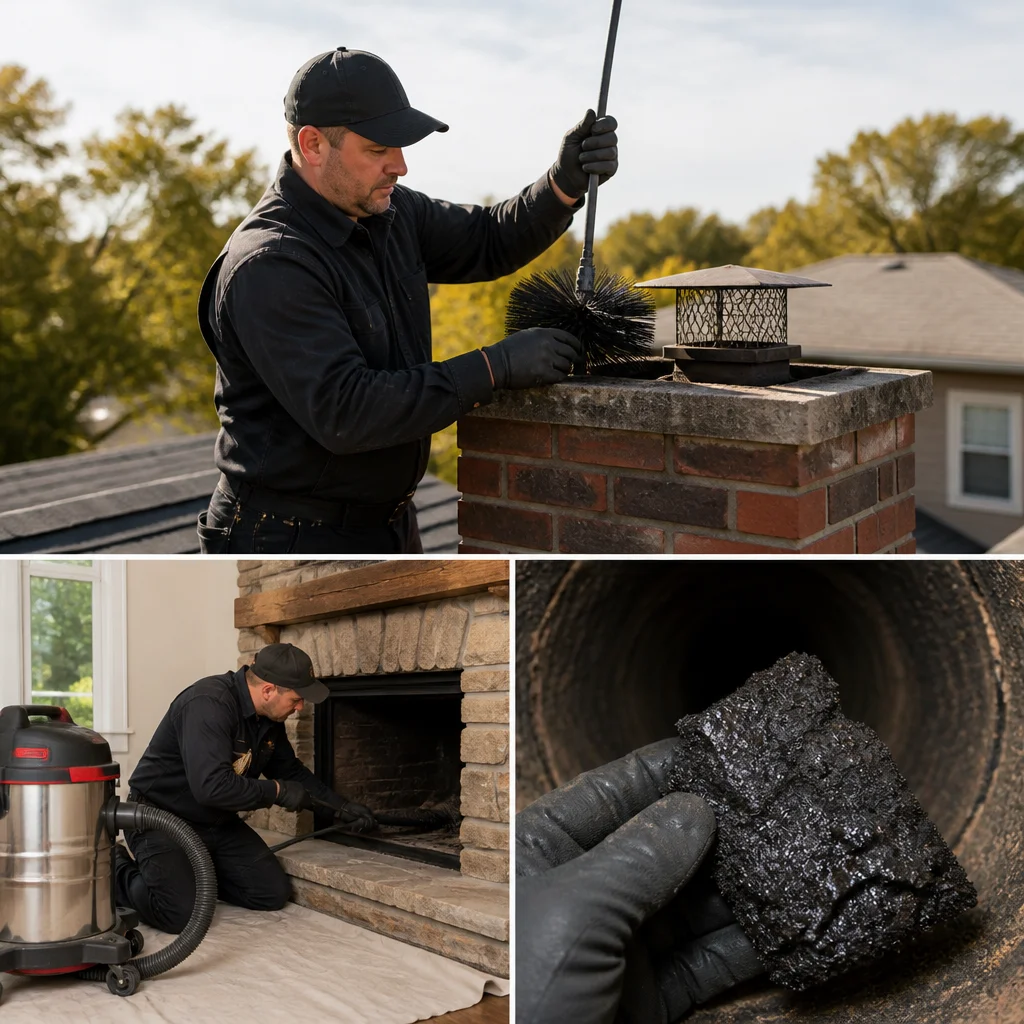
Professional chimney and smoke chamber cleaning requires more than one tool and one technique. Our multi-stage process ensures complete removal of creosote and debris from top to bottom.
Stage 1: Chimney cap and top removal. We safely remove your chimney cap and cover roof areas to protect against debris and dust. This access point allows us to address blockages and begin scrubbing the upper flue section.
Stage 2: Flue scrubbing and brushing. Using rotating brushes sized to match your flue dimensions, we scrub the interior walls to dislodge creosote and buildup. The brush size is crucial for effective contact without leaving areas untouched.
Stage 3: Smoke chamber cleaning. The smoke chamber (the funnel-shaped area above your fireplace) collects debris and creosote differently than the flue. It requires a separate technique using angled brushes and specialized tools.
Stage 4: Firebox and damper inspection. We inspect and clean your fireplace damper and the firebox floor to ensure ash and debris won’t travel into the flue during the next fire.
Stage 5: Vacuum extraction and final cleanup. High-powered suction removes loosened debris from all sections, preventing it from settling back into lower areas or escaping into your home.
Each stage serves a specific purpose. Skipping any step leaves deposits behind.
What to do next: When you call for chimney cleaning services, ask about our multi-stage process so you know you’re getting comprehensive work.
The Smoke Chamber: Why This Area Demands Special Attention
The smoke chamber is the transition area between your fireplace opening and your flue. It’s shaped like an inverted funnel and is prone to collecting more creosote and debris than other areas because it’s where smoke and gases change direction and begin moving upward.
Many homeowners and even some less experienced cleaners overlook the smoke chamber during cleaning. The shape and angles make it challenging to reach with standard straight brushes, so debris accumulates in pockets and corners. This buildup reduces draft efficiency and can eventually force smoke back into your home.
Proper smoke chamber cleaning requires angled and offset brushes, along with techniques that target the sloped walls and throat area. We pay special attention to this zone because we’ve found it’s often the critical difference between adequate cleaning and truly professional work.
A clean smoke chamber improves fireplace performance immediately, and you’ll notice better draft and more efficient heating from your first fire after cleaning.
What to do next: Ask your cleaning technician to show you the smoke chamber before and after. The difference is visible and reassuring.
Advanced Tools and Techniques We Use for Complete Removal
We invest in professional-grade equipment that residential cleaners simply don’t have access to. This makes a measurable difference in how thoroughly we can remove creosote and debris.
Our toolkit includes:
- Flexible fiberglass brushes in multiple diameters to match different flue sizes precisely
- Rotary cleaning systems that apply consistent pressure and rotation for uniform scrubbing
- Offset and angled attachments specifically designed for smoke chambers and transitions
- Inspection cameras with zoom capability to confirm complete removal
- High-powered HEPA vacuum systems (covered separately below) that capture dust before it escapes
We also use technique differences that matter. Professional sweepers know how to apply the right pressure, make multiple passes in problem areas, and use angle changes to dislodge stubborn creosote that’s entered Stage 2 or Stage 3 hardness.
The combination of correct tools and trained technique ensures you’re not paying for a cursory pass through your chimney. You’re getting the removal quality needed for genuine safety and efficiency.
What to do next: Ask if the technician uses professional-grade brushes and a rotary system. This matters more than you might think.
What to Expect During Your Professional Cleaning Appointment
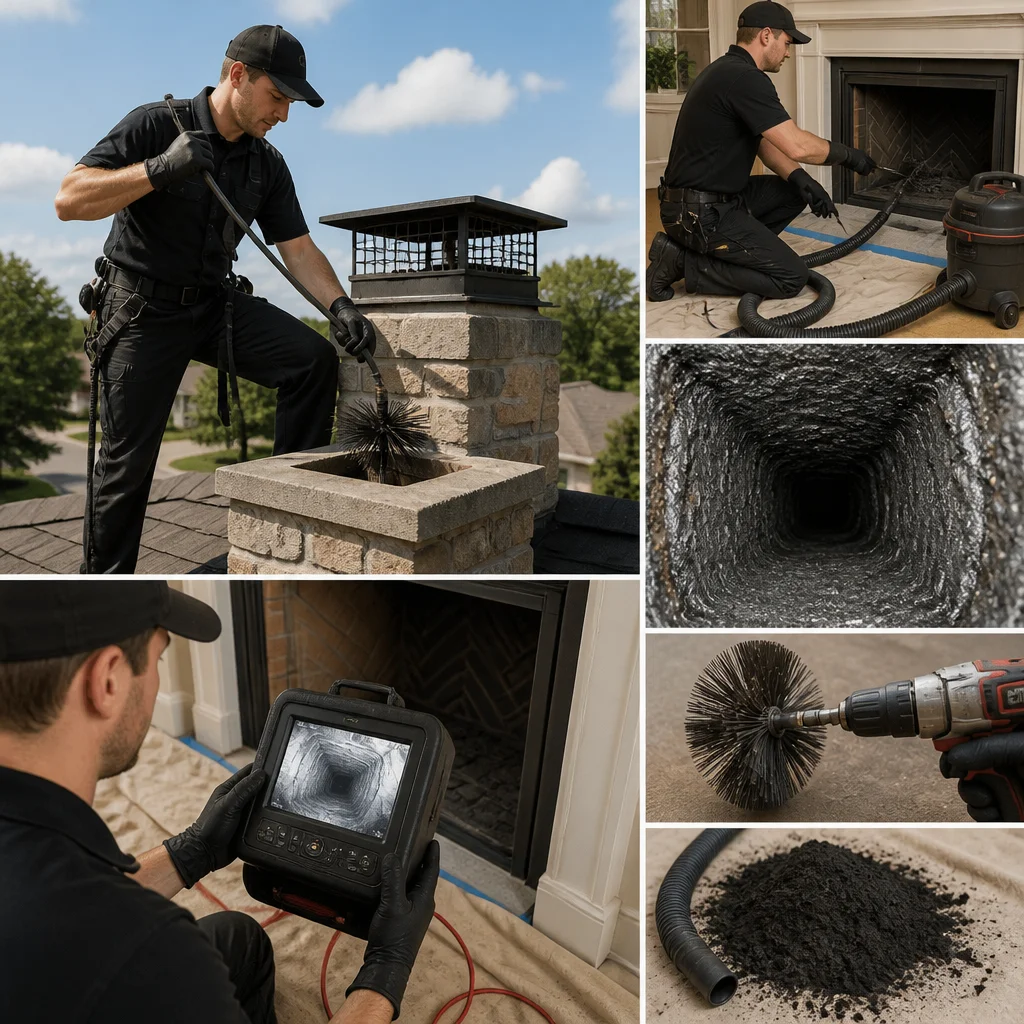
Knowing what to expect removes surprises and lets you prepare your home accordingly. A typical appointment takes 1.5 to 3 hours depending on your chimney’s condition and configuration.
Before we arrive: Clear the area around your fireplace. Pets should be in another room since we’ll have doors and windows open. We’ll do a walkthrough to identify the most efficient setup.
During cleaning: You’ll hear scrubbing sounds and feel air movement as we work. We set up containment at your fireplace opening to limit dust travel. Even with our advanced vacuum system (see next section), you’ll notice some dust, so don’t plan other activities simultaneously.
Our communication: We’ll explain what we’re finding, show you the inspection camera footage, and discuss any repairs or concerns. This transparency helps you make informed decisions about your chimney’s health.
After cleaning: We dispose of all debris, dispose of removed caps and covers, and perform a final inspection to confirm the flue is clear. You’ll receive documentation of the work completed.
What to do next: Prepare to stay nearby during the appointment so you can hear updates and ask questions. This is educational for future reference too.
How Our Dust Control System Keeps Your Home Clean
One major difference between professional cleaning and DIY attempts is dust management. Traditional chimney sweeping creates massive clouds of dust that settle throughout your home. We control this with a high-powered HEPA vacuum system that captures debris at the source.
Our dust control operates on negative pressure, meaning we create suction that pulls loosened creosote and soot directly into our containment system before it becomes airborne. This isn’t a small household shop vacuum; it’s commercial equipment designed specifically for chimney work.
The system also includes:
- HEPA filtration to capture particles as small as 0.3 microns
- Sealed containment at the fireplace opening
- Vacuum-assisted brush heads that combine scrubbing and suction simultaneously
- Protection for your furniture, floors, and HVAC system
You’ll notice dust control immediately when you compare our work to stories you might hear about other cleaning services that leave black soot everywhere. Your home stays livable during the appointment, and cleanup afterward is minimal.
What to do next: Don’t let concerns about mess delay your cleaning. Our dust control makes this a clean, professional process.
Signs Your Smoke Chamber Needs Professional Attention
Sometimes homeowners notice warning signs that indicate their smoke chamber (and full chimney) needs cleaning right away rather than waiting for the annual schedule.
Watch for:
- Smoke backing into the room when your fireplace is operating, even with the damper open
- Reduced draft where fires don’t burn as hot or bright as they used to
- Visible black dust accumulating on your fireplace opening or hearth
- A strong burning smell from your fireplace that persists even when not in use
- Difficulty starting fires or keeping them going steadily
These signs indicate creosote buildup is interfering with normal function. Addressing them promptly prevents further damage and fire risk.
If you’ve used your fireplace several times this season and haven’t had a professional cleaning yet, you likely need one now rather than waiting until next year.
What to do next: Don’t ignore these warning signs. Call for a professional inspection and cleaning right away if you notice any of them.
Why DIY Chimney Cleaning Falls Short of Professional Standards
We understand the temptation to save money with DIY chimney cleaning, but there are real reasons why professionals exist for this work.
DIY limitations include:
- Safety risks: Working on roofs and inside flues carries fall and inhalation hazards without proper equipment and training
- Incomplete removal: Consumer-grade brushes and vacuum equipment can’t reach all creosote, especially in smoke chambers and transitions
- Undetected damage: Without inspection cameras, you won’t know if your flue liner is cracked or if blockages exist below the visible area
- Lack of documentation: You won’t have professional assessment or before-and-after records
- Potential liability: Damage to your chimney during DIY work might not be covered by your homeowner’s insurance
Professional cleaners carry liability insurance, use specialized equipment, and have the training to identify problems that affect your home’s value and safety. We’ve been called to remediate incomplete DIY cleanings that left dangerous creosote deposits and damaged chimney liners.
The investment in professional service pays for itself through safety, efficiency, and avoiding costly repairs.
What to do next: Get a professional quote. The cost is often lower than you expect and far lower than chimney repairs caused by neglect or improper cleaning.
Protecting Your Investment: Maintenance After Professional Cleaning
Your freshly cleaned chimney is a clean slate, but buildup begins immediately with the next fire. Ongoing maintenance protects your investment and keeps your system safe.
Annual cleaning is the standard recommendation if you use your fireplace regularly. If you burn several times a week during winter, you might need cleaning twice yearly. If you rarely use your fireplace, annual cleaning is still recommended to prevent animal entry and moisture accumulation.
Between professional cleanings:
- Use seasoned hardwood (dried for 1-2 years) rather than green or treated wood
- Ensure your chimney cap is intact to prevent animal entry and rain damage
- Have your damper inspected to confirm it opens fully and seals tightly
- Monitor draft quality and any unusual smells during fires
A maintenance mindset keeps small issues from becoming expensive problems. The cost of annual cleaning is minimal compared to flue liner replacement or structural repair.
What to do next: Schedule your next cleaning appointment before you leave this one. This keeps you on track and prevents gaps in maintenance.
Schedule Your Professional Chimney Cleaning Today
Your fireplace brings warmth to your home, but that warmth is only truly safe when your chimney is clean. We’re ready to help you protect your family and your investment with professional chimney and smoke chamber cleaning.
Contact us to schedule your appointment or request a professional inspection. We’ll assess your chimney’s condition with our advanced camera system, discuss any repairs needed, and perform thorough, professional cleaning using proven techniques and equipment.
Your safety is our priority, and your confidence in our work is our guarantee.
Frequently Asked Questions (FAQ)
How often should we have our chimney cleaned and inspected?
We recommend professional chimney cleaning and inspection at least once per year before your heating season begins. If you use your fireplace frequently or burn softwood, we suggest scheduling cleaning twice annually to prevent dangerous creosote accumulation that can lead to chimney fires. Our inspections help us identify any structural issues or blockages that need immediate attention.
Why can’t we just clean our chimney ourselves instead of hiring professionals?
Professional chimney cleaning requires specialized equipment like our high-powered dust control vacuums and advanced inspection cameras that most homeowners don’t have access to. We’re trained to safely navigate the entire flue system, including the smoke chamber, where creosote buildup is most dangerous and difficult to reach. DIY attempts often miss critical problem areas and can actually damage your chimney structure, so we ensure the job is done safely and thoroughly.
What happens if we ignore signs that our smoke chamber needs cleaning?
Creosote buildup in your smoke chamber is highly flammable and significantly increases your risk of chimney fires that can spread to your home’s structure. We’ve seen preventable damage occur when homeowners delay professional attention, resulting in costly repairs to masonry, flue liners, and sometimes the roof itself. Routine cleaning prevents these hazards and keeps your fireplace operating efficiently and safely.
