
Table of Contents
- Why Texas Homeowners Struggle with Chimney Maintenance
- The Safety Risks of Neglected Chimneys
- What Sets Professional Chimney Cleaning Apart
- Our Advanced Inspection Technology and Methods
- Comprehensive Services: Cleaning, Inspection, and Repair
- Why Our Masonry and Flue Repair Expertise Matters
- Chimney Cap Installation and Prevention Solutions
- How Our Safety-Focused Approach Protects Your Home
- The Go Chimney Sweep Difference in Greater Austin
- Choosing the Right Chimney Service for Your Fireplace
- Schedule Your Professional Chimney Inspection Today
- Frequently Asked Questions (FAQ)
Why Texas Homeowners Struggle with Chimney Maintenance
When you light a fire in your fireplace on a cool Texas evening, you probably don’t think much about what’s happening inside your chimney. But behind that cozy scene, a lot can go wrong without proper maintenance. We’ve spent years helping Greater Austin homeowners understand that a well-maintained chimney is the foundation of a safe, efficient fireplace. Whether you’re dealing with creosote buildup, damaged masonry, or simply need a thorough inspection, choosing the right chimney service makes all the difference.
Many homeowners in Texas don’t realize that chimney maintenance isn’t optional. The irregular fireplace use across our state actually creates a unique challenge. You might use your fireplace heavily in January and February, then not at all until November, which means buildup can accumulate unevenly and homeowners often forget about seasonal maintenance.
Texas weather compounds the problem. Our dramatic temperature swings from hot summers to mild winters, combined with occasional heavy rains, create conditions that age chimneys faster than homeowners expect. Exterior masonry deteriorates quickly when exposed to these cycles, and many people simply don’t know when cracks or gaps are developing inside the flue where they can’t see them.
Time and competing priorities round out the picture. Between work, family, and home repairs, chimney cleaning typically lands low on most homeowners’ to-do lists until something goes visibly wrong. By then, years of creosote buildup may already be compromising safety and efficiency.
The Safety Risks of Neglected Chimneys
A neglected chimney poses genuine hazards that go beyond simple discomfort. Creosote accumulation is the most common culprit. This sticky, flammable substance builds up inside your flue every time you burn wood, and if it gets thick enough, it can ignite during a fire. A chimney fire burns extremely hot and can damage your flue liner, crack masonry, or even spread to your home’s structure.
Blockages present another serious risk. Debris, animal nests, or deteriorating flue liners can partially or completely obstruct the chimney, preventing carbon monoxide and other combustion gases from venting safely outside. Carbon monoxide is an odorless, colorless gas that can cause serious illness or death, and a blocked chimney may allow it to seep back into your living spaces.
Structural damage accumulates silently. Cracks in masonry allow water penetration during rain, which freezes and expands in winter, worsening damage over time. Compromised flue liners leak toxic gases and allow heat to transfer to surrounding wood framing, creating fire hazards. Missing or damaged chimney caps let water, animals, and debris enter the system freely.
The good news is that these risks are entirely preventable with regular professional inspection and maintenance.
What Sets Professional Chimney Cleaning Apart
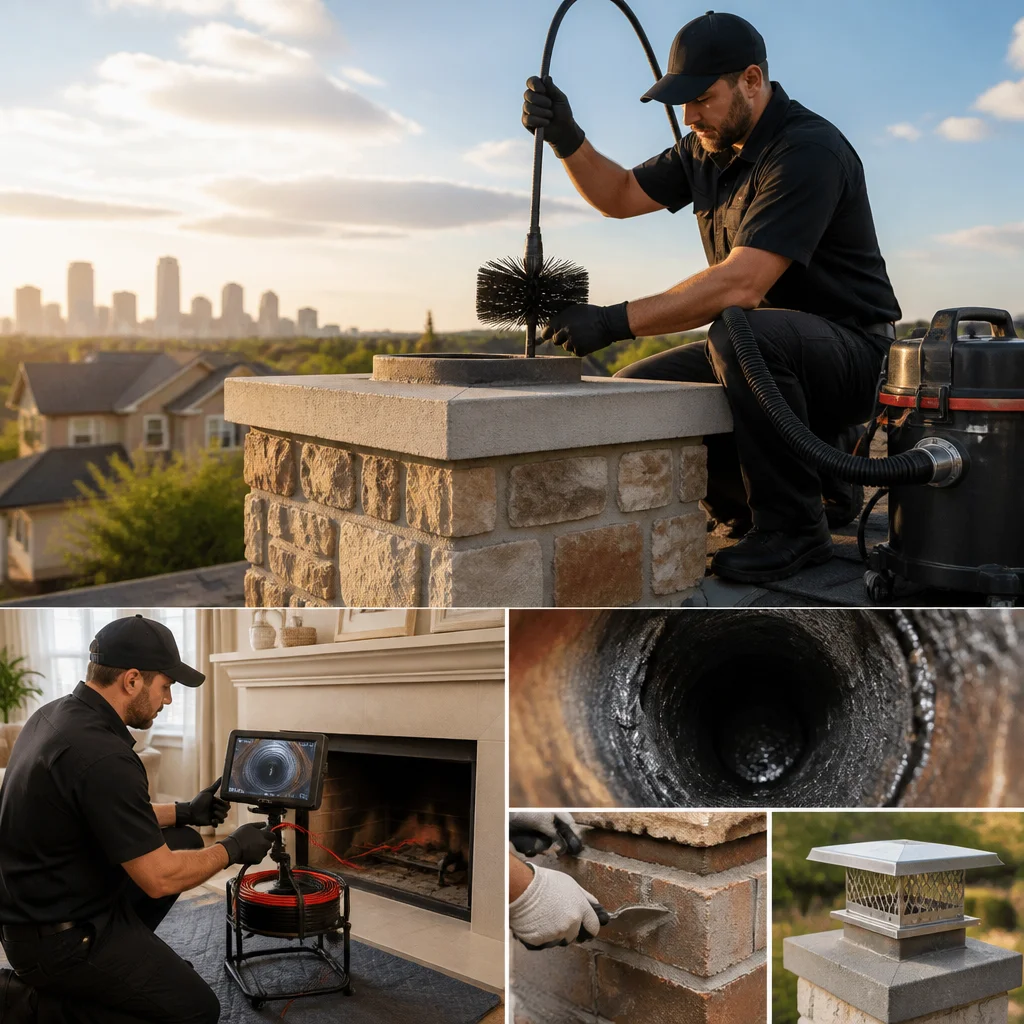
DIY chimney cleaning with consumer-grade brushes and rods simply doesn’t achieve what professional equipment can. We use high-powered dust control vacuums that capture creosote and debris safely without releasing particles into your home. These aren’t the shop vacs homeowners can rent; they’re commercial-grade systems with specialized filters designed specifically for chimney work.
Professional sweeps understand chimney anatomy in ways that matter for safety. Different fireplace types, flue sizes, and venting systems require specific techniques. A traditional wood stove vents differently than a pre-fab fireplace, and our technicians know exactly how to thoroughly clean each configuration without causing damage.
We also carry liability insurance and maintain certifications that protect you. If something unexpected happens during cleaning, you’re covered. More importantly, certified professionals have invested in ongoing training to stay current with building codes, safety standards, and best practices in our industry.
Our Advanced Inspection Technology and Methods
Our inspection cameras give us eyes inside your chimney’s flue where no human can safely go. These high-resolution systems feed real-time video to a monitor, allowing us to document cracks, blockages, creosote buildup, and deterioration with complete accuracy. We don’t guess; we show you what’s actually happening inside your chimney.
This technology transforms inspections from a black-box experience to a transparent partnership. We can point out exactly where a crack is located, how extensive it is, and what caused it. You see the same footage we do, so you understand the recommendations we make and the urgency behind them.
Our systematic approach means nothing gets missed. We inspect the chimney cap condition, scan the entire flue from top to bottom, check for blockages, assess masonry integrity, and evaluate the damper function. When an inspection is complete, you have a comprehensive picture of your chimney’s actual condition.
Comprehensive Services: Cleaning, Inspection, and Repair
We handle the full spectrum of chimney care under one roof. Our professional chimney cleaning services remove creosote and debris safely and thoroughly, using equipment and techniques that protect your home and belongings. We combine brushing, vacuuming, and specialized tools to achieve results that make a real difference in fireplace performance and safety.
Inspections are the cornerstone of preventive care. We recommend a Level 1 inspection annually if you use your fireplace regularly. This basic inspection checks flue integrity, looks for blockages, and ensures the chimney is functioning properly. If we spot issues or you haven’t had the chimney inspected recently, we recommend a Level 2 inspection with camera access to examine the entire flue interior and diagnose problems accurately.
Repairs bridge the gap between inspection findings and a safe chimney. Creosote buildup requires cleaning. Blockages need removal. Damaged components need restoration or replacement. We handle masonry repairs, flue liner issues, damper problems, and more.
Why Our Masonry and Flue Repair Expertise Matters
Masonry isn’t simply decorative on your chimney; it’s structural. Cracks in brick or mortar allow water inside, which compromises the flue liner underneath and damages the chimney’s integrity. We have the expertise to repoint mortar, patch cracks, and rebuild damaged sections properly.
Flue liners deserve special attention because they’re critical to safety. These liners contain combustion gases and heat inside the chimney, preventing damage to surrounding masonry and home structure. When a flue liner cracks or deteriorates, gases and heat can escape, creating fire hazards. We assess liner condition during every inspection and repair or replace damaged sections to restore full safety.
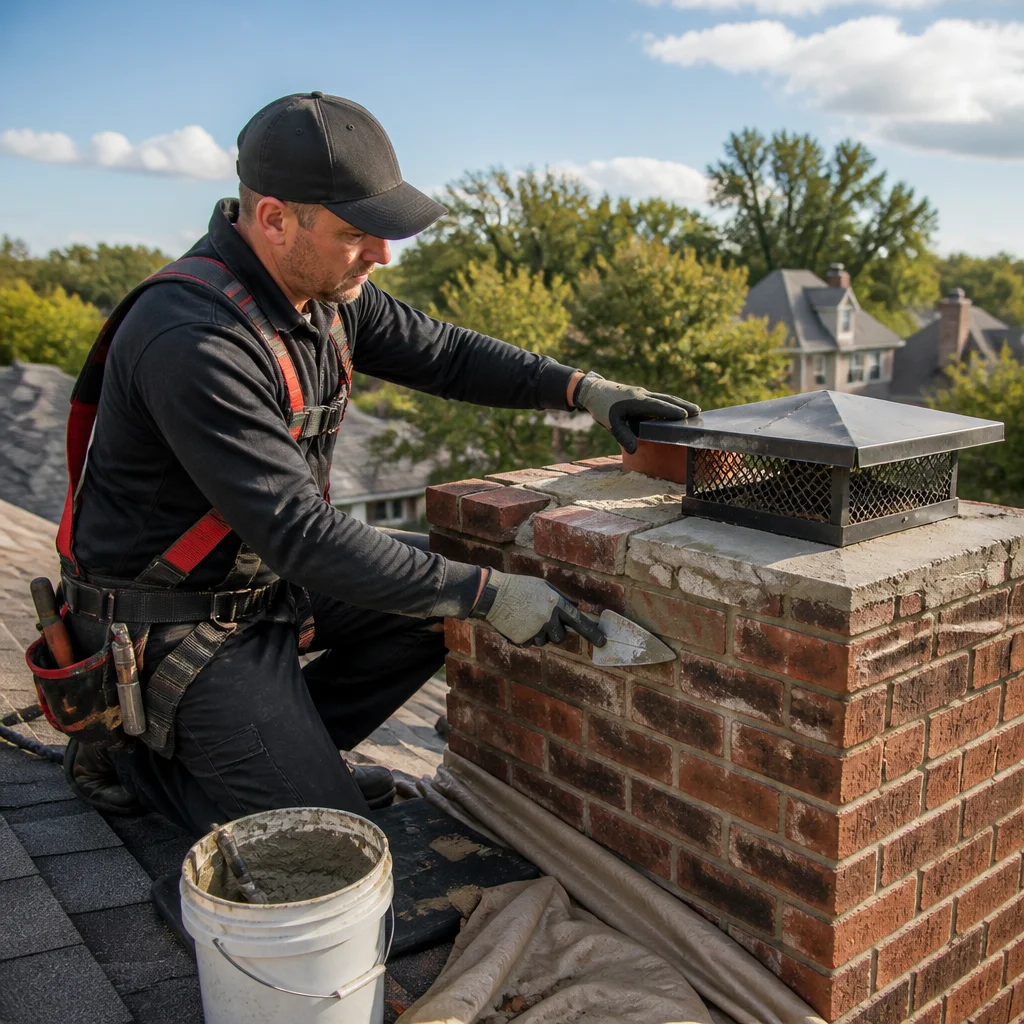
Our technicians understand that repairs must meet current building codes, which have evolved significantly. Modern standards ensure better safety margins and longer-lasting results than older methods. We stay current with these requirements so your repairs are both safe and durable.
Chimney Cap Installation and Prevention Solutions
Your chimney cap installation is one of the most effective investments for preventing future problems. A quality chimney cap keeps rain out, prevents animals from entering, and stops downdrafts that can push smoke into your home. We install caps that are properly sized, securely fastened, and matched to your chimney’s specifications.
Many homeowners underestimate how much damage water causes over time. A missing or damaged cap allows rain to pour directly into your flue, soaking the interior and accelerating deterioration. Animals also find open chimneys attractive, nesting inside and blocking proper venting. A cap solves both problems simultaneously.
Prevention through regular maintenance also includes ensuring your damper operates smoothly and checking that your chimney structure drains properly. These details prevent costly repairs down the road.
How Our Safety-Focused Approach Protects Your Home
We believe safety isn’t negotiable in chimney service. Our process prioritizes protecting your family and home at every step. We use containment systems during cleaning to prevent debris from entering your living space. We lay drop cloths and work carefully around your furnishings and decor.
Our inspections err on the side of caution. If we see something that could potentially be a problem, we explain it clearly and recommend appropriate action. We don’t push unnecessary services, but we don’t minimize legitimate concerns either. You get honest assessment and recommendations you can trust.
We also educate homeowners about safe fireplace practices. These include using seasoned hardwood (not green or treated wood), maintaining a clean flue, keeping the damper open while fires burn, and never leaving fires unattended. Small habits make a real difference in both safety and efficiency.
The Go Chimney Sweep Difference in Greater Austin
We’ve built our reputation in the Greater Austin area by doing consistent, thorough work that homeowners can depend on. We’re not the biggest national chain, and that’s intentional. We know the specific climate challenges Austin homeowners face, we understand local building codes, and we maintain relationships with customers over years, not just transactions.
Our team is locally trained and familiar with the full range of chimney types common in our area, from historic brick fireplaces to modern pre-fab systems. We’ve learned what works for older Austin homes and what problems newer construction tends to develop.
We also stand behind our work with professionalism and follow-up. If you have questions after service, we’re here to answer them. We’re invested in your long-term chimney health, not just a one-time visit.
Choosing the Right Chimney Service for Your Fireplace
When evaluating chimney services, look for certification, insurance, and transparent communication. Ask about inspection methods. Does the company use cameras to document findings? Can they show you what’s actually happening inside your chimney? Request references and check reviews, but also value a local company with deep community roots.
Pricing matters, but it shouldn’t be the only factor. The cheapest option often cuts corners on equipment, training, or thoroughness. A slightly higher investment in professional service often saves money later by catching problems early and preventing costly emergency repairs.
Ask about the technician’s experience and whether they’re trained to handle your specific fireplace type. Some services specialize in certain chimney configurations. Make sure whoever you hire understands your system.
Schedule Your Professional Chimney Inspection Today
Your fireplace is an investment in comfort and your home’s value. It deserves professional care from people who take safety seriously. If you’re in the Greater Austin area and your chimney hasn’t been inspected in over a year, or if you’ve noticed any warning signs like smoke backup or unusual odors, reach out to us today.
We’d be happy to schedule an inspection and give you a clear picture of your chimney’s condition. Contact Go Chimney Sweep to book your appointment and take the first step toward a safer, more efficient fireplace.
Frequently Asked Questions (FAQ)
How often should I have my chimney inspected and cleaned?
We recommend our customers have their chimneys inspected and cleaned at least once per year, ideally before the heating season begins. If you use your fireplace heavily or burn multiple fires per week, we suggest scheduling service more frequently to prevent dangerous creosote buildup. Our inspections help us catch structural issues early, so you can address them before they become costly repairs.
What makes professional chimney cleaning different from DIY cleaning?
We use advanced inspection cameras and high-powered dust control vacuums that safely remove creosote and debris without damaging your chimney or spreading soot throughout your home. Our technicians are trained to identify hidden problems like flue damage, deteriorating mortar, and blockages that homeowners typically miss. Professional cleaning also eliminates fire hazards and improves your fireplace’s efficiency, which DIY methods simply cannot accomplish safely.
What should I do if my chimney inspection reveals damage?
We’ll provide you with a detailed assessment and recommend the specific repairs needed, whether that involves masonry work, flue relining, or chimney cap installation. Our team handles everything from minor repairs to comprehensive restoration, so you don’t need to coordinate with multiple contractors. We focus on addressing problems promptly to prevent further deterioration and keep your chimney operating safely for years to come.
