
Table of Contents
- Why Hardened Creosote Threatens Your Historic Chimney
- Understanding Creosote Buildup in Historic Liners
- Our Professional Creosote Removal Process
- Advanced Equipment We Use for Safe Removal
- Comparison of Removal Methods and Why Ours Stands Out
- How We Protect Historic Chimney Integrity During Cleaning
- Prevention Strategies After Professional Removal
- Signs Your Historic Chimney Needs Creosote Removal Now
- Trusting Our Expert Team with Your Historic Chimney
- Frequently Asked Questions (FAQ)
Why Hardened Creosote Threatens Your Historic Chimney
Historic fireplaces are a cherished feature in many Texas homes. They add character, warmth, and charm that modern heating systems simply can’t replicate. But owning a home with a historic chimney comes with real maintenance responsibilities, particularly when it comes to creosote buildup. Hardened creosote isn’t just a minor cleaning concern—it’s a safety issue that demands professional attention.
When wood burns in your fireplace, it releases smoke containing volatile compounds. As that smoke cools inside your chimney, it condenses and sticks to the liner walls as a dark, sticky substance called creosote. Over time, especially with regular fireplace use, this buildup hardens into layers that pose several serious threats.
Hardened creosote is highly flammable. A chimney fire can reach temperatures exceeding 2,000 degrees Fahrenheit, potentially damaging your liner, spreading to your home’s structure, and putting your family at risk. Beyond fire risk, thick creosote deposits restrict airflow, which reduces your fireplace’s heating efficiency and allows toxic gases like carbon monoxide to back up into your living space.
Historic chimney liners are particularly vulnerable. Many older chimneys use clay tile liners that are more porous and brittle than modern alternatives. Hardened creosote puts extra stress on these aging materials, potentially causing cracks that lead to moisture infiltration, structural deterioration, and costly repairs down the line. We’ve seen firsthand how neglected creosote buildup transforms a beautiful historic fireplace into a liability.
The longer you wait, the thicker the creosote becomes, and the harder it is to remove safely without damaging your historic liner.
Understanding Creosote Buildup in Historic Liners
Creosote forms in three distinct stages, each requiring different removal approaches. Stage 1 is a light, powdery black substance that’s relatively easy to sweep away with standard chimney brushes. Most homeowners don’t notice this stage because it doesn’t significantly impact performance.
Stage 2 creosote is thicker and stickier. It begins to form a hard, glazed coating on your liner walls. This is where many historic chimney owners first realize they have a problem, often after noticing reduced draft or a stronger smell from their fireplace.
Stage 3 is hardened creosote—thick, tar-like deposits that have fused to the liner surface. This is what we’re addressing in this article. Removing it requires specialized techniques and equipment to avoid damaging the delicate historic clay tile liners that many Texas homes feature.
Historic liners compound the challenge because their surface is rougher and more porous than modern stainless steel liners. Creosote bonds more aggressively to these surfaces, and aggressive removal methods can chip, crack, or dislodge tiles. The solution requires technique, patience, and the right tools.
Our Professional Creosote Removal Process
We begin every chimney liner maintenance project with a thorough video inspection using advanced inspection cameras. This allows us to see exactly what we’re dealing with—the thickness of the creosote, the condition of your historic liner, and any existing damage we need to work around. Understanding your specific situation guides our entire approach.
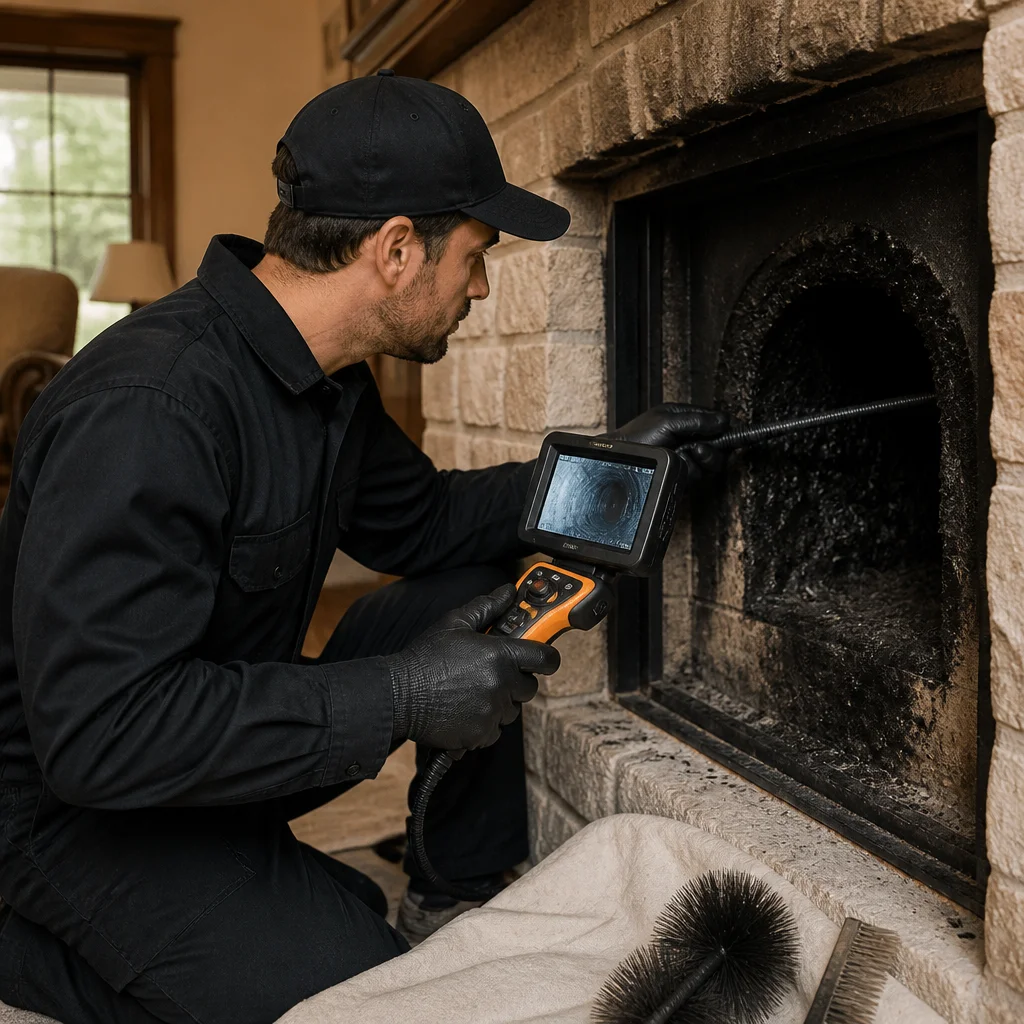
Once we’ve assessed the buildup, we use a multi-step process designed specifically for historic chimneys. We start with chemical treatment applied to the hardened creosote, which begins breaking down the bond between the deposit and your liner. We let this work for a period of time rather than immediately attacking the buildup mechanically.
Next, we carefully remove the loosened creosote using specialized hand tools and soft-bristled techniques that work with your historic liner rather than against it. Our technicians are trained to feel the difference between creosote and liner material, removing deposits without gouging or damaging clay tiles.
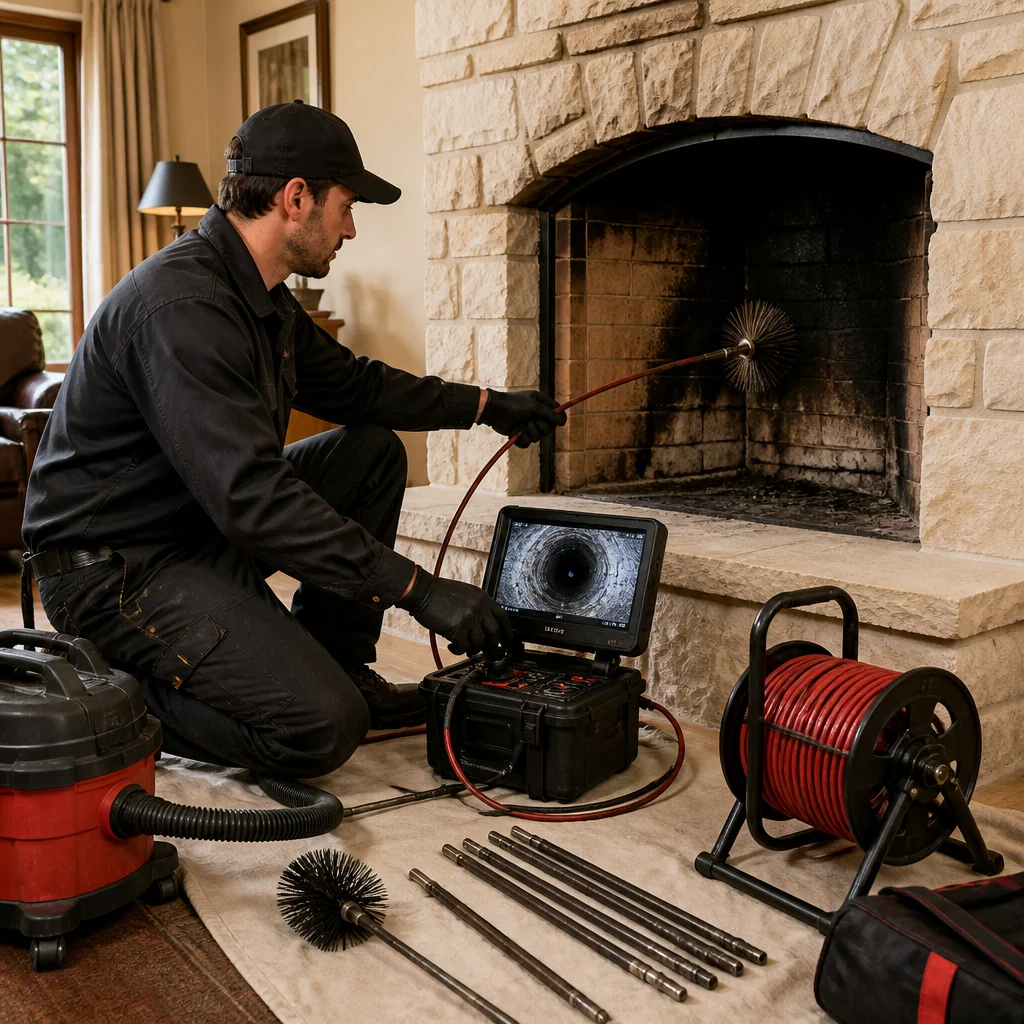
Throughout this process, we use high-powered dust control vacuums that capture creosote particles at the source, protecting your home’s interior from contamination and ensuring a clean workspace. The entire removal is done from top-down, with careful containment of debris to keep your home safe and your floors clean.
Advanced Equipment We Use for Safe Removal
Our specialized equipment sets our service apart, particularly when working on historic chimneys that demand gentler handling than modern installations.
Our inspection camera system gives us real-time visibility of your entire flue, detecting creosote thickness, liner condition, and any structural issues before we begin removal. This prevents surprises and allows us to adjust our approach if we encounter unexpected damage.
High-powered dust control vacuums with HEPA filtration capture creosote particles before they escape into your home. Traditional chimney sweeping can distribute fine creosote dust throughout your living space and into your HVAC system. Our containment approach protects your family’s health and keeps your home cleaner.
We employ chemical creosote softeners specifically formulated to break down hardened deposits without harming historic clay tile liners. These products work differently than aggressive mechanical removal, making them ideal for delicate historic construction.
Our soft-bristled chimney brushes and specialized hand tools allow precise, controlled removal without the risk of gouging or cracking historic tiles. We prioritize technique over brute force, which is the only safe approach for chimneys over 50 years old.
Comparison of Removal Methods and Why Ours Stands Out
Several creosote removal methods exist, but not all are appropriate for historic chimney liners. Understanding the differences helps explain why we’ve built our process around historic chimney safety.
Rod-and-brush methods use long rods with rotating brushes, applied with significant mechanical force. While effective for modern stainless steel liners, this approach risks damaging historic clay tiles. The spinning action can dislodge tiles and create cracks that compromise your chimney’s structural integrity.
Power sweeping systems use compressed air to drive brushes up and down the chimney with considerable force. Again, this works for newer construction but can cause significant damage to brittle historic liners.
Wire brush techniques are even more aggressive and should never be used on historic clay tile liners. The abrasive action can permanently damage the tiles and accelerate deterioration.
Our chemical-assisted hand removal approach takes time but protects your chimney. By softening deposits first and using gentle manual removal, we eliminate hardened creosote without risking your historic liner’s integrity. Yes, it takes longer than aggressive mechanical methods. But you’re paying for protection and precision, not speed.
For historic chimney cleaning in Central Texas, this thoughtful approach is the only way to ensure you’re preserving the structure you’re cleaning.
How We Protect Historic Chimney Integrity During Cleaning
Protecting your historic chimney during creosote removal requires constant attention and skilled workmanship.
We start by carefully assessing the condition of your liner before any removal work begins. If we identify cracked or loose tiles, we adjust our technique further, potentially using even gentler methods in those areas. Sometimes, if damage is severe, we discuss whether relining might be necessary before proceeding.
Our technicians receive specific training in historic chimney care. They understand the different materials used in older construction, recognize signs of stress, and know when to pause and reassess rather than pushing forward with standard techniques.
We avoid high-pressure water washing on historic liners, which can force moisture deep into porous clay and create freeze-thaw damage in Texas winters. Instead, we use dry removal methods that eliminate the creosote without introducing moisture into aged materials.
After creosote removal, we conduct a final inspection to confirm the liner is clean and undamaged. We document the condition with photos and video, giving you confidence that your chimney is safe and your historic structure has been preserved.
Prevention Strategies After Professional Removal
Once we’ve removed hardened creosote from your historic chimney, maintenance becomes your partner in protecting that investment.
Burn seasoned hardwood exclusively. Green or wet wood creates more smoke and faster creosote buildup than properly dried wood. Ideally, burn wood that’s been cut and stacked for at least six months, with moisture content below 20%. This single change dramatically reduces creosote formation.
Use your fireplace consistently but mindfully. Short, infrequent fires that don’t heat your chimney adequately create cooler flue temperatures where creosote condenses faster. If you use your fireplace regularly during winter, you’re maintaining the right temperatures for efficient burning.
Have your chimney inspected annually, particularly if you live in the Greater Austin area or other Central Texas communities where seasonal use of fireplaces is common. Regular inspections catch creosote at Stage 1 or early Stage 2, before it hardens into the problematic buildup we’ve just removed.
Consider chimney cap installation if you don’t already have one. A quality cap prevents rain, debris, and animal nesting material from entering your flue while allowing smoke to escape freely. It’s one of the simplest investments you can make in chimney longevity.
Signs Your Historic Chimney Needs Creosote Removal Now
Several warning signs indicate your historic chimney needs professional attention. Don’t wait for an obvious problem to develop.
A smoky smell from your fireplace, especially when it’s not in use, suggests creosote buildup is restricting airflow. The smell often intensifies on humid days when the buildup absorbs moisture.
Reduced draft or difficulty getting fires to start and sustain combustion are classic signs of creosote blocking your flue. If your fires burn sluggishly or require excessive coaxing, creosote is likely the culprit.
Visible dark, shiny deposits on the inside of your fireplace opening or visible creosote staining on the exterior of your chimney indicate significant buildup. At this point, you’re definitely past routine maintenance into removal territory.
Hearing crackling or popping sounds from your chimney during or after fires may indicate creosote deposits being heated and shifting. While not every noise means an immediate danger, it’s a sign to schedule an inspection promptly.
If your fireplace hasn’t been professionally cleaned in over a year, or you’re uncertain about its maintenance history, don’t delay in scheduling service. We provide chimney cleaning professionals in Round Rock and throughout Central Texas for exactly this reason.
Trusting Our Expert Team with Your Historic Chimney
Your historic chimney deserves expert care from technicians who understand both the structure’s age and the modern safety standards it must meet.
We’ve spent years perfecting our approach to removing hardened creosote from historic liners because we recognize that one-size-fits-all methods simply don’t work. Your 80-year-old clay tile liner requires different handling than a modern stainless steel flue, and we’ve built our entire process around that reality.
Our commitment to combining professional inspection technology, specialized equipment, chemical treatment protocols, and hand-guided removal technique means you’re getting the safest, most effective creosote removal available for historic Texas chimneys. We protect your home’s safety, preserve your chimney’s structure, and restore your fireplace’s efficiency all in one comprehensive service.
If you’re noticing signs of creosote buildup or simply want to schedule your annual inspection, contact us today. We’re ready to help you maintain this beautiful, historic part of your home.
Frequently Asked Questions (FAQ)
What methods do we use to remove hardened creosote from historic chimney liners?
We combine high-powered rotary cleaning tools with our advanced dust control vacuum system to safely break down and extract stubborn creosote deposits without damaging your liner’s integrity. Our team uses specialized brushes calibrated for historic materials, and we inspect the work with our camera system to ensure complete removal. For particularly severe buildup, we may recommend a staged cleaning approach that protects the structural integrity of older liners.
How do we know if my historic chimney needs creosote removal right now?
We perform a comprehensive video inspection using advanced camera technology to assess creosote accumulation levels inside your flue and identify any buildup that creates fire hazards. If we detect more than one-eighth inch of creosote or notice glazed buildup that indicates higher fire risk, we’ll recommend immediate cleaning. We’ll show you the inspection footage so you can see exactly what we found.
What happens to my historic chimney during the cleaning process to prevent damage?
We tailor our approach specifically to your chimney’s age and materials, using gentler techniques for older liners while maintaining full cleaning effectiveness. Our team is trained in the unique vulnerabilities of historic masonry and flue systems, and we use protective coverings to prevent debris from entering your home. After cleaning, we document the work with camera footage and provide you with recommendations to keep your historic chimney safe and functional.
