
Table of Contents
- Why Chimney Debris Matters for Texas Homeowners
- The DIY Approach: Risks and Limitations
- Our Professional Debris and Nest Removal Process
- Advanced Equipment and Safety Standards We Use
- Comprehensive Inspection Capabilities You Get With Us
- Preventing Future Bird Nests and Debris Buildup
- Cost Comparison: Hidden Expenses of Going Alone
- Why Go Chimney Sweep Is Your Best Choice
- Peace of Mind Comes With Professional Service
- Frequently Asked Questions (FAQ)
Why Chimney Debris Matters for Texas Homeowners
Chimneys are meant to be conduits for smoke and gases leaving your home, not storage units for debris. Yet that’s exactly what happens when leaves, twigs, bird nests, and sediment accumulate inside your flue. For Texas homeowners, particularly those in the Hill Country with older masonry chimneys, this buildup creates real safety and efficiency problems.
Debris restricts airflow, which means smoke and carbon monoxide can back up into your living space. It also creates a perfect environment for creosote (a flammable byproduct of burning wood) to stick around longer and build up faster. When creosote layers get thick enough, they become a chimney fire waiting to happen. Beyond fire risk, blockages reduce your fireplace’s heating efficiency, forcing your heating system to work harder during cold months.
Birds love chimneys for nesting, especially in spring and early summer. A chimney with an unprotected opening is an open invitation. Once a nest establishes, it doesn’t just sit there quietly. Nesting materials deteriorate, mix with other debris, and eventually pack down, creating a solid obstruction. We see this scenario regularly across the Austin and Hill Country areas, and it’s preventable with the right approach.
The first step is understanding what’s actually in there. Debris ranges from harmless leaves to hazardous nests to structural damage inside the flue. Ignoring it doesn’t make it go away; it compounds the problem over time.
The DIY Approach: Risks and Limitations
The appeal of DIY chimney debris removal is straightforward: save money and handle it yourself. The reality is far more complicated and potentially dangerous.
Climbing on your roof to peer into the chimney opening introduces immediate risks. Falls from heights account for thousands of injuries annually, and a steep-pitched roof in wet or windy conditions multiplies that danger. Beyond the fall risk, you can’t see what’s actually blocking your chimney without proper equipment. A flashlight from above tells you almost nothing about obstructions deeper in the flue.
Using standard tools like a plumbing snake or improvised rod can damage your chimney liner, especially if it’s clay tile or metal. A damaged liner means smoke and gases can escape into your walls and attic, creating carbon monoxide and fire hazards that are far costlier to fix than preventive cleaning. You also won’t know if you’ve actually removed everything or just pushed debris down, which can then resettle.
Handling bird nests and related materials yourself introduces health concerns. Bird droppings can harbor histoplasmosis and other pathogens. Without proper respiratory protection and containment, you’re exposing yourself and potentially your home’s interior to contamination.
DIY removal also leaves you with no inspection data. You won’t know the condition of your flue liner, whether cracks or gaps exist, or what your chimney’s structural integrity really is. You’re essentially flying blind, hoping that what you removed was the only problem.
What to do next: Before considering any DIY attempt, call a professional for an initial assessment. The cost is minimal compared to the liability and potential damage.
Our Professional Debris and Nest Removal Process
We approach every debris removal job with a systematic process designed to be thorough, safe, and protective of your chimney system.
First, we conduct a visual inspection from the roof and ground level, assessing what we’re dealing with. Is it a bird nest, accumulated leaves and twigs, creosote buildup, or a combination? This initial look determines our specific approach. For nests, we’re careful to check timing and local regulations around nesting birds to ensure humane handling.
Next, we use specialized brushes and rods sized appropriately for your chimney’s dimensions and construction. Our tools are designed to clean without causing damage. We work from the top down, systematically dislodging debris and moving it toward the fireplace opening where our advanced dust control systems capture it before it enters your home.
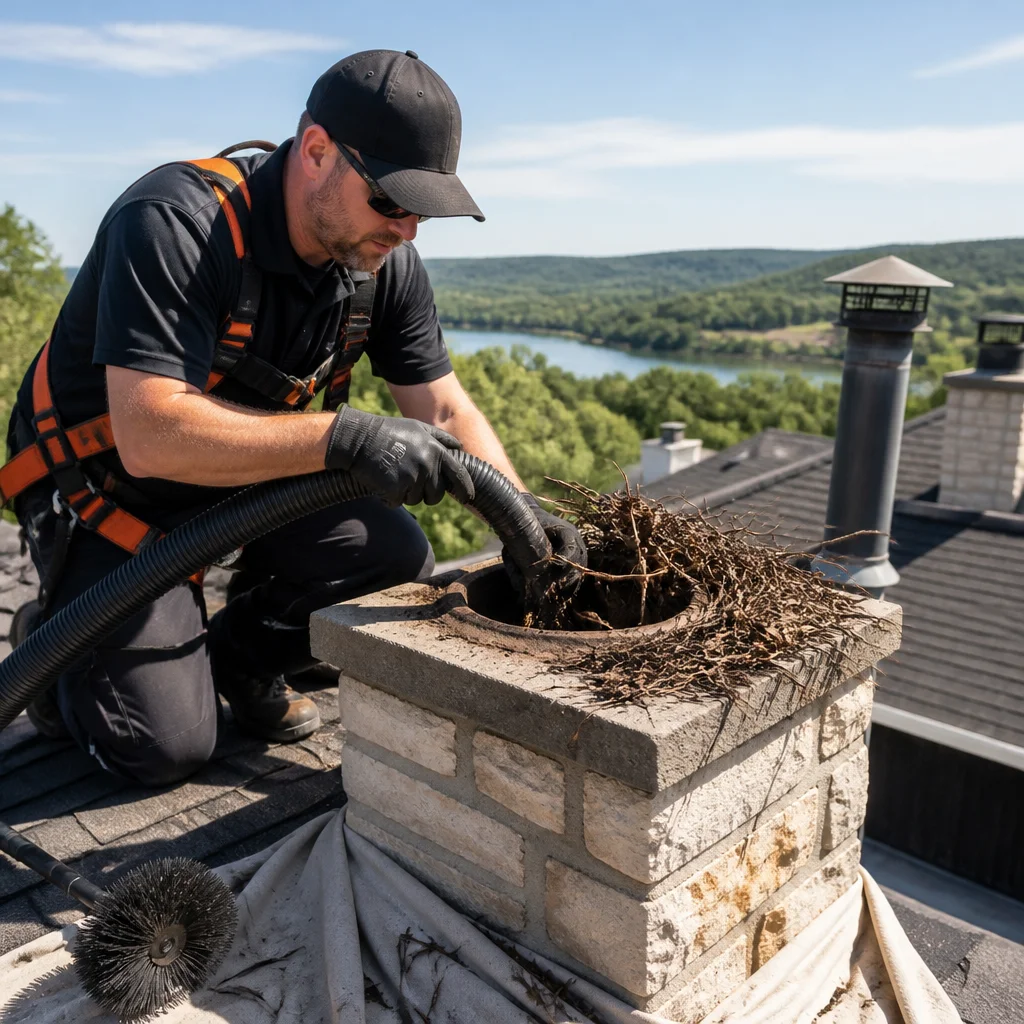
For stubborn buildup, we may use rotating brush systems that agitate deposits without forcing equipment into tight spaces where it could cause damage. Every stroke is controlled and purposeful. We’re not just pushing things around; we’re actually removing material from your flue.
Once the main debris is cleared, we perform a secondary cleaning pass to catch any residue. This two-stage approach ensures completeness. Finally, we apply our dust control equipment to capture any particles and prevent them from settling into your home’s air or on furniture.
Bird nests require special handling. Beyond simple removal, we make recommendations for prevention afterward. Stopping future nests before they start saves you from repeating this process year after year.
The entire process takes 1-3 hours depending on debris volume and chimney condition. You’re left with a clear flue and detailed findings about what we removed and what condition your chimney is in.
Advanced Equipment and Safety Standards We Use
We invest in professional-grade equipment because your safety depends on it. Standard consumer tools simply don’t meet the demands of chimney work.
Our high-powered dust control vacuums are HEPA-equipped, capturing particles as small as 0.3 microns. This means creosote dust, soot, and other fine contaminants stay out of your breathing air and off your floors. The vacuum systems connect directly to our cleaning equipment, creating a closed-loop process that keeps your home clean during the job.
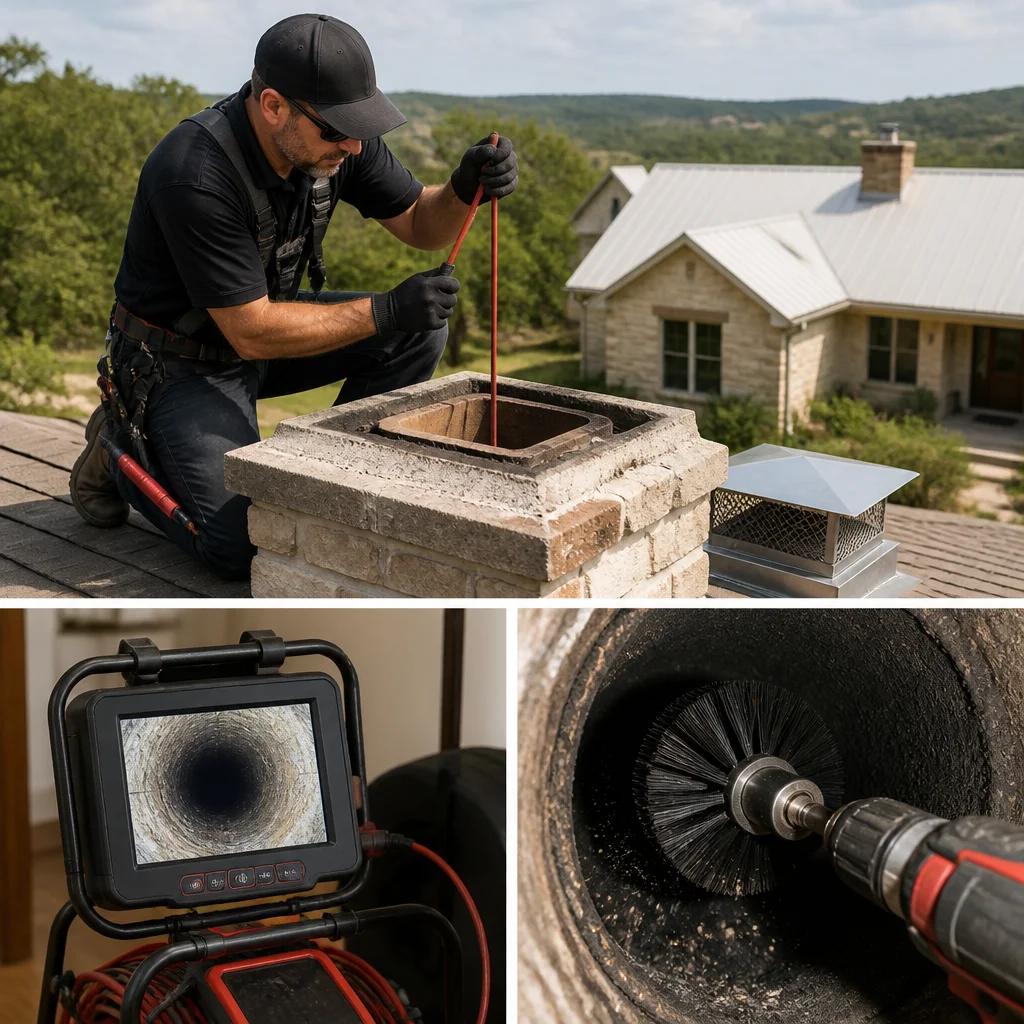
Our inspection cameras allow us to see inside your flue in detail without guesswork. We can identify cracks, gaps, buildup patterns, and obstruction locations with precision. These images become part of your service record, giving you documentation of your chimney’s condition.
For brush systems, we use sizes and materials matched to your specific chimney type. Masonry chimneys, metal liners, and tile-lined flues all require slightly different approaches. Using the wrong brush could scratch a metal liner or dislodge clay tile. We know the difference and choose appropriately every time.
Our technicians are trained to work safely at heights and in confined spaces. We use fall protection equipment, practice proper ladder techniques, and follow industry safety standards. Insurance coverage is current and comprehensive. When we’re on your property, you’re protected.
We’re also equipped to handle complications that DIY attempts often create. If we find that a previous attempt has damaged your liner or created blockages we can’t clear through standard means, we know how to address it or refer you to the appropriate specialist.
Comprehensive Inspection Capabilities You Get With Us
Debris removal is only the beginning of what we do during a chimney inspection. Our comprehensive evaluation gives you complete visibility into your chimney’s health.
We assess your flue liner condition throughout its length, checking for cracks, deterioration, or separation. A damaged liner is a serious issue that affects both safety and efficiency. We document findings with camera images so you can see exactly what we’re describing.
We inspect the chimney cap, crown, and exterior mortar joints. Water intrusion is one of the leading causes of chimney damage. A compromised crown or deteriorated mortar lets rain inside, where it damages the liner, brick, and internal structure. Catching these issues early prevents expensive water damage.
The damper (or smoke shelf area in older chimneys) gets evaluated for proper operation and sealing. A damper that doesn’t close tightly wastes heating energy. We check for cracks around the damper frame that could allow smoke leakage.
We also assess creosote buildup levels and patterns. This tells us a lot about how your fireplace is performing and whether your wood burning habits need adjustment. If we find significant buildup, we can make specific recommendations about wood quality, burn temperature, and usage patterns.
For homeowners ready for a deeper dive, we offer comprehensive evaluations that provide a complete roadmap of any needed repairs or maintenance. You’re never guessing about your chimney’s actual condition.
Preventing Future Bird Nests and Debris Buildup
Once we’ve cleared your chimney, preventing future problems is the smartest investment you can make. A clean chimney that stays clean costs far less than repeated removals.
Chimney cap installation is the foundation of prevention. A quality cap keeps birds, squirrels, and debris out while allowing smoke to exit freely. We install caps that are sized and secured properly for Hill Country wind conditions. A poorly installed cap can become a problem itself, so this detail matters.
Regular chimney cleaning on an annual basis prevents major buildup. For homeowners who burn wood regularly (more than 20 fires per season), annual cleaning catches creosote accumulation before it becomes hazardous. Less frequent users might extend to every other year, but the decision should be based on inspection findings, not guesswork.
Maintaining proper burning practices reduces both debris and creosote. Burning seasoned wood (dried 6-12 months) creates less creosote than green or unseasoned wood. Building efficient fires that reach proper temperature also reduces deposits. These habits also make your fireplace safer and more efficient.
We can also recommend chimney flue covers or screens for added protection in areas where bird activity is particularly high. These devices stop nests from establishing while maintaining proper ventilation.
The preventive approach turns chimney maintenance from a crisis response into a manageable annual task. You’ll know what to expect, budget accordingly, and avoid the stress of emergency shutdowns during cold weather when you need your fireplace most.
Cost Comparison: Hidden Expenses of Going Alone
The initial cost of professional debris removal might seem higher than attempting it yourself, but that comparison ignores numerous hidden expenses that surface after DIY attempts.
A roofing injury can cost $50,000 or more in emergency care, not counting lost income and recovery time. Homeowners insurance may not cover work-related injuries. One bad fall wipes out years of savings from DIY attempts.
Damage to your chimney liner from improper tools or aggressive techniques can run $1,500-$3,500 to repair. A cracked metal liner needs replacement. A damaged clay tile liner often requires full relining with a metal insert. This cost dwarfs professional cleaning.
Undetected obstructions can lead to carbon monoxide buildup, requiring furnace adjustments or appliance replacement. Health impacts from exposure add up quickly.
Repeated nest removals because prevention wasn’t addressed properly means paying for cleaning multiple times per year. One chimney cap installation ($300-$500) prevents years of repeat removals.
Our professional debris removal typically runs $200-$400 depending on complexity. That investment prevents $1,500-$5,000+ in potential damage or health expenses. It’s preventive medicine for your home, not an expense you’re absorbing for no return.
Most importantly, you’re getting documentation and expertise. You know exactly what condition your chimney is in and what it needs next. That knowledge is priceless for making informed decisions about your home’s safety and efficiency.
Why Go Chimney Sweep Is Your Best Choice
We’re not just another service provider. Our entire operation is built around keeping Hill Country homeowners safe and informed about their chimneys.
We’ve served Austin and the surrounding region long enough to understand local conditions. Hill Country chimneys face specific challenges with wind exposure, limestone construction nuances, and seasonal pest patterns. We tailor our approach to what actually works here, not generic techniques that work everywhere and nowhere well.
Our team combines technical knowledge with customer education. We explain what we’re finding and why it matters in language that makes sense to homeowners. You’re not just paying for a service; you’re investing in understanding your home’s systems.
We invest in equipment and training because we believe that better tools and skills create better outcomes. HEPA vacuums, inspection cameras, and safety certifications cost real money. We spend that money anyway because it’s the right thing to do for customer safety and satisfaction.
Transparency is built into how we operate. Our estimates are clear about what’s included. Our technicians explain what they’re doing while they’re doing it. You’ll get photos and findings, not just an invoice with no explanation.
We stand behind our work. If something isn’t right after our service, we make it right. That confidence comes from doing the job thoroughly from the start, not cutting corners to save time.
When you call Go Chimney Sweep, you’re choosing a company that actually cares about your home’s safety and efficiency, not just completing the next job on the list.
Peace of Mind Comes With Professional Service
Here’s what homeowners tell us they appreciate most after working with us: they stop worrying about their chimney.
Instead of wondering if debris is accumulating, if birds are nesting, or if their fireplace is safe to use, they know. They have a service schedule. They have documentation. They know exactly what condition their chimney is in and what needs attention.
That peace of mind has real value. You can use your fireplace during winter without anxiety. You’re not losing sleep wondering if you missed something during a DIY attempt. Your family is breathing safe air without carbon monoxide concerns.
For busy homeowners, this is especially valuable. You don’t have to become a chimney expert. You just need to know who to call and trust they’ll do it right. That’s us.
The reality is that professional chimney debris removal isn’t a luxury. It’s the responsible way to maintain a fireplace system. It protects your investment in your home, keeps your family safe, and extends the life of your chimney for years to come.
If your chimney has accumulated debris or you suspect a bird nest is blocking your flue, contact us today. We’ll evaluate your specific situation and provide clear recommendations. Your safety is worth the call.
Frequently Asked Questions (FAQ)
What makes professional chimney debris removal safer than DIY methods?
We use specialized equipment like high-powered dust control vacuums and advanced inspection cameras that homeowners typically don’t have access to. When we remove debris and bird nests, our team follows strict safety protocols to prevent creosote particles from entering your home and to ensure no structural damage occurs during the cleaning process. DIY attempts often lack proper ventilation control and can expose you to hazardous materials without the right protective equipment.
How often should we have our chimney inspected and cleaned in the Hill Country?
We recommend annual inspections and cleaning for anyone who uses their fireplace regularly, especially in our Texas climate where debris and nesting materials accumulate quickly. If you use your chimney less frequently, we can help determine a maintenance schedule during your initial inspection. Regular service prevents expensive repairs down the road and keeps your home safe from chimney fires caused by creosote buildup.
Can you remove bird nests from my chimney, and will they come back?
Yes, we remove active nests and debris as part of our professional cleaning service. After removal, we install chimney caps and screens that effectively prevent birds from returning while still allowing proper ventilation for your fireplace. Our prevention strategies address the root cause, so you won’t find yourself dealing with repeated infestations.
