
Table of Contents
- Why Regular Fireplace Maintenance Matters More Than You Think
- The Real Cost of Neglecting Your Chimney System
- How Often We Recommend Cleaning Your Fireplace
- Understanding Creosote Buildup and Fire Hazards
- Signs Your Chimney Needs Professional Attention
- Our Comprehensive Inspection and Cleaning Process
- Seasonal Maintenance Tips for Austin Homeowners
- Protecting Your Home With Professional Safety Standards
- Advanced Tools We Use for Thorough Cleaning
- Creating Your Custom Maintenance Schedule
- Why Austin Homes Need Year-Round Fireplace Care
- Schedule Your Professional Chimney Service Today
- Frequently Asked Questions (FAQ)
Why Regular Fireplace Maintenance Matters More Than You Think
Your fireplace is more than just a cozy gathering spot on cold Texas evenings. It’s a complex system that demands consistent care to operate safely and efficiently. When we work with Austin homeowners, we often find that many view their fireplace as a “set it and forget it” feature, similar to air conditioning. That assumption costs people money and puts their homes at risk.
A well-maintained fireplace performs better, heats more efficiently, and most importantly, prevents dangerous fires that start in the chimney itself. The stakes are higher than most people realize. A chimney fire can spread rapidly to your roof, walls, and attic before you even smell smoke. Regular maintenance catches problems early, before they become emergencies.
We’ve seen countless homes where a simple annual cleaning would have prevented costly repairs or dangerous situations. The good news is that preventive maintenance is straightforward, affordable, and something we handle professionally at Go Chimney Sweep.
The Real Cost of Neglecting Your Chimney System
Putting off chimney maintenance creates a domino effect of problems. When creosote builds up unchecked inside your flue, it restricts airflow, reduces heating efficiency, and creates a fire hazard. A poorly maintained chimney can also develop cracks in the flue liner, allowing dangerous gases like carbon monoxide to seep into your home.
Here’s what happens in a neglected system: Moisture enters through small openings and cracks, damaging the mortar that holds your chimney structure together. Ice and freeze-thaw cycles in winter accelerate this deterioration. By the time you notice a problem, you’re facing thousands in masonry repairs, flue relining, or structural reconstruction.
Beyond safety concerns, an inefficient fireplace means your heating system works overtime. You burn more wood, spend more on fuel, and still don’t get the warmth you expect. Many homeowners don’t connect poor fireplace performance to maintenance neglect until we inspect their system and show them the buildup.
The financial reality is clear: a $200 annual inspection and cleaning prevents $3,000 to $5,000 in repairs down the road.
How Often We Recommend Cleaning Your Fireplace
For Austin homeowners who use their fireplaces regularly during the cooler months, we recommend professional cleaning at least once per year, ideally before the heating season begins. If you burn wood frequently, twice yearly isn’t excessive, especially if you use softwoods or wet wood that produces more creosote.
The exact frequency depends on several factors specific to your situation. We consider how often you use your fireplace, the type of wood you burn, your chimney’s draft efficiency, and whether your flue has a liner. A homeowner who lights their fireplace a few times per season needs different maintenance than someone who heats with it regularly.
Here’s our practical approach: Schedule your main cleaning in fall, before you rely on your fireplace through winter and spring. If you’re a heavy user, add a mid-season inspection in late January or February. This timing works well for Austin’s climate, where fireplace season is relatively mild compared to northern regions.
We’ve documented that homes following this schedule experience zero chimney fires, while those skipping cleanings face preventable emergencies. That data guides our recommendations.
Understanding Creosote Buildup and Fire Hazards
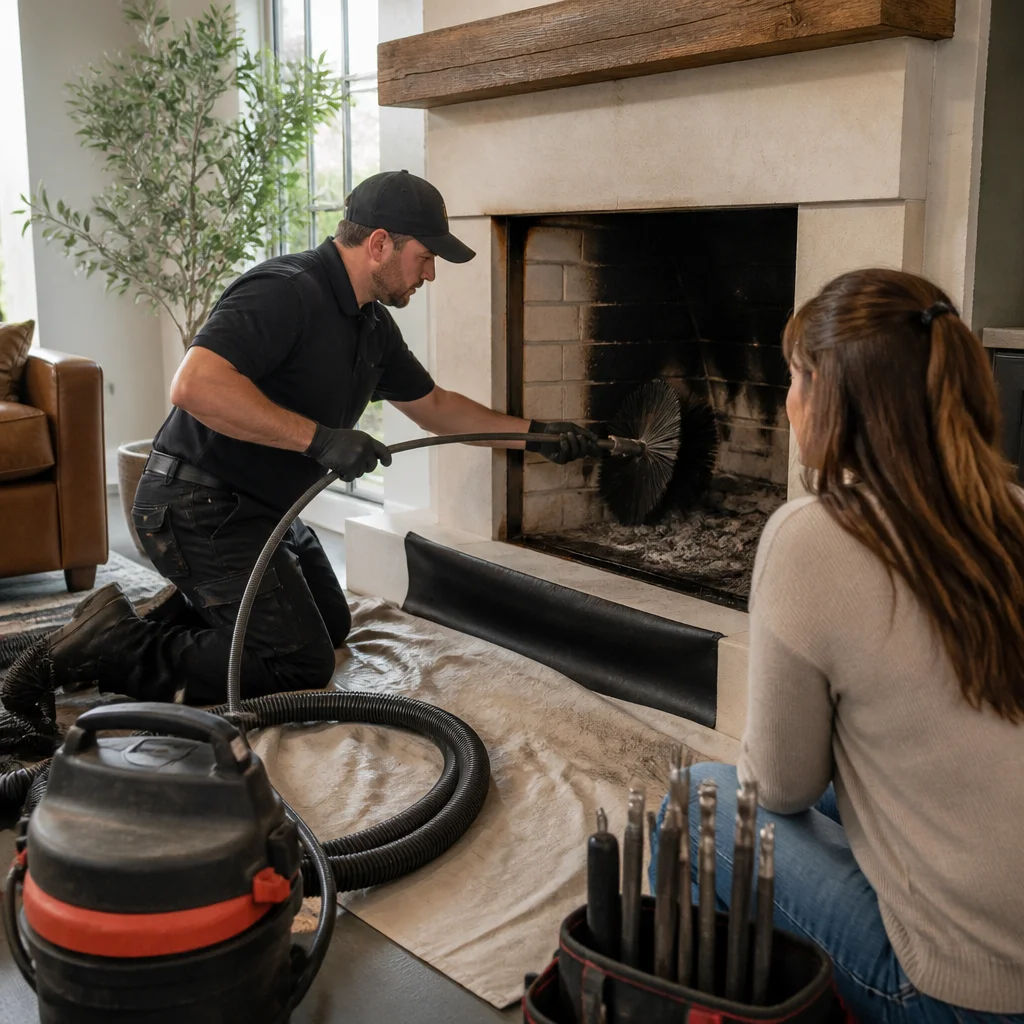
Creosote is the black, tar-like residue that builds up on chimney flue walls when wood burns. It’s a natural byproduct of combustion, unavoidable and always present when you use your fireplace. The problem isn’t creosote itself, but allowing it to accumulate beyond safe levels.
Creosote exists in three stages. Stage one is a light, powdery deposit that doesn’t yet pose serious fire risk, though it reduces efficiency. Stage two is a sticky, tar-like substance that restricts airflow and increases fire danger. Stage three is a hardened glazed coating that’s extremely difficult to remove and significantly more flammable.
Most chimney fires start when creosote ignites inside the flue. You might hear loud crackling, see flames at the chimney top, or smell an acrid odor inside your home. Some people miss the signs because the fire burns mostly inside the concealed chimney. The intense heat can crack the flue liner and spread to surrounding wood framing.
Regular cleaning removes creosote before it reaches dangerous stages, keeping your system safe and efficient. We use specialized equipment to ensure complete removal, not just surface cleaning.
Signs Your Chimney Needs Professional Attention
Don’t wait for a scheduled appointment if you notice these warning signs. Contact us immediately if you spot any of the following:
A thick black or brown coating visible inside your fireplace opening indicates creosote accumulation. Strong, unpleasant odors coming from your chimney suggest moisture and debris buildup. Difficulty starting fires or excessive smoking indoors points to draft problems, often caused by blockages or a missing chimney cap. You might also notice water stains on your ceiling or walls near the fireplace, which signals water intrusion through chimney cracks.
Damaged or missing mortar between bricks, visible cracks in the chimney structure, or a deteriorating chimney cap all require professional inspection. Small animals or birds nesting in your chimney create blockages that prevent proper ventilation.
These signs appear before emergencies develop, giving you time to address them. We recommend a professional chimney inspection if you’re unsure whether your system needs attention.
Our Comprehensive Inspection and Cleaning Process
When you schedule service with us, we don’t simply run a brush through your chimney. Our process is thorough and systematic.
We begin with a visual inspection of the exterior, checking the chimney cap, crown, flashing, and overall structural condition. Then we examine the interior using advanced camera technology to assess the flue liner and identify any damage or blockages. This inspection allows us to spot problems that aren’t visible from outside.
Next comes the cleaning. We use high-powered, HEPA-filtered vacuum systems that capture dust and debris without spreading it throughout your home. Our technicians carefully remove creosote buildup using specialized brushes suited to your chimney’s size and material. We work methodically from top to bottom, ensuring complete removal.
Before we finish, we inspect the cleaned system a second time to confirm we’ve addressed all deposits and haven’t missed any damage. We’ll discuss our findings with you, explain what we found, and recommend any repairs or additional services your system might need.
This comprehensive approach takes longer than quick brush-and-go services, but it protects your home properly.
Seasonal Maintenance Tips for Austin Homeowners
Austin’s climate doesn’t demand the rigorous winter preparation that northern states require, but seasonal care still matters. In late September or early October, before you start using your fireplace regularly, schedule your professional inspection and cleaning. This timing prevents problems before they affect your comfort.
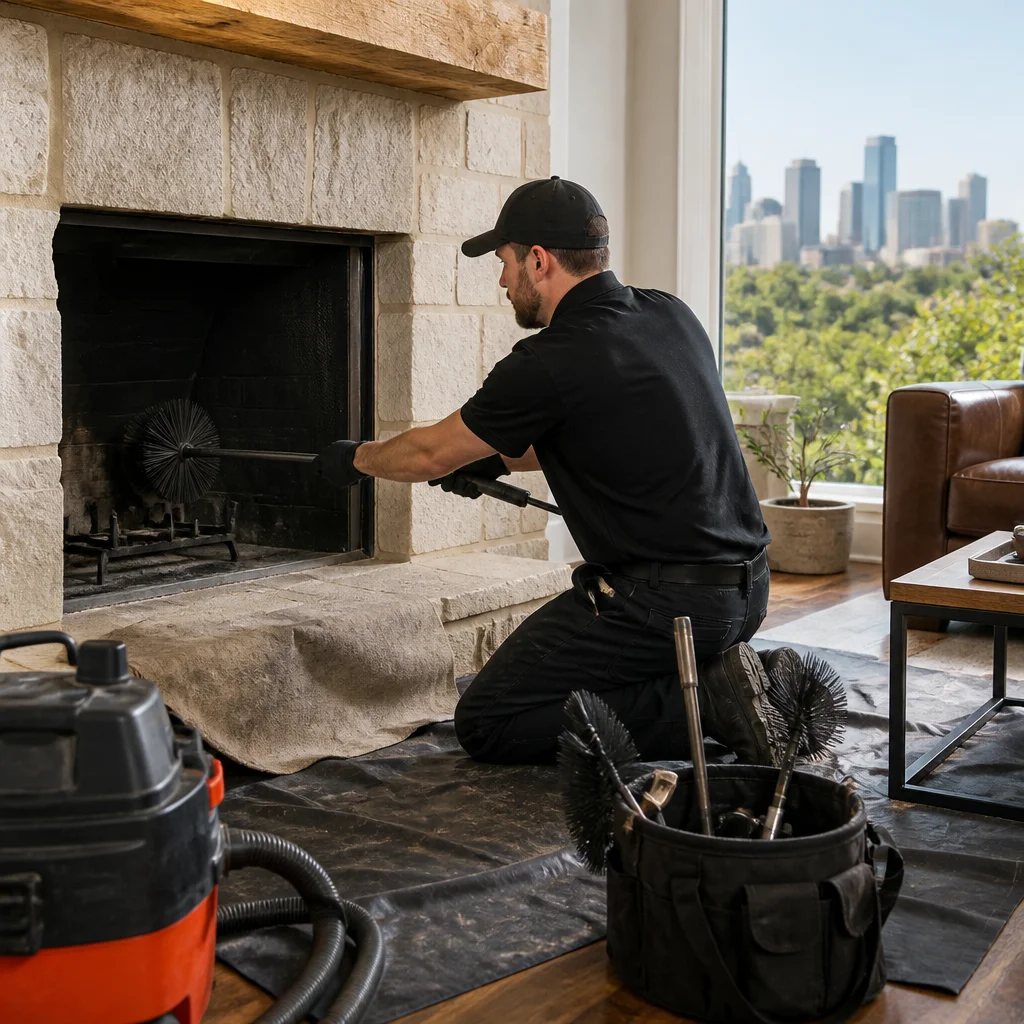
During the heating season, monitor your fireplace closely. Pay attention to how it performs, any odors, and smoke behavior. Burn only seasoned hardwood, never treated lumber or wet wood. Softwoods and unseasoned wood produce excessive creosote quickly.
In spring and summer, keep your chimney cap in good condition and clear any debris that accumulates. If you’re not using your fireplace, a damper or chimney cap prevents birds, insects, and moisture from entering the flue. Check these after heavy storms or wind.
A simple practice that costs nothing: Each time you use your fireplace, briefly check that the damper is fully open before lighting the fire. A closed damper traps smoke and gases inside your home and creates dangerous conditions.
Protecting Your Home With Professional Safety Standards
Safety isn’t just marketing language for us, it’s our core practice. We follow the National Fire Protection Association (NFPA) standards for chimney inspection and cleaning. Our team is certified and trained in proper techniques and safety protocols.
Professional chimney sweeping requires knowledge most homeowners don’t possess. You need to understand proper equipment use, recognize structural problems, identify fire hazards, and know when repairs are necessary. DIY attempts often miss problems or cause damage to the chimney system.
We carry proper insurance, use certified equipment, and follow industry best practices. This protects both your home and ensures you’re getting a genuinely thorough service, not just surface cleaning that leaves hazards behind.
When you work with us, you’re choosing the expertise and accountability that comes with a professional service provider.
Advanced Tools We Use for Thorough Cleaning
Our equipment sets us apart from basic chimney sweeping services. We use high-powered vacuum systems with HEPA filtration that removes fine particles and creosote dust safely. These aren’t standard shop vacs; they’re industrial-grade tools designed specifically for chimney work.
We employ camera inspection systems that let us see exactly what’s happening inside your flue without guessing. This technology reveals cracks, blockages, and damage that would be invisible otherwise. We can show you what we found and explain what it means for your system.
Our brush systems are tailored to your chimney’s material and size, whether you have a round metal flue, clay tile, or masonry-lined chimney. Using the wrong brush can damage your liner, so matching the right tool matters.
These investments in quality equipment allow us to deliver results that matter, not just check a box on a maintenance list.
Creating Your Custom Maintenance Schedule
Every fireplace is different, and every homeowner’s needs vary. We work with you to develop a maintenance plan that makes sense for your specific situation.
If you use your fireplace occasionally during winter, an annual fall cleaning is typically sufficient. If you heat with wood through much of the cooler season, twice-yearly service becomes important. If you burn only softwoods, more frequent cleaning may be necessary.
We also factor in your chimney’s age, condition, and whether it has a proper flue liner. A newer system with a full liner might need less aggressive maintenance than an older chimney with a damaged liner.
When we complete your inspection, we’ll recommend the schedule that best protects your home. We can set reminders to keep you on track, and we’re always available if you notice problems between scheduled appointments.
Why Austin Homes Need Year-Round Fireplace Care
Austin’s mild winters mean your fireplace might sit dormant for months at a time. This inactivity doesn’t eliminate the need for care, it actually creates its own challenges.
Unused chimneys accumulate moisture, leaves, and debris. Small animals see an open flue as an ideal home. Water intrusion continues during our spring and summer rains, gradually damaging mortar and flue liners. By the time heating season rolls around again, problems have developed silently.
We recommend at least a visual inspection in spring, after heavy rain seasons, if you notice any odors or performance issues, or before you return to regular fireplace use. This doesn’t need to be a full cleaning, but it ensures no surprises when you want to enjoy your fireplace.
Thinking of your chimney as part of your home’s year-round maintenance, not just a winter concern, keeps it functioning safely.
Schedule Your Professional Chimney Service Today
Your fireplace deserves expert attention, and your family deserves the safety that comes with a properly maintained system. We’re here to make that happen.
Contact Go Chimney Sweep today to schedule your inspection and cleaning. We’ll evaluate your specific situation, explain our findings clearly, and recommend a maintenance schedule tailored to your home and usage patterns. Whether you need immediate service or want to plan ahead for the season, we’re ready to help.
A small investment in regular maintenance prevents costly repairs, protects your home from fire hazards, and keeps your fireplace running efficiently for years to come.
Frequently Asked Questions (FAQ)
How often should I have my Austin fireplace cleaned?
We recommend professional chimney cleaning at least once a year for homeowners who use their fireplaces regularly. If you burn wood frequently during the colder months, we may suggest cleaning twice yearly to prevent excessive creosote buildup, which is the leading cause of chimney fires. Our inspection will help us determine the ideal schedule based on your specific usage patterns.
What happens if I don’t maintain my chimney regularly?
Neglecting chimney maintenance allows creosote to accumulate inside your flue, significantly increasing your risk of a dangerous chimney fire that can damage your home’s structure. We’ve seen countless cases where homeowners faced costly masonry repairs, structural damage, or worse when they skipped regular cleanings. Our goal is to help you avoid these preventable problems through consistent, professional care.
What signs tell me my chimney needs professional attention?
We recommend calling us if you notice a strong smoky smell in your home, visible creosote buildup, animals or debris in your chimney, cracks in the masonry, or if your fireplace isn’t drawing smoke properly. These issues won’t resolve on their own and can pose serious safety risks, so we’re here to assess and address them quickly.
