
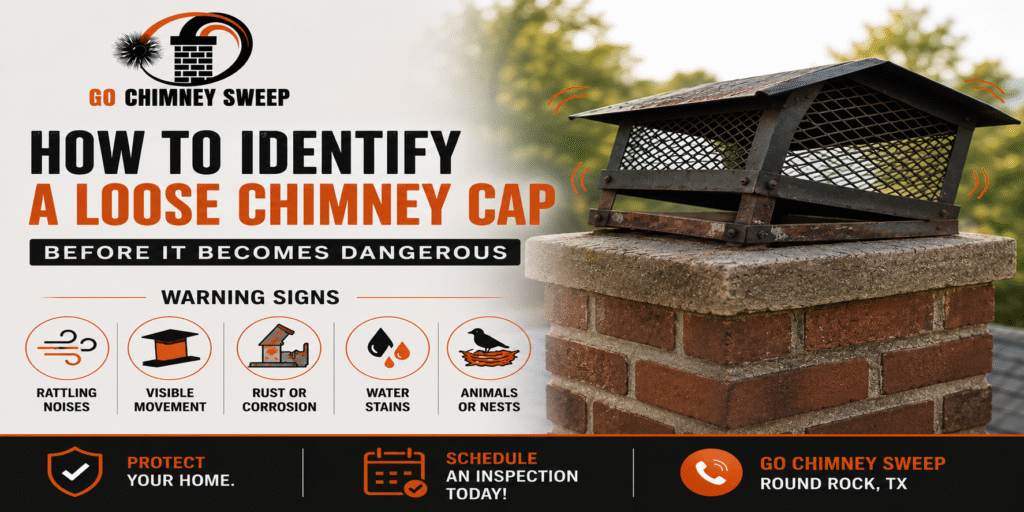
A chimney cap is one of the smallest components of a chimney system, yet it plays one of the biggest roles in protecting your home. Installed at the top of the chimney, it helps keep rain, debris, animals, and sparks under control while allowing smoke and gases to vent properly.
Over time, exposure to strong winds, heavy rain, changing temperatures, and natural wear can cause a chimney cap to become loose. If left unaddressed, a loose chimney cap can lead to costly repairs and even create safety hazards. Learning how to recognize the warning signs can help homeowners address the issue before it becomes a serious problem.
What Does a Chimney Cap Do?
A chimney cap serves several important purposes beyond simply covering the chimney opening. It helps:
- Keep rainwater out of the chimney.
- Prevent birds, squirrels, and other animals from entering.
- Stop leaves, twigs, and debris from blocking the flue.
- Reduce the risk of sparks escaping onto the roof.
- Improve the overall lifespan of the chimney system.
When the chimney cap becomes loose or damaged, these protective benefits are greatly reduced.
Listen for Unusual Noises During Windy Weather
One of the earliest signs of a loose chimney cap is unusual noise coming from the roof during windy conditions.
You may hear:
- Metallic rattling
- Vibrating sounds
- Banging or clanking
- Whistling caused by shifting metal
These sounds often indicate that the chimney cap is no longer securely attached and may move whenever strong winds pass over the roof.
Look for Visible Movement
If you can safely view your chimney from the ground using binoculars, look for signs that the cap appears tilted, uneven, or unstable.
A properly installed chimney cap should sit firmly on top of the chimney without shifting. Any visible movement or misalignment could indicate loose fasteners or damage that requires attention.
Check for Rust or Corrosion
Most chimney caps are made from galvanized steel, stainless steel, or copper. Over time, moisture can cause rust or corrosion, especially on screws, brackets, and mounting hardware.
Rust weakens the structure of the chimney cap and may eventually cause it to loosen or separate from the chimney.
Water Inside the Fireplace
A loose chimney cap may allow rainwater to enter the chimney.
Signs of water intrusion include:
- Damp fireplace walls
- Water stains around the fireplace
- Musty odors
- Rust on fireplace components
- Cracked or deteriorating masonry
Moisture problems should never be ignored because they often become more expensive to repair over time.
Birds or Animals Entering the Chimney
A chimney cap also acts as a barrier against wildlife.
If you begin hearing birds chirping, scratching noises, or movement inside the chimney, the cap may have become loose, damaged, or partially detached, allowing animals to enter and build nests.
Debris Falling into the Fireplace
Leaves, sticks, and other outdoor debris should not regularly appear inside your fireplace.
If you notice an unusual amount of debris accumulating in the firebox, the chimney cap may no longer be providing adequate protection.
Storm Damage Can Loosen Chimney Caps
Strong winds, hail, heavy rain, and falling tree branches can loosen chimney caps without obvious signs from the ground.
After severe weather, scheduling a chimney inspection is a smart way to confirm that the chimney cap and other exterior components remain secure and undamaged.
Why Prompt Repairs Matter
A loose chimney cap may seem like a minor issue, but ignoring it can lead to much larger problems. Continued exposure to weather can allow water to damage the chimney liner, masonry, and fireplace components. In severe cases, a detached chimney cap may fall from the roof, creating a potential hazard for people and property below.
Repairing or replacing a loose chimney cap early is usually much simpler and more affordable than repairing extensive water or structural damage later.
Schedule Regular Chimney Inspections
Routine chimney inspections are one of the best ways to identify loose chimney caps before they become dangerous. During an inspection, a professional can examine the chimney cap, flashing, masonry, crown, liner, and venting system to ensure everything is functioning properly.
Annual inspections help homeowners catch small issues early, improve chimney performance, and reduce the likelihood of unexpected repairs.
Professional Chimney Cap Inspection in Round Rock, TX
If you suspect your chimney cap may be loose or damaged, Go Chimney Sweep Round Rock is here to help. We proudly provide professional chimney inspections, chimney cap evaluations, chimney sweeping, and maintenance services throughout Round Rock, TX. Our experienced team can identify loose or damaged chimney caps, recommend the right solution, and help protect your chimney from water, debris, and wildlife. Contact Go Chimney Sweep Round Rock today to schedule a professional chimney inspection and keep your chimney operating safely year-round.
