
Table of Contents
- How Bird Debris Clogs Your Chimney and Threatens Your Home
- Why DIY Bird Debris Removal Creates Safety Hazards
- What Professional Chimney Bird Removal Actually Involves
- Our Advanced Inspection Technology Reveals Hidden Damage
- The Real Costs of Attempting DIY Solutions
- How We Safely Extract Bird Nests and Debris
- Preventing Future Bird Intrusions with Our Chimney Caps
- Why Texas Homeowners Trust Go Chimney Sweep
- Scheduling Your Professional Bird Debris Removal Service
- Frequently Asked Questions (FAQ)
How Bird Debris Clogs Your Chimney and Threatens Your Home
Bird nests inside your chimney create far more than an inconvenience. When birds enter through an unprotected chimney opening, they deposit twigs, leaves, feathers, and nesting material that accumulate rapidly. Within weeks, a single nest can block airflow entirely, preventing smoke and carbon monoxide from venting safely out of your home.
The blockage forces dangerous gases back into your living space. Carbon monoxide is colorless and odorless, making it impossible to detect without proper ventilation. Beyond the carbon monoxide risk, blocked chimneys prevent your fireplace from operating at all. A fire lit in a chimney with a nest often results in rapid spread of flames up the blocked flue, potentially igniting the nest material and surrounding masonry.
Birds also leave behind droppings that contain acidic compounds. These compounds deteriorate mortar, brick, and the flue lining over time. What starts as a simple nest can escalate into structural damage that requires expensive repairs if left unaddressed.
Why DIY Bird Debris Removal Creates Safety Hazards
Climbing onto a roof to remove bird nests puts you at serious physical risk. Falls from roofs cause tens of thousands of injuries annually, many resulting in permanent disability. Even experienced homeowners underestimate how quickly a slip can occur on sloped surfaces, particularly around chimney openings where footing is awkward.
The tools required for safe removal extend beyond what most homeowners own. A standard vacuum cannot handle the volume or consistency of nesting debris. Improvised removal methods often push debris deeper into the flue rather than extracting it, compacting the blockage and making professional removal harder later.
There’s also the biological hazard. Bird droppings can contain histoplasmosis, a fungal infection that affects the lungs when spores are inhaled. Without proper respiratory protection and containment, you’re exposing yourself and your family to pathogens that require medical treatment.
Finally, DIY removal won’t address the root problem. You might extract one nest, but if the chimney opening remains unprotected, birds will return within months and build again. Most homeowners who attempt DIY removal end up calling us shortly after, often with a worse situation than if they’d called initially.
What to do next: If you’ve spotted a bird nest, don’t attempt removal yourself. Contact us for a professional assessment instead.
What Professional Chimney Bird Removal Actually Involves
When you schedule bird debris removal with us, we follow a methodical process designed to protect your home and remove every trace of nesting material.
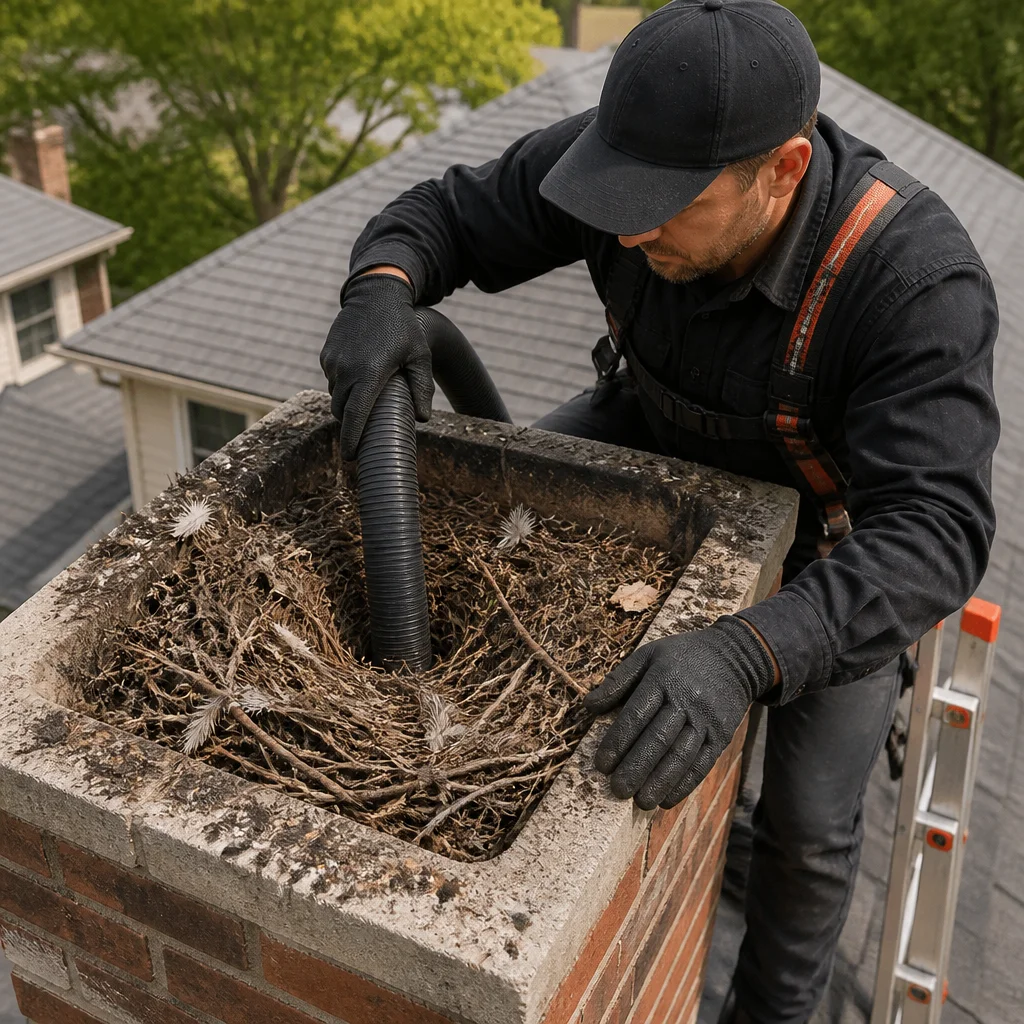
Our technicians start by visually inspecting the chimney exterior and cap area. We document the extent of the blockage before beginning any work. We then use specialized high-powered vacuum systems with HEPA filtration to contain dust and prevent contamination of your home. Our equipment extracts debris from the flue while simultaneously monitoring airflow to ensure we’re achieving complete clearance.
We physically remove larger nest components using chimney rods with brushes and scrapers specifically designed for this work. Unlike consumer-grade tools, our professional-grade equipment won’t damage the flue liner or cause debris to lodge elsewhere in the system. After removing visible debris, we’ll inspect the entire flue length to ensure no nesting material remains.
Our process typically takes 1 to 2 hours, depending on nest size and flue condition. We clean up all debris from your property and dispose of materials properly. Once extraction is complete, we assess whether the flue liner sustained any damage during the bird occupation.
Our Advanced Inspection Technology Reveals Hidden Damage
After debris removal, we use video inspection cameras to examine areas of your chimney that are otherwise invisible. Our inspection camera travels the full length of the flue, displaying high-definition images on a monitor. This allows us to spot cracks in the liner, mortar deterioration, or creosote buildup that the birds may have masked.
Bird nesting often occurs in chimneys that already have underlying issues. A chimney with poor draft or airflow problems attracts birds because the environment suits their nesting needs. Our camera inspection identifies these root causes. We can spot a flue liner that’s separated, a damper that’s stuck partially open, or deposits that restrict airflow.
This technology is essential because visual inspection from ground level misses critical details. A crack in the flue liner that’s only a quarter-inch wide can expand over time, allowing dangerous gases to leak into your home’s walls. Catching these issues early prevents expensive structural damage.
Action item: After bird debris removal, ask us to perform a full camera inspection. Many homeowners are surprised to learn about pre-existing damage once we’re inside the system.
The Real Costs of Attempting DIY Solutions
The financial case for professional removal becomes clear when you calculate total expenses. A fall from your roof resulting in a broken leg or head injury can cost $20,000 to $100,000+ in medical bills, plus time away from work. Even a minor injury creates weeks of recovery and disrupted household routines.
A ladder or tool rental for DIY work typically costs $50 to $150 per day. If your first attempt doesn’t fully clear the debris, you’re renting again. Many homeowners make multiple attempts, each adding cost and frustration.
If DIY removal damages your flue liner, repairs range from $1,200 to $2,500 depending on severity. Compacted debris left behind after incomplete removal often requires professional extraction anyway, meaning you’ve paid for tools and effort plus a full professional service.
Professional bird debris removal costs between $300 and $600, a fraction of what you’ll pay for injuries, tool rentals, or flue liner repairs. Our service includes inspection and assessment, protecting you from hidden damage that would surface later.
Consider too the cost of a gas or fire incident. A fireplace fire caused by ignited bird nesting can damage your chimney structure, require flue liner replacement, and potentially cause home damage requiring structural repairs. Our preventive removal eliminates this risk entirely.
How We Safely Extract Bird Nests and Debris
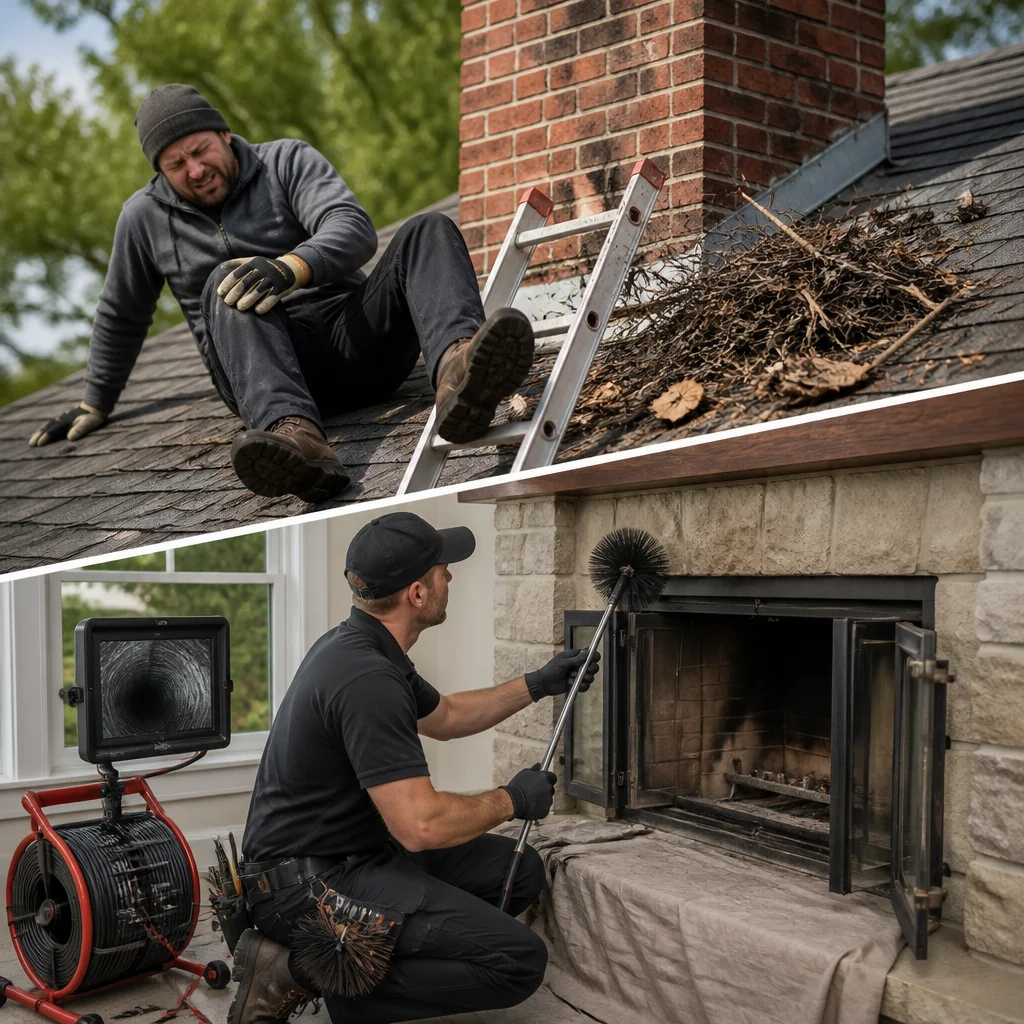
Our technicians are trained in confined space work and follow safety protocols that exceed industry standards. We use fall protection when working at height, proper respiratory protection when handling bird debris, and containment systems that prevent contamination of your home’s interior.
We begin by assessing whether the birds have completely vacated the nest. If active nesting is occurring, we work with local wildlife considerations, removing nests humanely and ensuring birds aren’t harmed. We never trap or kill birds; our focus is safe removal that allows wildlife to relocate.
Our high-powered dust control vacuum has a capacity that matches commercial construction sites. We position the vacuum intake directly at your chimney opening, creating negative pressure that pulls debris into a sealed container. This approach captures particles that would otherwise spread throughout your attic or home.
We use a combination of flexible rods with rotating brushes and rigid rods with hand tools. This combination allows us to dislodge debris carefully without using excessive force that could damage your flue liner. We pull debris downward toward the vacuum rather than pushing it further up the chimney.
For nests lodged deep in the flue or difficult to reach, we may need to work from the roof as well. We use proper fall protection and secure all equipment. This dual-access approach ensures we can remove even stubborn debris without risk.
Preventing Future Bird Intrusions with Our Chimney Caps
The most important step after debris removal is preventing birds from returning. A properly installed chimney cap installation blocks birds and animals from entering while maintaining proper ventilation for your fireplace.
We install caps with a mesh design that allows smoke and gases to exit freely while creating a physical barrier birds cannot penetrate. Quality caps are made from stainless steel that withstands Texas weather and won’t rust or corrode.
A cap also prevents rain from entering the flue, reducing water damage to your liner and masonry. It eliminates animal intrusions beyond birds, including squirrels, raccoons, and insects. Over time, the cap pays for itself by preventing damage and expensive repairs.
We measure your chimney opening precisely and select a cap sized to your exact flue dimensions. An oversized cap may not seal properly; an undersized cap restricts airflow. Our technicians install caps securely with fasteners that prevent wind from dislodging them.
Next step: If you don’t currently have a cap or your existing cap is damaged, ask us about cap installation during your bird debris removal service.
Why Texas Homeowners Trust Go Chimney Sweep
We’ve been serving Greater Austin and surrounding communities for years, building a reputation on reliability and thorough work. Homeowners choose us because we combine professional expertise with genuine care about their home’s safety.
Our team stays current on chimney standards, equipment advances, and safety best practices. We invest in technology like inspection cameras and high-powered vacuums that deliver results consumer tools simply cannot match. We train our technicians in confined space work, bird control, and proper handling of biological hazards.
We’re also transparent about what we find and what we recommend. If bird debris removal is all your chimney needs, we’ll tell you that. If we spot damage during inspection, we’ll explain what it means and what options you have. We won’t oversell services you don’t need, but we also won’t minimize genuine safety concerns.
Homeowners appreciate that we stand behind our work. If you schedule a bird debris removal service with us and birds return within six months due to our incomplete removal or cap installation failure, we’ll address it at no additional charge.
Scheduling Your Professional Bird Debris Removal Service
Getting started is straightforward. Contact us by phone or through our website to describe the issue you’ve noticed. We’ll ask a few quick questions: Have you seen birds in or around your chimney? Do you smell anything unusual? When was your chimney last inspected?
Based on your answers, we’ll schedule an appointment at a time that works for your schedule. We offer flexible service windows and can often accommodate same-week appointments for bird-related emergencies.
During your appointment, our technician will assess the situation, discuss findings with you, and provide a clear quote for the work. We explain every step of our process and answer any questions before we begin.
After we remove the debris and complete inspection, we’ll discuss your chimney’s overall condition and recommend any additional services like cap installation or flue liner repairs if needed. You’ll receive a summary of work completed and recommendations for ongoing maintenance.
Professional bird debris removal protects your home, your family’s safety, and your peace of mind. We’re ready to help when you’re ready to call. Reach out to us today to schedule your service.
Frequently Asked Questions (FAQ)
What’s the difference between what we do and a DIY bird debris removal attempt?
When you try to remove bird nests yourself, you risk exposing yourself to parasites, bacteria, and structural damage you can’t see without proper equipment. We use advanced inspection cameras to locate all debris, high-powered dust control systems to safely extract materials, and specialized tools to assess any damage to your flue or masonry. Our process ensures your chimney is completely cleared and safe to use, not just partially cleaned.
How does a bird nest actually damage your chimney and fireplace?
Bird nests block airflow, which traps dangerous carbon monoxide gases inside your home instead of venting them outside. The nesting materials also compress and mix with creosote, creating a highly flammable buildup that increases your risk of a chimney fire. We’ve found that these blockages also allow moisture to accumulate, which deteriorates your flue lining and masonry over time.
Can we prevent birds from nesting in our chimney again after you remove the debris?
Yes, we install quality chimney caps specifically designed to block birds and other animals while maintaining proper ventilation for your fireplace. Our caps are custom-fitted to your chimney and built to withstand Texas weather, giving you long-term protection without needing repeated removal services.
