
Table of Contents
- Why Creosote Buildup Threatens Your Austin Home
- Understanding the Creosote Problem
- DIY Creosote Removal Methods and Their Limitations
- Professional Equipment and Technology Advantages
- Safety Standards and Certification Requirements
- Cost Comparison: Professional vs DIY Approaches
- Our Advanced Creosote Removal Process
- Why Go Chimney Sweep is Your Best Choice
- Customer Success Stories from Greater Austin
- Preventing Future Creosote Accumulation
- Schedule Your Professional Creosote Removal Today
- Frequently Asked Questions (FAQ)
Why Creosote Buildup Threatens Your Austin Home
Creosote is a sticky, flammable byproduct that accumulates inside your chimney every time you light a fire. In Austin’s climate, where many homeowners enjoy wood-burning fireplaces during cooler months, creosote buildup happens faster than you might expect. When this substance hardens on chimney walls, it narrows the flue opening, reduces draft efficiency, and creates a serious fire hazard.
The real danger isn’t just poor performance. Thick creosote deposits can ignite during a chimney fire, reaching temperatures exceeding 2,000 degrees Fahrenheit. This intense heat can crack the flue liner, damage masonry joints, and potentially spread flames to your home’s structure. We’ve seen Austin homeowners face costly repairs and frightening situations that could have been prevented with regular, professional maintenance.
Beyond fire risk, creosote restricts airflow, forcing smoke and carbon monoxide back into your living space. This reduces your fireplace’s heating efficiency and creates indoor air quality problems. The good news: consistent professional creosote removal keeps your chimney safe, maintains proper draft, and protects your family.
Understanding the Creosote Problem
Creosote forms when wood smoke cools as it travels up your chimney. The cooler the flue, the more creosote accumulates. This is why Austin homes with poor chimney insulation or inadequate draft see heavy buildup, especially when burning unseasoned or wet wood.
There are three stages of creosote development:
- Stage 1: Light, flaky deposits that are easier to remove
- Stage 2: Thicker, tar-like buildup that requires more aggressive cleaning
- Stage 3: Dense, hardened glaze that’s nearly impossible to remove without professional equipment
Most Austin homeowners don’t realize they have a problem until they notice reduced fireplace efficiency, smoke smell in the house, or visible soot around the fireplace opening. By that point, creosote has usually progressed to stage 2 or beyond.
The speed of accumulation depends on several factors: wood type and moisture content, fireplace usage frequency, chimney height, outdoor temperature, and flue condition. A fireplace used 3-4 times weekly can accumulate significant creosote within a single heating season.
DIY Creosote Removal Methods and Their Limitations
Many homeowners attempt DIY creosote removal using store-bought chimney brushes, extension poles, and commercial cleaning chemicals. While these tools might work for very light, stage 1 deposits, they fall short in practical and safety ways.
Standard chimney brushes are designed for maintenance cleaning, not serious creosote removal. They’re often too soft to break through hardened deposits and lack the reach to thoroughly clean every section of the flue. You’ll end up with incomplete cleaning, leaving dangerous buildup behind.
Chemical cleaning products (powder or log-style) claim to reduce creosote, but they work inconsistently. These products create a chemical reaction that flakes deposits rather than fully removing them. The loosened creosote then falls into your firebox or damper area, requiring manual cleanup anyway. More critically, these chemicals don’t eliminate fire risk from existing thick deposits.
Safety concerns with DIY attempts include:
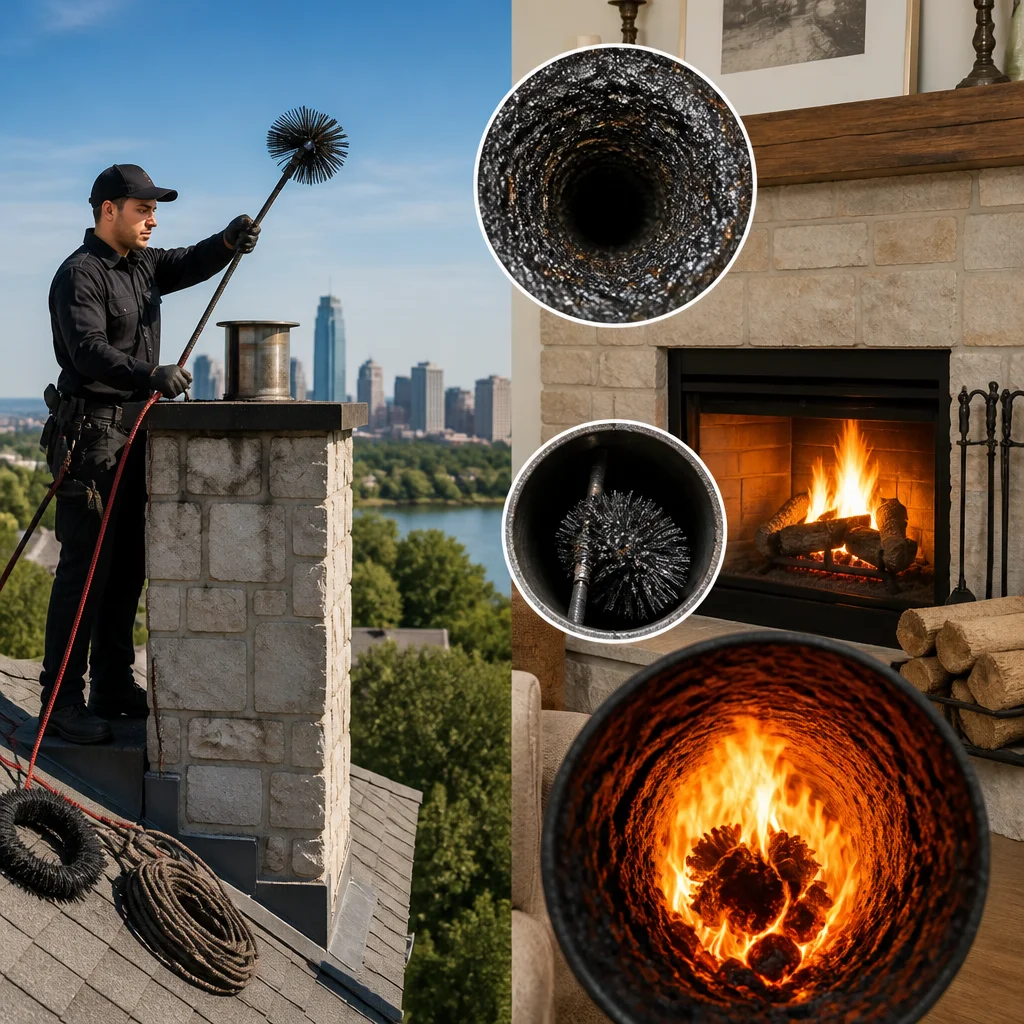
- Working at heights on ladders or roofs increases fall risk
- Disturbing accumulated creosote can trigger a chimney fire
- Improper technique damages flue liners or masonry
- Incomplete removal leaves hazardous buildup undetected
- Lack of inspection equipment means you can’t confirm the job is done
One Austin homeowner tried a commercial chimney log product, believing it would handle two seasons of buildup. The chemical loosened creosote but didn’t remove it completely. When we performed a professional inspection afterward, we found dangerous accumulation throughout the flue that the DIY method had missed entirely.
Professional Equipment and Technology Advantages
We use specialized equipment designed specifically for thorough creosote removal that DIY tools simply can’t match. Our high-powered rotary cleaning systems feature flexible rods with properly weighted brush heads that rotate as they travel up and down the chimney. This aggressive action breaks through hardened creosote that passive brushing can’t touch.
Our advanced inspection cameras let us see exactly what we’re working with before, during, and after cleaning. This technology reveals the severity of buildup, identifies flue liner damage, and confirms that creosote removal is complete. You get proof that your chimney is actually clean, not assumptions.
Industrial-grade dust control vacuums capture creosote particles before they escape into your home. When creosote becomes airborne during cleaning, it’s a health hazard and creates serious mess. Our equipment contains everything at the source, protecting your home’s interior and air quality.
We also have access to specialized brushes for different flue sizes and configurations, extension systems that reach tall chimneys safely, and equipment to address stage 3 hardened deposits that require precision technique. This combination of tools ensures thorough results regardless of how severe the buildup is.
Safety Standards and Certification Requirements
Professional chimney sweeps in Austin should hold certification from the Chimney Safety Institute of America (CSIA) or equivalent credentials. This certification requires passing comprehensive exams covering chimney operation, creosote dangers, proper cleaning techniques, safety protocols, and building codes. It’s not a quick credential; it represents genuine expertise.
Licensed professionals carry liability insurance protecting your home if equipment causes accidental damage. This safeguard doesn’t exist with DIY efforts. We’re also trained to recognize additional hazards like damaged flue liners, structural problems, or carbon monoxide risks that untrained homeowners might miss completely.
Our team follows NFPA 211 standards, the national fire code for chimney safety and maintenance. These standards specify cleaning frequency (typically annually for regular use), inspection requirements, and safety documentation. Professional service ensures your chimney meets these standards, which matters for insurance coverage and home safety.
Cost Comparison: Professional vs DIY Approaches
A basic professional chimney creosote removal in the Austin area costs between $150 and $300, depending on chimney height, accessibility, and buildup severity. This includes cleaning and inspection. Adding a chimney inspection if not already performed adds $100 to $150.
DIY attempts seem cheaper upfront. A chimney brush kit costs $30 to $80, and chemical products run $15 to $40. However, the real cost emerges when incomplete cleaning forces you to hire a professional anyway, or worse, when inadequate creosote removal leads to a chimney fire causing thousands in damage.
Insurance complications add hidden costs to DIY approaches. If a chimney fire occurs and your insurer discovers you haven’t had professional cleaning, they may deny your claim. That’s a potentially six-figure expense versus the cost of regular professional service.
Consider this realistic scenario: A homeowner spends $50 on DIY supplies, discovers they haven’t solved the problem, then pays $200 for professional cleaning anyway. Total cost: $250 plus frustration and risk. Professional cleaning from the start costs $200, includes inspection and documentation, and carries zero risk.
Over ten years of regular fireplace use, annual professional creosote removal costs around $1,500 to $3,000. A single chimney fire, even if your home isn’t severely damaged, easily exceeds $5,000 to $10,000 in repairs, deductibles, and potential code violations. Professional maintenance is not an expense; it’s insurance against catastrophic costs.
Our Advanced Creosote Removal Process
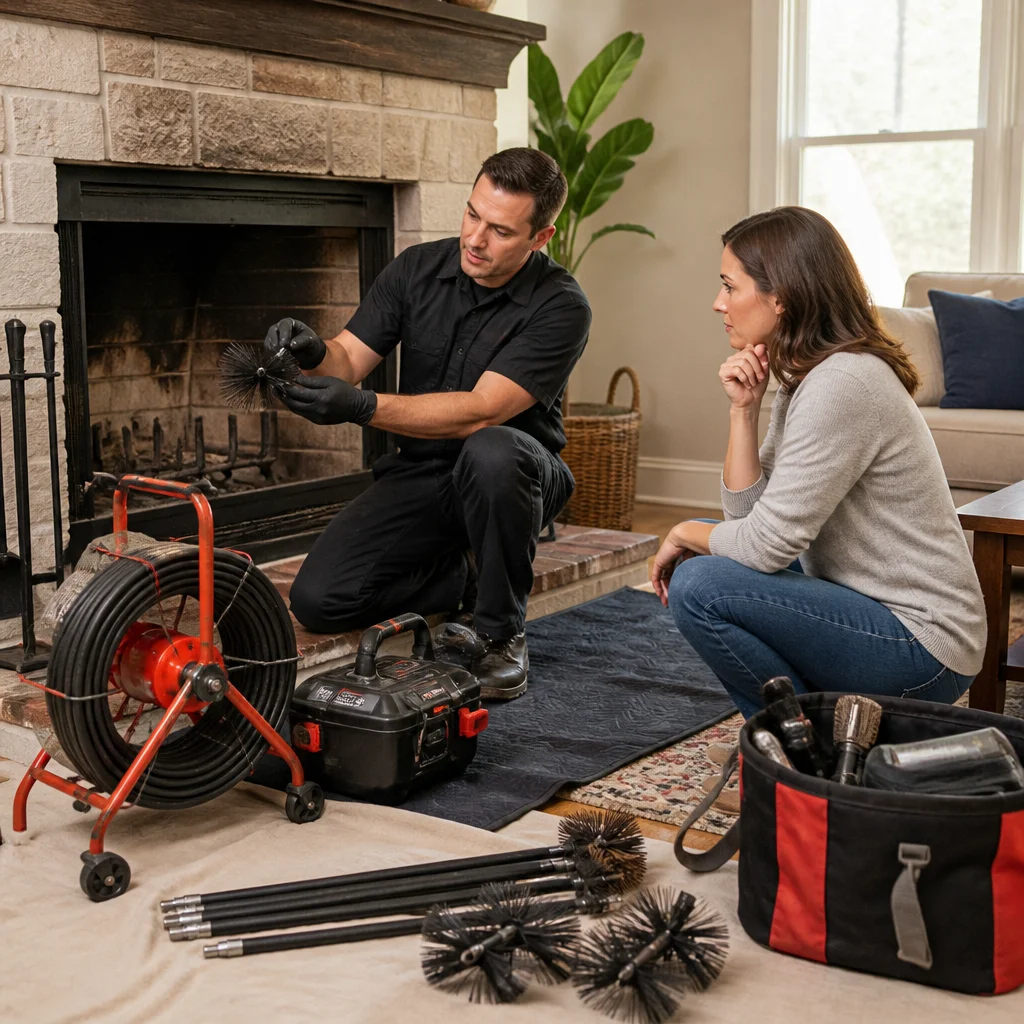
When you schedule creosote removal with us, here’s exactly what happens:
We begin with a thorough video inspection using our advanced camera system to assess creosote buildup stage, flue condition, and any existing damage. This baseline measurement tells us what we’re dealing with and guides our approach.
Next, we seal your fireplace opening to contain dust and debris, then deploy our rotary cleaning system. Our technician carefully works the brush system from top to bottom, applying appropriate pressure to break through creosote without damaging the flue liner. For severe deposits, we may make multiple passes, gradually breaking buildup into manageable pieces.
Throughout the process, our industrial vacuum system captures particles at the source. This keeps your home clean and removes creosote before it can resettle in your chimney.
After mechanical cleaning, we perform a final inspection with our camera to confirm complete creosote removal. We document the results with photos and written reports showing your chimney is clean and safe.
We also check your chimney cap, damper function, and flue liner condition. If we spot issues like cracks, gaps, or deterioration, we recommend repairs immediately. Catching problems early prevents expensive damage later.
Why Go Chimney Sweep is Your Best Choice
We’re not just another chimney service in Austin. Our team brings CSIA-certified expertise, advanced equipment that delivers superior results, and a commitment to your home’s safety that shows in every job.
Unlike services that rush through cleanings, we invest time in proper inspection before and after work. We use high-powered rotary systems and industrial vacuums that ensure complete creosote removal without the mess and risk of DIY attempts or less-equipped competitors.
Our professionals are trained to spot secondary issues during service: damaged flue liners, masonry problems, improper chimney installation, or ventilation concerns. Catching these early saves you thousands. We also provide detailed documentation of our work, which your insurance company appreciates and which protects your home’s value.
We understand the Austin area’s climate and how it affects chimney performance. Our recommendations for cleaning frequency and maintenance are tailored to your specific situation, not one-size-fits-all advice.
When you choose us for creosote removal, you’re choosing certainty. You’ll know your chimney is truly clean, your family is safe, and your fireplace operates at peak efficiency.
Customer Success Stories from Greater Austin
A family in North Austin called us after noticing reduced draft and smoke seeping into their living room. They’d owned the home for three years without professional cleaning. When we inspected, we found stage 3 creosote buildup throughout a 30-foot flue. Our rotary cleaning system removed it completely in one service. They now enjoy their fireplace without smoke issues and have scheduled annual maintenance to prevent recurrence.
Another homeowner in South Austin attempted a DIY cleaning with a standard brush kit before calling us. They’d actually dislodged loose creosote into the damper area, creating a worse situation. Our professional cleaning removed the accumulated debris, properly cleaned the flue, and inspected for damage. They’re now on a regular maintenance schedule.
A Cedar Park property owner with a tall, complex chimney configuration needed specialized equipment to reach all sections. Standard DIY tools were never going to work. Our extended rotary system and experienced technicians handled the job professionally, leaving the chimney spotless and safe.
These situations repeat frequently across Greater Austin. Homeowners either skip professional service and face problems later, or they attempt DIY solutions that don’t fully work. When they eventually call us, professional cleaning always delivers superior results and peace of mind.
Preventing Future Creosote Accumulation
Annual professional cleaning is the gold standard for chimneys used regularly, but reducing creosote formation also matters. The best prevention strategy involves burning properly seasoned firewood (moisture content below 20%). Wet or unseasoned wood creates far more creosote than dry wood.
Store firewood outdoors in a covered area for at least 6-12 months before burning. This allows natural drying. Avoid burning treated wood, plywood, or painted materials; these release toxic chemicals and accelerate creosote buildup.
Maintain proper fireplace draft by ensuring your damper opens fully and your chimney cap isn’t blocked. Poor draft causes incomplete combustion, which means more creosote. If you notice reduced draft, have a professional inspect your chimney structure and installation.
Consider your fireplace usage patterns. Frequent, efficient burns (hot fires that reach proper temperature quickly) create less creosote than prolonged, smoldering fires. Build fires that catch quickly and burn hot.
Schedule professional inspections at least annually, more often if you use your fireplace heavily. Regular service catches buildup early when it’s easier and less expensive to address. An annual cleaning and inspection costs far less than damage from a chimney fire or structural deterioration.
Schedule Your Professional Creosote Removal Today
Don’t let creosote buildup put your Austin home and family at risk. Professional creosote removal is affordable, fast, and delivers complete peace of mind that DIY methods simply can’t match.
Contact us today to schedule your comprehensive chimney cleaning and inspection. We’ll assess your creosote situation, remove buildup completely using advanced equipment, and provide documentation proving your chimney is safe and efficient. Our team serves the Greater Austin area with the expertise and commitment your fireplace deserves.
Your fireplace should be a source of warmth and comfort, not worry. Let’s make sure it’s clean, safe, and working at its best.
For further reading: Chimney cleaning Round Rock.
Frequently Asked Questions (FAQ)
How often should we have our chimney cleaned to prevent creosote buildup?
We recommend having your chimney swept at least once per year if you use your fireplace regularly, though we often suggest more frequent cleanings if you burn wood several times per week. The frequency really depends on your specific wood type and burning habits, which is why we conduct a thorough inspection first to assess your creosote levels and provide a customized maintenance schedule for your Austin home.
What makes professional chimney cleaning safer than attempting it ourselves?
Our team uses high-powered dust control vacuums and advanced inspection cameras that homeowners typically don’t have access to, which allows us to remove creosote effectively while keeping your home clean and identifying any hidden structural issues. Beyond equipment, we’re trained to recognize fire hazards, properly ventilate during the process, and follow strict safety standards that protect both you and your property from potential damage.
Why is DIY creosote removal risky for our fireplace?
Creosote is highly flammable, and without professional-grade equipment, you risk incomplete removal that actually increases fire danger in your chimney and home. We’ve seen countless cases where homeowners missed buildup in hard-to-reach areas or accidentally damaged their chimney structure during DIY attempts, resulting in costly repairs that far exceed the price of professional cleaning in the first place.
