
Table of Contents
- Why Creosote Buildup Threatens Your Home
- The Hidden Dangers of Ignoring Creosote
- How Professional Creosote Cleanup Prevents Chimney Fires
- Our Advanced Inspection and Removal Process
- Safety-First Approach to Chimney Maintenance
- Signs Your Chimney Needs Professional Creosote Removal
- The Cost of DIY vs. Professional Creosote Cleanup
- Protecting Your Family Through Regular Professional Cleaning
- Schedule Your Professional Creosote Cleanup Today
- Frequently Asked Questions (FAQ)
Why Creosote Buildup Threatens Your Home
Every time you light a wood-burning fireplace, you’re creating heat and smoke. That smoke travels up your chimney carrying moisture and unburned particles. As it cools on the interior walls, those particles condense into a dark, sticky substance called creosote.
Creosote is a natural byproduct of wood combustion, but it’s also highly flammable. Unlike soot, which is relatively easy to brush away, creosote hardens into layers that become increasingly difficult to remove over time. The buildup accumulates slowly and quietly, often going unnoticed until it becomes a serious problem.
The longer creosote sits in your flue, the thicker it gets. A heavy creosote coating narrows your chimney’s interior, restricting airflow and forcing smoke back into your living space. This reduced draft also means the flue cools faster, which accelerates further creosote formation. You end up in a cycle where poor ventilation creates conditions for even more buildup.
What to do next: If you haven’t had your chimney professionally inspected in over a year, or if you use your fireplace regularly, schedule an evaluation to assess creosote levels before the heating season intensifies.
The Hidden Dangers of Ignoring Creosote
The most obvious risk is chimney fire. Creosote is combustible, and when temperatures inside the flue reach about 1,000 degrees Fahrenheit, it can ignite. A creosote fire burns intensely and spreads rapidly through the accumulated layers. Homeowners often describe it as sounding like a loud roaring or rushing noise coming from the chimney, sometimes accompanied by flames or sparks visible at the top of the flue.
Beyond fire risk, creosote creates secondary hazards you might not anticipate. The acidic nature of creosote can corrode metal flue liners and deteriorate masonry joints over time. This degradation weakens the structural integrity of your chimney system. In worst cases, cracks allow dangerous gases like carbon monoxide to escape into your home instead of venting outside. You could have a leaking flue without realizing it.
Creosote also blocks airflow, which reduces fireplace efficiency and forces more smoke into your home. This creates indoor air quality problems, triggers smoke alarms, and makes your living space uncomfortable. The buildup can even attract pests seeking shelter in the dark, blocked sections of your chimney.
What to do next: Don’t assume your chimney is safe because you haven’t experienced problems yet. Creosote accumulation is silent and invisible until it becomes critical. Professional inspection reveals exactly what you’re dealing with before danger strikes.
How Professional Creosote Cleanup Prevents Chimney Fires
When we perform professional chimney cleaning services, we’re doing far more than cosmetic maintenance. We’re removing the fuel source that could ignite a dangerous chimney fire.
Our approach starts with assessment. Before we begin cleaning, we inspect the extent and type of creosote present. There are three stages of creosote buildup, and each requires slightly different techniques. Stage 1 is a light, flaky layer that responds well to standard brush sweeping. Stage 2 is a harder, tar-like coating that needs more aggressive scrubbing. Stage 3 is thick, glazed creosote that’s nearly impossible to remove without specialized equipment designed for heavy deposits.
We use high-powered equipment paired with manual techniques to ensure thorough removal. Our advanced dust control vacuums capture particles before they spread through your home, keeping the process clean and contained. After removal, we perform a final inspection to verify the flue is clear and safe for use.
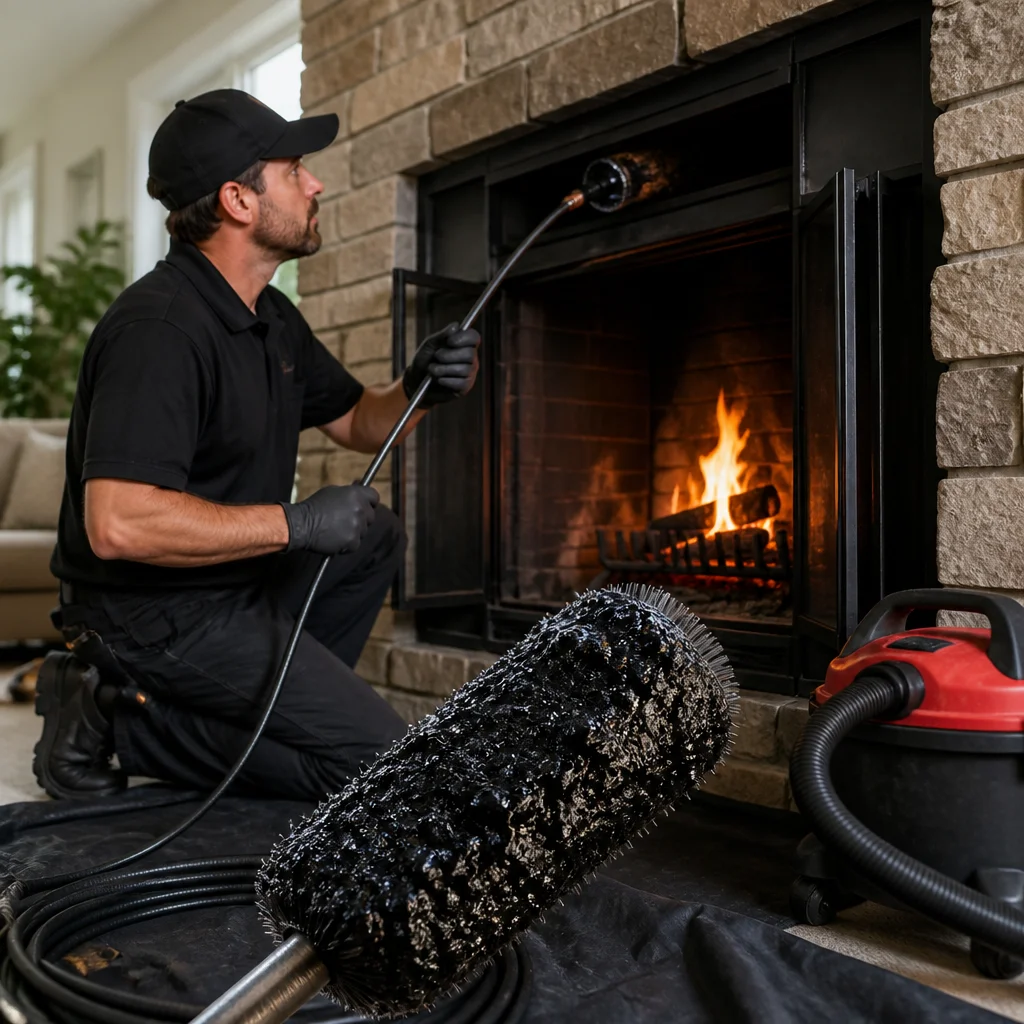
This comprehensive approach eliminates the creosote, restores proper airflow, and allows your fireplace to operate at peak efficiency. More importantly, it removes the fuel that could fuel a dangerous fire.
What to do next: If you use your fireplace multiple times per week during winter, plan annual professional cleaning. Homes with lighter use (one to two fires weekly) might extend cleaning to every 18 months, but professional assessment should happen annually.
Our Advanced Inspection and Removal Process
We combine traditional chimney sweep expertise with modern technology to deliver thorough results. Here’s how we work:
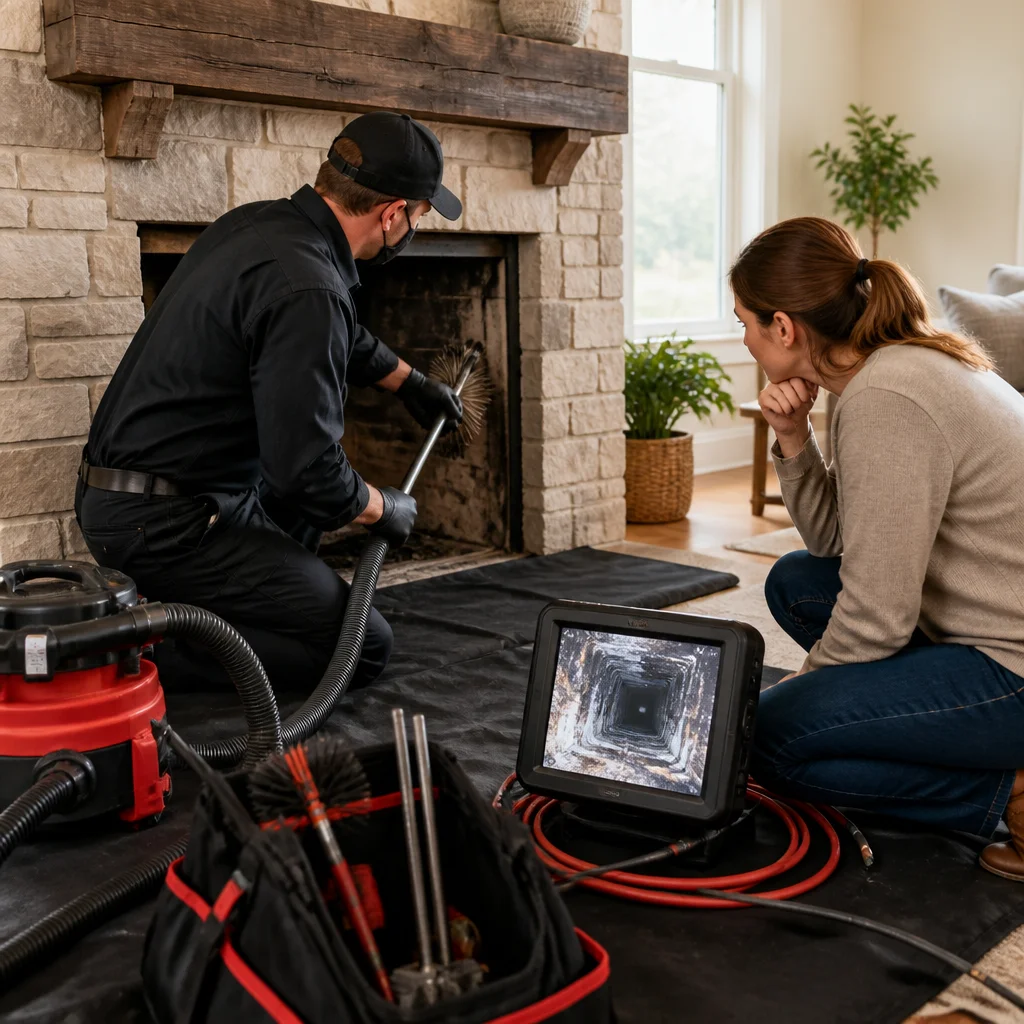
Visual and Camera Inspection: We begin by examining the exterior and interior of your chimney. Our advanced inspection cameras allow us to see deep into the flue without guesswork. This reveals the exact amount of creosote, the presence of blockages, structural damage, or other concerns that need attention.
Strategic Brush and Rod System: We use appropriately sized brushes that match your flue dimensions and creosote buildup stage. Our manual brushing techniques, combined with weighted rods, dislodge stubborn deposits throughout the entire flue length.
High-Powered Vacuum Containment: As we loosen creosote and debris, our industrial vacuum system captures it immediately. This containment approach keeps your home clean and prevents particles from escaping into your living areas.
Verification Inspection: After cleaning, we perform a second camera inspection to confirm the flue is clear. We document what we find with photos you can reference later.
Recommendations and Documentation: We provide a detailed report explaining what we found, what we cleaned, and any repairs or maintenance we recommend for future safety.
This systematic process ensures nothing is missed and gives you complete confidence in the results.
Safety-First Approach to Chimney Maintenance
Safety guides every decision we make at Go Chimney Sweep. We’re not just removing creosote; we’re protecting your family and home from fire risk and gas hazards.
Our technicians are trained to recognize conditions beyond simple creosote buildup. During chimney inspection services, we evaluate the structural condition of your masonry, check for damaged flue liners, and identify any leaks or gaps where gases could escape. If we find issues, we explain exactly what needs repair and why.
We also emphasize education. Many homeowners don’t realize that certain wood-burning practices increase creosote formation. Burning wet or unseasoned wood, for example, produces excessive smoke and moisture that accelerates buildup. We share practical tips on burning dry, seasoned hardwood, maintaining proper airflow, and using appropriate fireplace damper settings.
Regular maintenance is the foundation of chimney safety. We recommend annual inspections for all fireplace users, even if you don’t think you need cleaning. Inspection costs far less than damage repair or emergency chimney fire response.
What to do next: Before using your fireplace this season, schedule a professional inspection. This single step prevents the vast majority of chimney emergencies.
Signs Your Chimney Needs Professional Creosote Removal
Certain warning signs indicate creosote buildup has reached concerning levels:
Reduced draft or poor airflow: If your fireplace produces more smoke in your home than flames in the firebox, creosote blockage is likely restricting airflow. You might notice difficulty starting fires or fires that burn poorly despite using dry wood.
Visible creosote buildup: If you can see black, tarry residue on the damper or inner walls when you look up into the firebox, that’s creosote. It means the flue likely has more buildup higher up.
Unpleasant odors: A strong, acrid smell when the fireplace is in use or even when it’s not can indicate heavy creosote deposits. The smell intensifies in humid conditions.
Sparks or embers shooting from the top: While some sparks are normal, excessive sparks suggest creosote ignition starting to occur. This is a red flag that immediate cleaning is necessary.
Rust stains or water damage around the chimney: While not directly creosote-related, these signs often accompany problems that restrict airflow and trap moisture, accelerating creosote formation.
What to do next: If you notice any of these signs, contact us immediately. The longer you wait, the more creosote accumulates and the greater the fire risk becomes.
The Cost of DIY vs. Professional Creosote Cleanup
DIY chimney cleaning might seem cost-effective upfront, but the reality is more complicated. A basic brush set and rods from a hardware store might cost $100 to $200. However, you’re lacking proper equipment, training, and safety measures.
Professional creosote cleanup with us typically costs between $300 and $600, depending on the severity of buildup and any repairs needed. This cost includes inspection, cleaning with advanced equipment, verification that the work is complete, and documentation of conditions.
The differences matter significantly. DIY attempts often leave creosote residue behind, especially stage 2 and 3 deposits that require stronger techniques. You’re also working at heights without proper safety equipment, increasing personal injury risk. Additionally, you can’t assess structural damage or gas leaks the way a trained professional can.
Consider the potential costs of failing to clean properly: chimney fire damage can easily exceed $10,000, and carbon monoxide exposure carries serious health consequences. Insurance often won’t cover damage from inadequate chimney maintenance.
Professional cleaning is an investment that protects your home, ensures effectiveness, and provides accountability. We stand behind our work and can document that cleaning was completed properly.
What to do next: Get a quote from us before assuming DIY is the right approach. The difference in cost is often much smaller than homeowners expect, and the protection you gain is substantial.
Protecting Your Family Through Regular Professional Cleaning
Consistent professional maintenance transforms creosote cleanup from a crisis management situation into preventive care. When we establish a regular cleaning schedule, we catch buildup before it becomes dangerous.
Homeowners who use their fireplaces frequently should prioritize annual cleaning. Those with moderate use might extend to every 18 months. Even if you rarely use your fireplace, we recommend inspection at least every two years to ensure no unexpected buildup or damage has occurred.
Beyond cleaning frequency, we also recommend complementary services that enhance overall chimney safety. Chimney cap installation prevents debris, animals, and rain from entering the flue. Damaged flue liners can be repaired or relined to restore proper gas venting. These investments compound over time, keeping your entire system functioning safely.
We view creosote management not as a one-time fix but as part of responsible home stewardship. Just as you maintain your HVAC system or plumbing, your chimney requires regular professional attention.
What to do next: Ask us about setting up a recurring cleaning schedule that matches your fireplace usage. We can send reminders when you’re due for service, keeping maintenance from slipping your mind during busy seasons.
Schedule Your Professional Creosote Cleanup Today
Creosote buildup isn’t something to ignore or delay. The risks are real, but they’re completely preventable through professional care.
We’re here to help you maintain a safe, efficient chimney system. Our team brings expertise, modern equipment, and a commitment to your family’s safety to every job we do. We’ve served Texas homeowners with professional chimney services for years, and we take pride in thorough, reliable work.
Contact us today to schedule your professional creosote cleanup and inspection. We’ll assess your current situation, recommend the best approach, and handle the work with the care it deserves. Your fireplace should be a source of warmth and comfort, not worry. Let’s make sure it is.
Frequently Asked Questions (FAQ)
How often should we have our chimney professionally cleaned?
We recommend annual chimney cleaning and inspection for most homeowners who use their fireplace regularly. If you burn wood frequently during winter months, we may suggest cleaning twice yearly to prevent dangerous creosote buildup. Our inspections help us determine the right schedule for your specific situation based on your usage patterns and chimney condition.
What makes professional creosote removal safer than attempting it ourselves?
We use specialized equipment like high-powered dust control vacuums and advanced inspection cameras that homeowners typically don’t have access to, which allows us to safely remove creosote without spreading hazardous particles throughout your home. Our team is trained to identify structural damage or other chimney issues that could become serious safety problems if missed. We also know exactly how to handle different creosote stages, since the substance becomes increasingly flammable and dangerous as it accumulates.
What happens if we ignore creosote buildup in our chimney?
Ignoring creosote puts your home at serious risk of chimney fires, which can damage your flue, masonry, and potentially spread to your roof or interior walls. We’ve seen preventable fires cause tens of thousands of dollars in damage that could have been avoided with regular professional cleaning. Beyond fire risk, excessive creosote restricts airflow and reduces your fireplace’s heating efficiency, costing you more on energy bills.
