
Table of Contents
- Why Creosote Buildup Threatens Your Home's Safety
- Understanding Creosote: Composition and How It Forms
- The Real Risks of Neglecting Creosote Removal
- How Our Professional Creosote Removal Process Works
- Our Advanced Equipment and Safety-First Approach
- Prevention Strategies We Recommend for Your Fireplace
- Signs You Need Professional Creosote Cleaning Now
- What Sets Our Chimney Sweep Service Apart
- Scheduling Your Professional Inspection and Removal Service
- Frequently Asked Questions (FAQ)
Why Creosote Buildup Threatens Your Home’s Safety
If you heat your home with a wood-burning fireplace or stove, creosote buildup is something you need to understand and address regularly. This sticky, flammable substance accumulates inside your chimney with every fire you light, and when left unchecked, it becomes a genuine fire hazard. We work with homeowners across Texas who sometimes don’t realize how serious creosote deposits can become until a professional inspection reveals the problem.
The good news is that creosote removal is straightforward when handled by trained professionals who use the right equipment. Understanding what creosote is, how it forms, and why professional removal matters can help you protect your home and keep your fireplace operating safely and efficiently.
Creosote is the primary reason most chimney fires happen. When this substance accumulates on the interior walls of your flue, it creates a highly flammable coating that ignites at relatively low temperatures. A chimney fire can reach 2,000 degrees Fahrenheit or higher, potentially damaging the flue lining, spreading to surrounding structures, and putting your family at risk.
Beyond the immediate fire danger, heavy creosote deposits restrict airflow, which reduces your fireplace’s heating efficiency and can cause smoke to back up into your living space. This means you’re getting less warmth while burning more wood and exposing your household to indoor air quality issues. The structural integrity of your chimney itself becomes compromised when creosote remains unaddressed for extended periods.
What to do next: Schedule a professional chimney inspection in Round Rock or your area to determine your current creosote levels before the winter heating season arrives.
Understanding Creosote: Composition and How It Forms
Creosote develops when wood burns incompletely. As smoke travels up your chimney, it cools and condenses on the flue walls, leaving behind a dark, sticky residue composed of unburned wood particles, tar, and various hydrocarbons. Several factors influence how quickly creosote accumulates:
- Wood moisture content: Wet or unseasoned wood produces far more creosote than properly seasoned firewood (which should have less than 20% moisture).
- Flue temperature: A cooler chimney promotes faster condensation and buildup. Inadequate draft or insufficient insulation speeds the process.
- Burning practices: Smoldering fires with restricted airflow create heavier creosote deposits than hot, complete burns.
- Chimney design: Poorly sloped or damaged flues allow smoke to linger longer, giving creosote more time to condense.
The creosote that forms comes in three stages. Stage one is a light, powdery coating that’s relatively easy to remove. Stage two becomes a sticky, tar-like substance that clings stubbornly to the flue. Stage three is the most dangerous: a hard, glazed, crusty buildup that requires specialized equipment to eliminate safely.
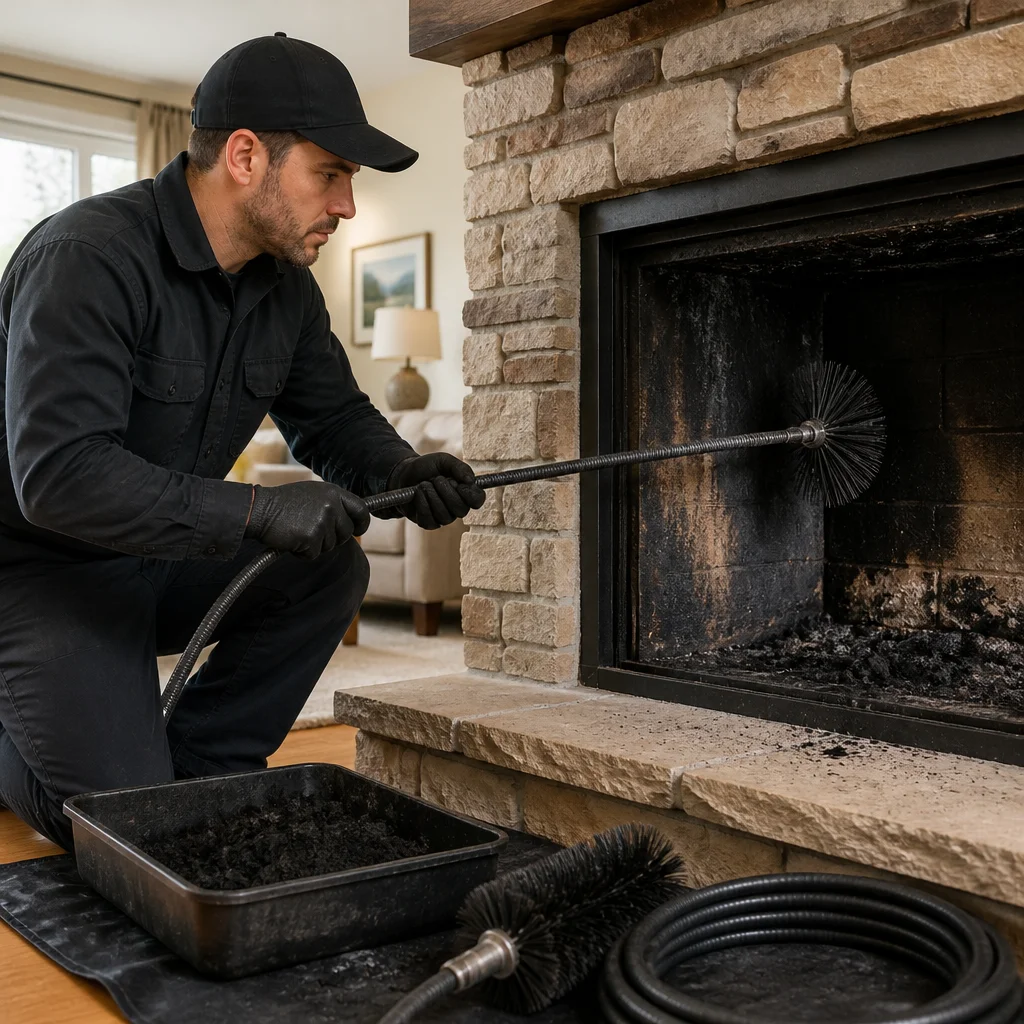
Most homeowners are unaware of which stage their creosote has reached, which is exactly why professional inspection matters before attempting removal.
The Real Risks of Neglecting Creosote Removal
Beyond chimney fires, neglected creosote creates a cascade of problems. Heavy buildup narrows the flue opening, reducing draft and causing smoke to back up into your home. This isn’t just uncomfortable; it means you’re breathing harmful particulates that should exit through the chimney.
Creosote is also acidic. When combined with moisture in the flue, it corrodes the chimney interior and mortar joints. Over time, this structural deterioration can lead to expensive flue liner replacement, masonry repairs, or complete chimney reconstruction in severe cases. The longer you wait to address creosote, the costlier the eventual repairs become.
Additionally, insurance companies and home inspectors treat heavy creosote deposits seriously. If you’re selling your home or renewing insurance, a chimney with significant creosote problems can complicate transactions or result in coverage denials. Regular professional removal protects your investment and keeps you insurable.
How Our Professional Creosote Removal Process Works
Our creosote removal approach depends on the type and severity of buildup we find during inspection. For lighter deposits, we use specialized brushes and rods designed to dislodge creosote without damaging the flue. For thicker, glazed creosote (stage three), we employ more aggressive techniques including rotary cleaning systems that safely break up the hardened coating.
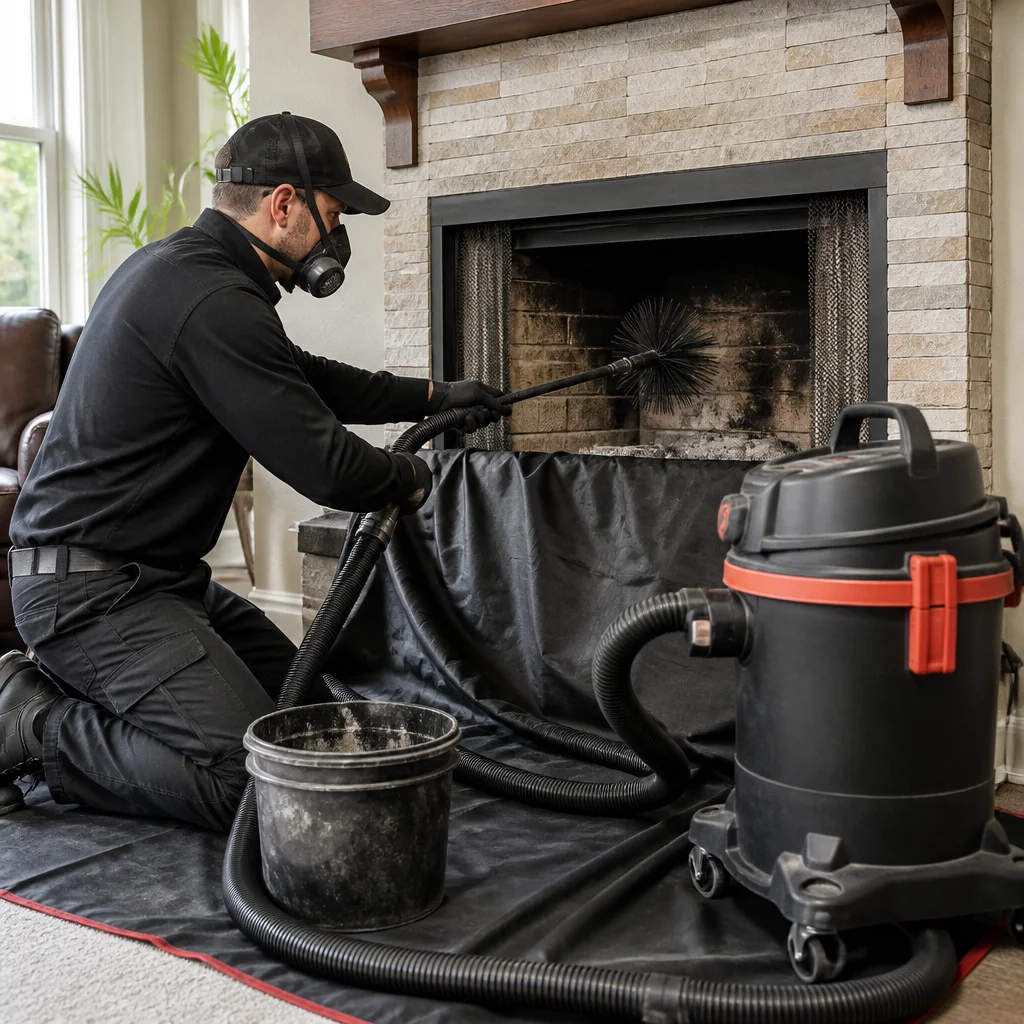
Throughout the process, we use high-powered dust control equipment to contain particles and keep creosote from settling into your home. Our technicians work methodically from the top of the chimney downward, ensuring complete removal while protecting your fireplace opening and hearth area.
We never rush through creosote removal. Each chimney is different, and the method we choose depends on your flue condition, the extent of buildup, and your chimney’s structural integrity. After cleaning, we perform a final inspection to confirm the flue is clear and safe for use.
Our Advanced Equipment and Safety-First Approach
We invest in modern equipment specifically designed for effective and safe creosote removal. Our high-powered vacuum systems with filtration technology capture creosote dust and debris at the source, preventing it from spreading through your home. Advanced inspection cameras allow us to see exactly what we’re working with before and after cleaning, so you know the job is complete.
Our brushes and rods are professional-grade tools rated for the specific creosote type we’re removing. Unlike over-the-counter products or outdated methods, our equipment ensures thorough removal without compromising your flue lining integrity. We also use safety harnesses and secure equipment when working on rooflines, because protecting our team translates to a more reliable service for you.
Every technician on our team is trained to recognize chimney damage that might have occurred due to chimney fires or structural issues. If we spot problems, we’ll explain what we’ve found and discuss repair options before proceeding.
Next step: Call us for a professional evaluation if you’re unsure about your chimney’s creosote level or condition.
Prevention Strategies We Recommend for Your Fireplace
Preventing excessive creosote buildup is far easier than dealing with heavy deposits. The most important step is burning properly seasoned hardwood. Softwoods like pine and cedar produce significantly more creosote, so stick with oak, maple, ash, or hickory that’s been dried for at least six to twelve months.
Keep your fireplace damper fully open while fires burn to ensure adequate draft. A partially closed damper or blocked airway restricts smoke movement, causing it to cool and deposit creosote more rapidly. Ensure your chimney cleaning service is performed annually before heavy winter use begins.
Additional prevention measures include:
- Building complete, hot fires that burn efficiently rather than smoldering fires.
- Having your chimney cap and flue liner inspected to ensure they’re functioning properly.
- Installing a chimney cap if you don’t have one, which prevents animal entry and reduces moisture intrusion.
- Maintaining proper chimney height and clearance from nearby trees to maximize draft.
These simple practices, combined with annual professional cleaning, keep creosote from becoming a safety concern in your home.
Signs You Need Professional Creosote Cleaning Now
Don’t wait until the heating season arrives to address creosote problems. Contact us immediately if you notice heavy smoke backing into your home when fires burn, a strong burnt smell lingering long after your fireplace cools, or visible black or brown residue on the interior flue walls when you peek up the chimney.
Reduced heating efficiency is another sign. If your fireplace isn’t warming your home the way it used to despite burning good wood, creosote restriction is likely the culprit. Popping or crackling sounds from the chimney during fires can indicate creosote ignition starting to occur.
Any rust stains on the exterior of your chimney or water leaks inside suggest both moisture and creosote problems that require professional attention. Don’t ignore these warnings.
What Sets Our Chimney Sweep Service Apart
We’re not a seasonal service that rushes through dozens of chimneys. We work carefully with each customer to understand their fireplace usage, burning habits, and specific concerns. Our inspections are thorough, using camera technology so you can see what we see.
Our team has years of hands-on experience recognizing creosote stages, identifying flue damage, and recommending the most effective removal approach for your situation. We explain our findings in clear language without unnecessary jargon, and we never push services you don’t need.
We’re committed to doing the job right the first time. That means taking time to protect your home, using quality equipment, and standing behind our work.
Scheduling Your Professional Inspection and Removal Service
Getting started is simple. Contact Go Chimney Sweep to schedule your creosote removal and chimney inspection. We serve the Greater Austin area and surrounding Texas communities, and we typically can accommodate appointments within a week.
Bring any questions about your fireplace performance, wood type, or concerns about creosote. The more we understand about your situation, the better service we can provide. Professional creosote removal is an investment in your home’s safety and your fireplace’s long-term function.
Don’t let creosote buildup become a hazard. Reach out today and let us help you maintain a safe, efficient fireplace for seasons to come.
Frequently Asked Questions (FAQ)
How often should we schedule creosote removal for our fireplace?
We recommend professional creosote cleaning at least once per year if you use your fireplace regularly during the heating season. If you burn wood frequently or notice heavy creosote buildup during inspections, we may suggest more frequent visits to keep your chimney safe and operating efficiently. Our team can assess your specific usage patterns and recommend the ideal schedule for your home.
What makes creosote such a fire hazard in chimneys?
Creosote is a highly flammable substance that builds up on chimney walls when wood burns, and it can ignite at temperatures as low as 1,100 degrees Fahrenheit. Once a creosote fire starts inside your chimney, it spreads rapidly and can damage the flue, extend to surrounding wood structures, and potentially enter your home. This is why we take creosote removal seriously and use professional-grade equipment to remove dangerous deposits before they become a threat.
What should we look for to know when creosote cleaning is needed?
We recommend watching for a thick, shiny black or dark brown coating inside your chimney, a strong burnt smell from your fireplace, or excessive smoke backing into your home. You might also notice sparks or popping sounds coming from the chimney during fires, which signals dangerous creosote accumulation. Our advanced inspection cameras let us identify creosote buildup precisely, so you’ll know exactly what needs attention.
