
Table of Contents
- Why Smoke Chamber Cleaning Matters for Your Fireplace Safety
- Understanding the Risks: Creosote Buildup and Fire Hazards
- Professional Smoke Chamber Cleaning: Our Advanced Approach
- How Our High-Powered Equipment Outperforms DIY Solutions
- Safety Standards and Inspections We Provide
- Cost-Benefit Analysis: Professional Service vs DIY Attempts
- Why Our Expertise Makes the Difference in Draft Improvement
- The Go Chimney Sweep Advantage for Austin Homeowners
- What to Expect During Our Smoke Chamber Cleaning Process
- Protecting Your Investment: Long-Term Fireplace Efficiency
- Frequently Asked Questions (FAQ)
Why Smoke Chamber Cleaning Matters for Your Fireplace Safety
Your smoke chamber is the heart of your fireplace system. This small but critical space sits directly above the firebox and funnels smoke upward into the flue. When it’s clean and properly maintained, your fireplace operates safely and efficiently. When it’s neglected, it becomes a hazard.
We’ve seen firsthand how many Austin homeowners underestimate the importance of smoke chamber maintenance. They use their fireplaces regularly during winter months, enjoying the warmth and ambiance, but rarely think about what’s accumulating inside. Over time, deposits build up that interfere with draft, reduce efficiency, and create genuine fire safety risks.
Regular smoke chamber cleaning ensures your fireplace system works as designed. It removes combustion byproducts, restores proper airflow, and prevents the kinds of structural problems that lead to expensive repairs down the line. Think of it like maintaining your car’s engine: regular service prevents breakdowns that would otherwise leave you stranded.
The difference between a well-maintained smoke chamber and a neglected one often comes down to professional attention. We recommend having your smoke chamber inspected and cleaned annually if you use your fireplace regularly.
Understanding the Risks: Creosote Buildup and Fire Hazards
Creosote is the primary concern in any chimney system. This dark, sticky substance forms when wood burns incompletely, and it accumulates on interior surfaces as smoke rises. In the smoke chamber specifically, creosote deposits can become thick and dangerous.
There are three stages of creosote buildup, and each presents escalating risks:
- Stage 1: Light, powdery deposits that are relatively easy to remove but reduce efficiency
- Stage 2: Thicker, more flammable buildup that restricts airflow and increases fire risk significantly
- Stage 3: Dense, hardened creosote that can spontaneously ignite and cause chimney fires
A chimney fire in stage 3 creosote isn’t a small problem. These fires can reach temperatures exceeding 2,000 degrees Fahrenheit, potentially damaging the flue, smoke chamber, and surrounding home structure. We’ve documented cases where homeowners discovered severe creosote accumulation only after a fire occurred, resulting in thousands of dollars in repairs that could have been prevented.
Incomplete combustion is the culprit. If your wood isn’t dry, your fireplace damper isn’t opening fully, or your chimney draft is poor, you’ll produce more creosote. Softwood burning also creates heavier creosote deposits than hardwood.
The smoke chamber absorbs creosote deposits at a faster rate than many homeowners realize, making regular cleaning essential for fire prevention and efficiency.
Professional Smoke Chamber Cleaning: Our Advanced Approach
Our professional smoke chamber cleaning process addresses every aspect of this critical component systematically. We don’t just sweep the visible surfaces; we clean the entire chamber thoroughly using specialized techniques designed specifically for smoke chamber geometry.
Here’s what our approach includes:
We start with a detailed inspection using advanced camera equipment to assess current conditions and identify any damage or structural concerns before cleaning begins. This allows us to spot problems early and adjust our cleaning strategy accordingly.
Next, we deploy high-powered vacuum systems designed specifically for chimney work. These aren’t household shop vacs. Our equipment features advanced dust control that captures debris at the source, preventing clouds of creosote and ash from spreading throughout your home. The vacuum creates negative pressure that pulls deposits loose safely and contains them completely.
We then manually clean the smoke chamber walls using specialized brushes and tools designed for this confined space. Different areas require different techniques. The sloped portions need careful attention to avoid missing deposits, while the corners and crevices where creosote accumulates most densely receive targeted scrubbing.
Finally, we inspect the entire chamber again to verify complete cleaning and check for any structural issues requiring repair or follow-up service.
This comprehensive approach ensures complete creosote removal and identifies problems before they become serious.
How Our High-Powered Equipment Outperforms DIY Solutions
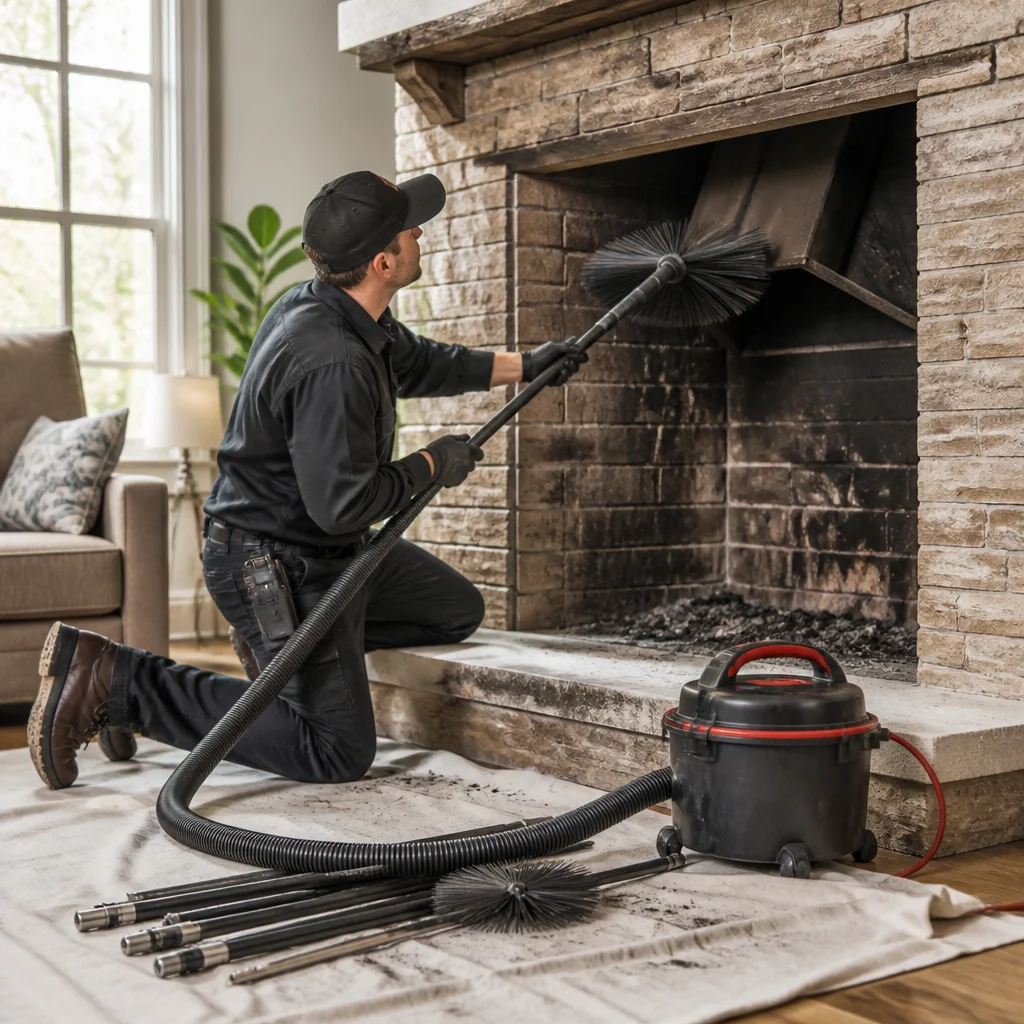
The equipment difference between professional and DIY cleaning is substantial, and it directly impacts both the results you get and the safety of your home during the process.
DIY enthusiasts typically use standard shop vacuums and basic chimney brushes purchased from hardware stores. While well-intentioned, this approach has critical limitations:
Standard vacuums lack the specialized filtration needed for creosote particles, which are extremely fine and sticky. Your household vacuum, or even a basic shop vac, will clog quickly and may actually spread creosote dust throughout your home as air escapes the exhaust.
Manual brushing without professional-grade equipment often misses deposits embedded in the smoke chamber’s irregular surfaces. The bends and transitions in smoke chambers aren’t simple vertical passages, and amateur brushing frequently fails to address material that’s hardened into place.
Dust and debris control become nearly impossible with DIY methods. Creosote clouds escape into living spaces, settling on furniture, walls, and throughout your home for weeks afterward.
Our high-powered equipment creates negative pressure that prevents this escape entirely. Our vacuums feature HEPA-level filtration that captures particles as small as 0.3 microns. We use specially designed brushes with the right stiffness and configuration for smoke chamber cleaning, reaching deposits others miss. The combination allows us to achieve a level of cleanliness simply unattainable through DIY work.
Consider a real scenario: a homeowner attempts DIY cleaning, gets frustrated halfway through thick creosote deposits, and stops. The partially cleaned chamber remains compromised, and now the job is even harder for a professional to complete later. This happens more often than many realize.
Our investment in professional-grade equipment protects your home and delivers results that actually matter for safety and efficiency.
Safety Standards and Inspections We Provide
Safety isn’t negotiable in chimney work, and professional standards exist for good reason. We follow the National Fire Protection Association (NFPA) guidelines and industry best practices for every cleaning and inspection we perform.
Our chimney inspection services employ advanced camera technology that allows us to document conditions visually. You receive photographic evidence of what we found and what we corrected. This documentation matters for your insurance records and gives you complete confidence in the work.
We inspect for several critical safety factors during smoke chamber cleaning:
- Structural integrity of the chamber walls and transitions
- Evidence of previous fire damage or deterioration
- Proper slope and configuration of the smoke shelf
- Damper operation and condition
- Any signs of moisture intrusion or damage
Each of these factors affects both safety and efficiency. A damaged damper, for example, compromises draft even if the chamber is perfectly clean. We identify these issues comprehensively rather than simply removing creosote and declaring the job complete.
We also verify that your flue system is properly sized and functioning correctly. An undersized or blocked flue contributes to incomplete combustion and creosote buildup. This systemic view prevents recurring problems.
Our safety-first approach means you’re protected not just from immediate fire hazards, but from the underlying issues that create those hazards in the first place.
Cost-Benefit Analysis: Professional Service vs DIY Attempts
The price difference between professional and DIY chimney cleaning is obvious at first glance. DIY costs minimal dollars. Professional service costs several hundred dollars. But examining actual costs and outcomes reveals a very different financial picture.
Let’s calculate the true cost of DIY attempts:
Equipment investment typically runs $150 to $300 for decent brushes, rods, and a shop vacuum. That’s a one-time cost if nothing breaks.
Your time investment is significant. Smoke chamber cleaning takes experienced professionals 1 to 2 hours. A homeowner attempting this without experience often needs 3 to 5 hours, with likely incomplete results.
Potential home damage from creosote dust contamination can require professional cleaning to restore carpets, furniture, and HVAC systems. This easily exceeds $1,000.
Risk of injury from ladder work or awkward positioning in confined spaces isn’t theoretical. Falls from ladders send thousands of homeowners to emergency rooms annually.
Incomplete cleaning creates problems that require professional remediation later, now at higher cost because the chamber must be recleaned more aggressively to remove additional buildup.

If incomplete cleaning contributes to a chimney fire, structural damage repairs often exceed $5,000 to $10,000.
Professional service, by comparison, delivers guaranteed complete cleaning, proper inspection, safety during the process, and documented results. The cost is fixed and transparent. There are no hidden damage discoveries months later.
Over five years of annual cleanings, professional service costs roughly $2,500 to $3,000. DIY attempts might save $1,000 to $1,500 upfront, but the actual risk-adjusted cost often exceeds professional service when you factor in incomplete results, potential damage, and time invested.
The smart financial decision is clear: professional cleaning protects your investment and your family’s safety more effectively than DIY shortcuts.
Why Our Expertise Makes the Difference in Draft Improvement
One benefit homeowners often don’t anticipate from professional smoke chamber cleaning is improved draft. This is where technical expertise really matters.
Creosote deposits don’t just block the chamber; they roughen interior surfaces, creating turbulence that disrupts airflow. A heavily coated smoke chamber forces heated air to work harder to exit, reducing draft efficiency. This slower draft, in turn, creates conditions for even more incomplete combustion and more creosote accumulation. It’s a negative cycle.
When we professionally clean the smoke chamber, we restore smooth interior surfaces. This immediately improves draft velocity and efficiency. You’ll notice your fireplace performs noticeably better after cleaning: flames burn hotter, the fire requires less tending, and heat distribution improves.
But our expertise goes beyond simple cleaning. We assess whether draft problems stem from the smoke chamber alone or indicate broader system issues:
A damper that doesn’t open fully restricts draft and creates similar symptoms. We verify damper function and repair or replace it if needed.
Inadequate chimney height relative to roof line, or nearby trees or structures blocking the chimney top, can compromise draft. We identify these issues and recommend solutions like chimney cap installation.
An undersized or damaged flue liner forces air to work around obstructions. We assess liner condition and recommend repairs that restore proper function.
Your fireplace draft depends on multiple interconnected components working together. Professional expertise identifies which components are underperforming and addresses root causes rather than treating symptoms.
This holistic approach is why homes serviced by experienced professionals consistently experience better fireplace performance than those attempting DIY maintenance.
The Go Chimney Sweep Advantage for Austin Homeowners
Our experience serving the greater Austin area gives us specific advantages that matter for your particular situation. Central Texas weather, building styles, and wood-burning habits create distinct challenges that generalized advice doesn’t address.
Austin’s climate means many homeowners use fireplaces seasonally but intensively during colder months. This usage pattern concentrates creosote buildup into shorter timeframes, requiring more aggressive maintenance. We’ve adapted our annual cleaning schedule recommendations specifically for Austin’s rhythm.
Many Austin-area homes feature stone and masonry construction that conceals chimney systems within walls. This means problems with draft or creosote buildup aren’t visually obvious until they’ve become serious. Our inspection protocols account for these concealed systems specifically.
We’re familiar with the masonry characteristics of Central Texas building materials and the specific repair needs they present. Limestone mortar requires different restoration techniques than other regions’ materials. We know these distinctions and apply appropriate methods.
Our advanced inspection cameras and dust control equipment mean we can service homes in established neighborhoods without creating the dust and noise concerns that plague less professional operations. Austin homeowners appreciate that we protect their homes and neighbors’ properties during our work.
We’re also local enough to provide follow-up service quickly. If you discover an issue months after cleaning, we’re here in Austin, not traveling from across the state. This accessibility matters when you need service.
For Austin-area homeowners prioritizing reliability, expertise, and trustworthy service, we’re the established choice.
What to Expect During Our Smoke Chamber Cleaning Process
Understanding what happens during your appointment helps you feel confident in the process and prepared for our visit.
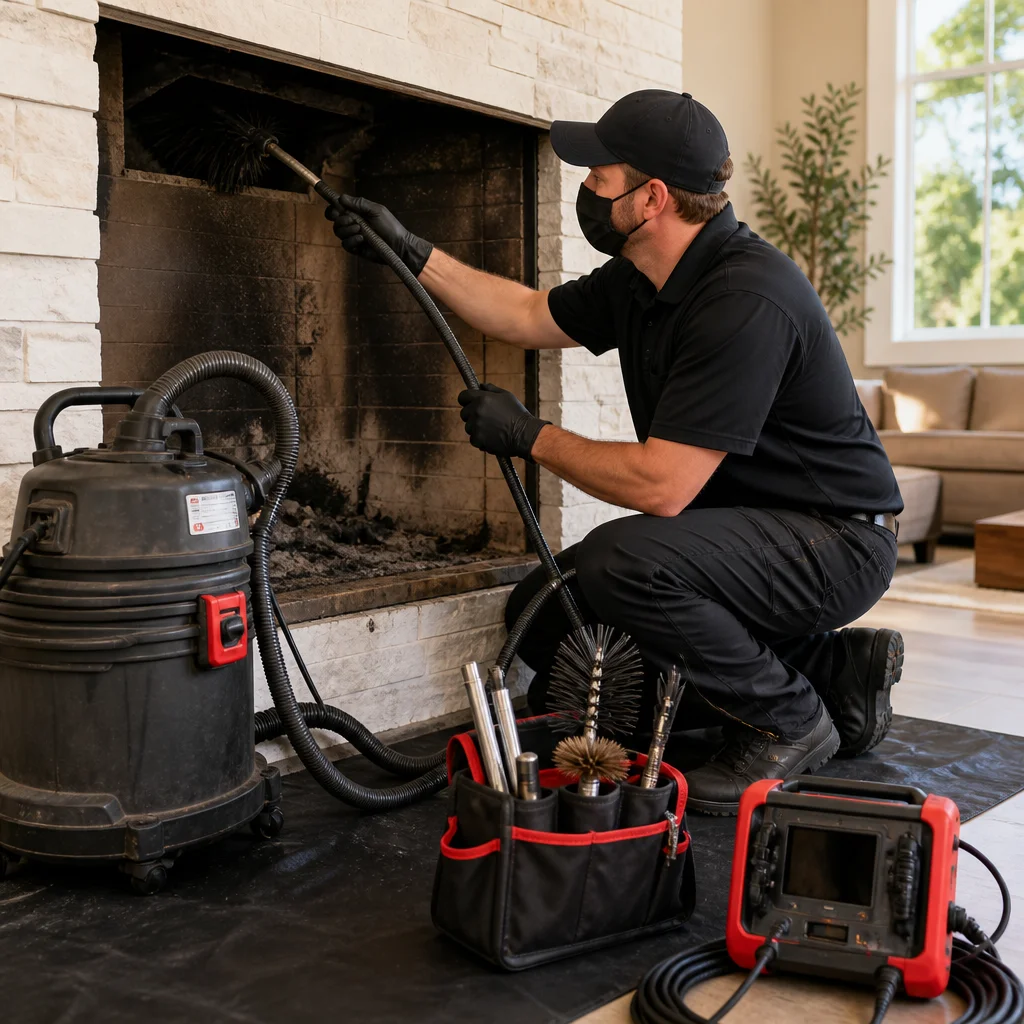
We typically schedule 2 to 3 hours for a complete smoke chamber cleaning and inspection. This allows us to work carefully without rushing through this critical system.
Our team arrives with our specialized equipment truck fully equipped. We cover your flooring and furniture around the fireplace to prevent any dust exposure, even with our advanced containment systems. This protection is standard regardless of our vacuum efficiency because we take home protection seriously.
We’ll explain our inspection findings before beginning cleaning work. If we identify any damage or concerns requiring additional services, we discuss these openly so you understand both the issues and recommended solutions.
During cleaning, our high-powered vacuum remains running throughout, maintaining negative pressure that prevents any creosote escape into your home. The process generates some noise from the vacuum unit, but nothing excessive or disruptive.
We clean methodically, working the entire smoke chamber surface. You’re welcome to ask questions or watch from a safe distance. Many homeowners find it interesting to see the equipment at work and understand how much material accumulates even in seemingly well-maintained systems.
After cleaning, we perform our final inspection, document conditions with camera photos, and review our findings with you. We answer questions about maintenance habits that can extend time between cleanings and explain what we observed regarding your specific fireplace’s condition.
You’ll receive documentation of our work and recommendations for any follow-up service needed. We’ll also discuss optimal timing for your next cleaning.
The entire process is transparent, professional, and focused on your complete confidence in the work completed.
Protecting Your Investment: Long-Term Fireplace Efficiency
Your fireplace is both a valuable home feature and a significant investment in comfort and ambiance. Protecting that investment requires ongoing attention to the smoke chamber and broader chimney system.
Regular professional cleaning ensures consistent efficiency. A clean fireplace uses less wood while producing more usable heat. Over a heating season, this efficiency translates to meaningful savings on fuel costs and reduced labor splitting and storing wood.
Professional maintenance also protects your home’s structural integrity. Creosote is acidic and corrosive. Over years, it damages flue liners, mortar joints, and masonry. A small investment in annual cleaning prevents thousands in structural repairs.
Insurance coverage sometimes requires documented maintenance. Regular professional cleaning from our company provides that documentation. Should any incident occur, you’re protected both by proper maintenance practices and by evidence that you’ve invested in professional care.
The enjoyment factor matters too. A well-maintained fireplace simply works better. Fires start more easily, burn more reliably, and heat more effectively. The experience of using your fireplace improves measurably when the system functions at its best.
We recommend annual smoke chamber cleaning and chimney inspection services for homeowners using fireplaces regularly. For occasional users, every two years is reasonable. We’ll assess your specific situation and recommend a schedule that keeps your system safe and efficient without unnecessary service.
Your fireplace should be something you enjoy without worry. Professional maintenance ensures that confidence is justified.
The choice between DIY methods and professional service ultimately comes down to priorities. If you prioritize cost savings alone, DIY methods seem attractive. But if you prioritize safety, effectiveness, and genuine long-term protection for your home and family, professional service is the only reasonable choice. We’ve built our reputation on delivering exactly that kind of service to Austin-area homeowners. When you’re ready to trust your fireplace system to professionals who understand its complexity and importance, we’re here to help.
Frequently Asked Questions (FAQ)
Why should we hire professional smoke chamber cleaning instead of attempting it ourselves?
We recommend professional cleaning because smoke chambers require specialized equipment and training to safely remove creosote buildup without damaging the delicate interior surfaces. Our high-powered dust control vacuums and advanced inspection cameras allow us to reach areas that DIY methods simply cannot access effectively. Attempting this work yourself risks incomplete cleaning, personal injury, and missing structural damage that could compromise your home’s safety.
How often does our smoke chamber need cleaning?
We typically recommend annual inspections and cleaning for fireplaces that are used regularly, especially in Texas where wood-burning season can extend several months. The frequency depends on how often you use your fireplace and the type of wood you burn, which our technicians will assess during your inspection. We’ll provide specific recommendations based on your individual situation to keep your chimney operating safely and efficiently.
What happens if we don’t maintain our smoke chamber?
Without regular maintenance, creosote accumulates in your smoke chamber and flue, which significantly increases your risk of chimney fires that can spread to your home’s structure. Poor maintenance also reduces draft efficiency, causing smoke to back up into your living space and potentially introducing harmful gases like carbon monoxide. We’ve seen preventable damage to Austin-area homes that could have been avoided with routine professional cleaning and inspections.
