
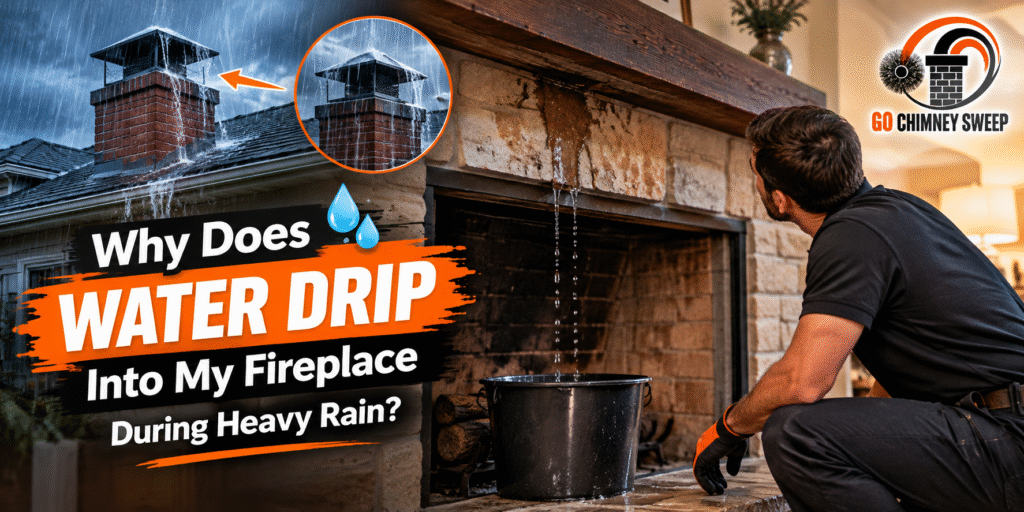
Have you ever noticed water dripping into your fireplace during a heavy rainstorm? While it might seem like a minor problem, water entering your chimney can be an early warning sign of damage that should not be ignored. A fireplace is designed to provide warmth and comfort, not allow rainwater into your living space. If you notice dripping sounds, damp bricks, water stains, or puddles inside your firebox, your chimney may have a moisture intrusion problem.
For homeowners across Texas and surrounding areas, heavy rainfall, thunderstorms, and strong winds can expose weaknesses in chimney structures. Understanding why water enters your fireplace and how to address the problem can help protect your home from costly repairs.
1. Missing or Damaged Chimney Cap
One of the most common reasons water enters a fireplace during heavy rain is a missing or damaged chimney cap. A chimney cap is a protective metal covering installed at the top of the chimney to help prevent rainwater, leaves, and debris from entering the flue.
Without a chimney cap, rainwater can fall directly into the chimney opening and eventually reach your fireplace. Even if a cap is installed, it may become loose, rusted, or damaged over time, reducing its ability to provide protection.
Common signs of chimney cap problems include:
- Water dripping directly into the firebox
- Rust or visible damage around the chimney opening
- Leaves or debris inside the fireplace
- Recurring leaks during heavy rainfall
- A missing or visibly displaced chimney cap
Installing or replacing a properly fitted chimney cap can help reduce water entry and protect your fireplace system from rain-related problems.
2. Cracked or Deteriorating Chimney Crown
The chimney crown is the protective concrete or masonry surface at the top of a masonry chimney. Its purpose is to direct rainwater away from the chimney structure and prevent moisture from penetrating the masonry.
Over time, exposure to changing temperatures, strong sunlight, and heavy rainfall can cause the chimney crown to develop cracks or begin deteriorating.
When water enters these openings, it can travel through the chimney structure and eventually create dampness around the fireplace.
Minor crown damage may be repairable, while severe deterioration might require rebuilding the crown.
A professional chimney inspection can help determine whether the crown is contributing to water intrusion.
3. Damaged Chimney Flashing Around the Roof
Chimney flashing is a system of metal pieces installed where the chimney meets the roof. It helps prevent rainwater from entering the gaps between the roofing materials and chimney structure.
When flashing becomes loose, corroded, improperly sealed, or damaged, rainwater can penetrate the surrounding roof area.
Water entering through damaged flashing may travel along framing or masonry before appearing near the fireplace. As a result, the location where water becomes visible is not always the actual source of the leak.
Signs of flashing problems may include:
- Water stains on ceilings near the chimney
- Damp walls surrounding the fireplace
- Leaks that worsen during wind-driven rain
- Peeling paint near the chimney structure
- Moisture appearing around the chimney breast
Because flashing problems involve both roofing and chimney components, proper diagnosis is important before attempting repairs.
4. Cracked Chimney Bricks and Mortar Joints
Your chimney is constantly exposed to outdoor weather conditions. Over time, bricks and mortar joints can deteriorate, allowing rainwater to penetrate the masonry.
During heavy rainstorms, water may enter through cracks, damaged mortar, or porous masonry surfaces.
Repeated moisture exposure can gradually weaken the chimney structure and contribute to additional deterioration.
Warning signs include crumbling mortar, loose bricks, white powdery deposits on masonry, and damp patches around the fireplace.
Professional chimney masonry repairs, including tuckpointing when appropriate, can help restore damaged mortar joints and reduce water penetration.
5. Wind-Driven Rain Entering the Chimney
Texas thunderstorms are often accompanied by strong winds that can push rainwater sideways rather than allowing it to fall straight down.
Under these conditions, rain may enter an exposed chimney opening or be driven beneath an unsuitable chimney cap.
Wind-driven rain can also expose small weaknesses in flashing, chimney crowns, and masonry that might not cause noticeable leaks during lighter rainfall.
If your fireplace only leaks during severe storms, wind direction and rainfall intensity may be important clues.
A chimney professional can examine the cap design, chimney structure, and surrounding roof components to identify possible entry points.
6. Worn Chimney Chase Cover
Some homes have factory-built fireplace systems surrounded by a framed chimney chase rather than a traditional masonry chimney.
These structures typically use a metal chase cover to help prevent water from entering the enclosure.
Over time, chase covers may develop corrosion, holes, or drainage problems. A poorly designed or damaged chase cover can allow water to collect and enter the chimney enclosure.
If your home has a prefabricated fireplace, a damaged chase cover could be responsible for rainwater appearing inside or around the fireplace.
Replacing a deteriorated chase cover with a properly fitted, corrosion-resistant option can help prevent recurring moisture intrusion.
7. Water Absorption Through Chimney Masonry
Not every fireplace leak results from an obvious crack or missing component. Older or deteriorating masonry can absorb significant amounts of rainwater, especially when bricks and mortar become increasingly porous.
During prolonged rainfall, absorbed moisture may migrate through the chimney structure and appear as dampness or staining inside the home.
If masonry absorption is contributing to the problem, repairs may involve restoring damaged mortar, replacing deteriorated materials, or applying a suitable vapor-permeable water repellent after necessary repairs.
Using the correct materials is essential because inappropriate waterproofing products can trap moisture within masonry and worsen deterioration.
What Happens If You Ignore Water Leaking Into Your Fireplace?
Water intrusion may begin with a few drops during heavy rainfall, but repeated exposure can lead to more serious chimney and home maintenance problems.
Potential consequences include:
- Masonry deterioration: Moisture can gradually weaken bricks and mortar
- Rust and corrosion: Metal fireplace components and dampers may become damaged
- Interior water damage: Moisture can stain walls, ceilings, and surrounding materials
- Mold and mildew: Persistent dampness can create conditions that encourage microbial growth
- Damaged chimney liners: Certain liner materials and components may deteriorate with prolonged moisture exposure
- Higher repair costs: Small, untreated leaks can eventually require extensive repairs
Addressing water intrusion early can help prevent additional damage and protect the condition of your fireplace system.
How Can You Stop Rainwater From Entering Your Fireplace?
The most effective solution depends on where the water is entering the chimney. Since several chimney components can cause similar symptoms, identifying the source is the first step.
A professional may recommend:
- Chimney Cap Installation: Install or replace a damaged chimney cap to help prevent rain from entering the flue.
- Chimney Crown Repair: Seal suitable minor cracks or repair deteriorating crown materials.
- Chimney Flashing Repair: Correct damaged or improperly installed flashing around the roof.
- Masonry Repairs: Repair cracked bricks and deteriorated mortar joints to reduce moisture penetration.
- Chase Cover Replacement: Replace corroded or damaged covers on prefabricated chimney enclosures.
- Chimney Inspection: Evaluate the chimney system to locate moisture entry points and identify related damage.
Avoid using your fireplace while an active leak remains unresolved, particularly if water has reached electrical components or damaged the fireplace system. A qualified professional should determine whether the fireplace is safe to operate.
Why Are Chimney Leaks Common During Heavy Rain in Texas?
Texas experiences a variety of weather conditions, including intense thunderstorms, periods of heavy rainfall, strong winds, and significant temperature changes.
These conditions can gradually affect exposed chimney materials. Heavy rain may reveal damaged flashing, deteriorated mortar joints, or an improperly fitted chimney cap.
In areas such as Austin, Round Rock, San Antonio, and surrounding Texas communities, seasonal storms make preventive chimney maintenance particularly valuable.
Regular inspections help homeowners identify vulnerable chimney components before severe weather causes noticeable interior leaks.
When Should You Call a Professional Chimney Service?
If water repeatedly enters your fireplace during rainfall, arranging a professional inspection is recommended.
You should also seek assistance when you notice:
- Persistent dripping or puddles in the firebox
- Water stains around the chimney or fireplace
- Crumbling masonry or visibly damaged mortar
- Rust on fireplace doors, dampers, or metal components
- A damaged or missing chimney cap
- Musty odors that become stronger after rainfall
A professional chimney assessment can help identify the underlying problem and determine which repairs are appropriate.
Final Thoughts
Water dripping into your fireplace during heavy rain is more than an inconvenience. It can indicate a missing chimney cap, damaged flashing, cracked masonry, chimney crown deterioration, or another moisture-related problem.
Understanding the possible causes can help you recognize warning signs before they develop into expensive repairs.
For Texas homeowners, regular chimney inspections, timely repairs, and proper protective components can make a meaningful difference in keeping fireplaces dry and chimney systems in good condition.
Taking action when you first notice a leak is one of the best ways to prevent additional water damage and preserve your chimney for years to come.
Protect Your Fireplace From Rainwater With Go Chimney Sweep
Is rainwater dripping into your fireplace every time a heavy storm passes through? Go Chimney Sweep is here to help homeowners throughout Austin, Round Rock, San Antonio, and surrounding Texas service areas maintain safer, better-protected chimneys. We offer professional chimney inspections, chimney cleaning, and chimney cap installation services to help identify potential moisture problems and protect your fireplace system. Whether you’re dealing with a missing chimney cap, recurring chimney leaks, or concerns about your chimney’s condition, our team can help you determine the next steps. Don’t wait for a small water leak to become an expensive problem. Contact Go Chimney Sweep today to schedule a chimney inspection and help keep your fireplace protected from the elements!
