
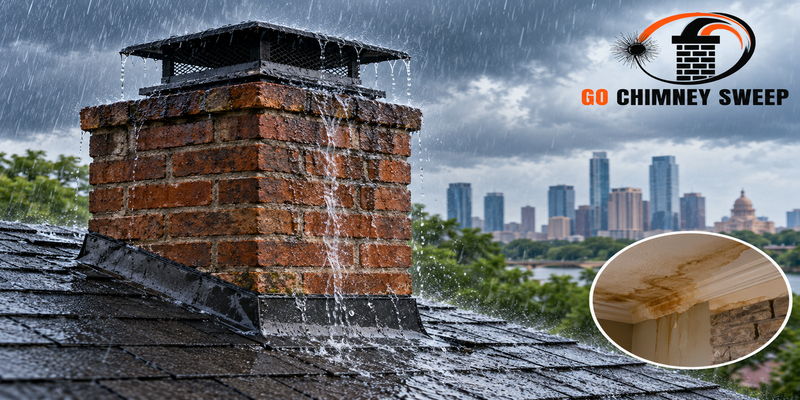
Heavy rain can reveal chimney problems that may remain unnoticed during dry weather. For homeowners in Austin, chimney leaks can appear as water stains near the fireplace, damp walls, musty odors, dripping sounds, or visible moisture inside the firebox.
A chimney is designed to withstand normal weather exposure, but it contains several components that must work together to keep rainwater outside. When flashing, masonry, chimney caps, crowns, or surrounding roofing materials begin to deteriorate, heavy rainfall can create enough water pressure to expose weaknesses.
Understanding where chimney leaks come from can help homeowners identify problems early and prevent moisture from causing more extensive damage.
Why Chimney Leaks Often Appear After Heavy Rain
Light rain may not produce enough water to penetrate small cracks or damaged areas. During a heavy Austin storm, however, large amounts of rainwater can collect around the chimney, flow across the roof, and repeatedly strike exposed masonry.
Wind-driven rain can also push water into openings that ordinary rainfall might not reach.
A chimney leak therefore does not always begin suddenly. In many cases, the underlying problem has been developing gradually, and heavy rain simply makes the damage noticeable.
1. Damaged or Missing Chimney Flashing
Flashing is one of the most important waterproofing components around a chimney.
Metal flashing is installed where the chimney meets the roof. Its purpose is to prevent rainwater from entering the small joint between the roofing material and chimney structure.
If the flashing becomes loose, rusted, cracked, improperly sealed, or separated from the roof, water may flow underneath it during heavy rain.
Common signs of flashing problems include:
- Water stains on ceilings or walls near the chimney
- Moisture appearing after strong storms
- Damp attic insulation near the chimney
- Peeling paint or drywall damage around the fireplace area
- Visible gaps between flashing and masonry
Because flashing sits directly at the roofline, even a relatively small opening can allow a significant amount of water into the home during prolonged rainfall.
2. Cracked Chimney Crown
The chimney crown is the protective concrete or masonry surface located at the top of many chimneys.
Its purpose is to direct rainwater away from the flue and chimney walls. A properly constructed crown should slope outward so water runs away from the center of the chimney.
Over time, temperature changes, moisture exposure, and normal deterioration can cause cracks to develop.
During heavy rainfall, water can enter these cracks and move deeper into the chimney structure.
Small crown cracks may eventually become larger if water repeatedly penetrates the material.
3. Missing or Damaged Chimney Cap
A chimney cap is installed above the flue opening and helps prevent rainwater from falling directly into the chimney.
Without a chimney cap, rain can enter the flue and travel downward toward the fireplace.
A damaged cap can create similar problems.
Chimney caps may become:
- Loose
- Rusted
- Bent
- Disconnected
- Damaged by storms
- Improperly installed
A cap also helps keep leaves, debris, birds, and small animals from entering the chimney.
If water appears directly inside the firebox after rainfall, the chimney cap is one of the components that should be inspected.
4. Deteriorated Chimney Mortar
Many chimneys are constructed from brick and mortar.
Although brick is durable, chimney masonry is constantly exposed to outdoor weather. Over time, mortar joints can crack, crumble, or develop small openings.
Heavy rain may penetrate these damaged joints.
Once water enters the masonry system, it may travel through the chimney structure and become visible inside the home.
Signs of deteriorating mortar can include:
- Crumbling joints
- Loose mortar
- Small gaps between bricks
- White staining on masonry
- Visible cracks
- Damp areas inside or around the chimney
Repairing deteriorated mortar can help restore the chimney’s ability to resist moisture.
5. Porous or Aging Chimney Bricks
Brick itself can also absorb water.
Older or damaged bricks may become increasingly porous after years of exposure to rain, sunlight, heat, and changing temperatures.
During a prolonged Austin rainstorm, saturated masonry can absorb substantial moisture.
Water may then migrate through the chimney walls and appear indoors.
Brick deterioration may become visible as:
- Flaking surfaces
- Crumbling brick
- Cracks
- Discoloration
- Pieces of masonry breaking away
Allowing damaged brick to remain exposed to repeated moisture can gradually weaken the chimney structure.
6. Roof Problems Near the Chimney
Sometimes a leak that appears to come from the chimney actually originates from the surrounding roof.
Damaged shingles, roof underlayment, valleys, or roof penetrations near the chimney can allow water into the attic.
Once inside, water may travel along rafters or framing before becoming visible near the chimney.
This can make leak diagnosis difficult because the location where water appears indoors is not always the same location where water entered the roof.
A complete inspection may therefore need to evaluate both the chimney and nearby roofing materials.
7. Cracks in the Chimney Chase Cover
Some homes use a prefabricated chimney system surrounded by a chimney chase.
At the top of the chase is usually a metal chase cover designed to keep water from entering the structure.
Over time, a chase cover may rust, warp, or develop holes.
Water can then enter the chimney enclosure during heavy rainfall.
Signs of chase cover problems may include rust stains running down the chimney, moisture inside the fireplace system, or visible corrosion near the top of the chimney.
8. Improper Waterproofing
Masonry chimneys are exposed to weather throughout the year.
In some situations, homeowners use inappropriate sealants or coatings that trap moisture inside the bricks instead of allowing the masonry to breathe.
Proper masonry water-repellent products are designed to reduce water absorption while still allowing moisture vapor to escape.
Using the wrong waterproofing material can potentially make moisture problems worse.
Before applying any waterproofing treatment, existing cracks, mortar deterioration, flashing problems, and structural defects should normally be addressed.
9. Damaged Chimney Cricket
On certain roofs, especially where a wide chimney intersects the roof slope, a small raised structure called a chimney cricket may be installed behind the chimney.
The cricket redirects rainwater around the chimney rather than allowing it to collect behind it.
If the cricket is missing, damaged, or incorrectly built, water may pool against the back of the chimney during heavy rainfall.
Standing or repeatedly flowing water increases the likelihood of flashing leaks and moisture penetration.
10. Condensation Mistaken for a Rain Leak
Not every moisture problem around a chimney is caused directly by rainfall.
Condensation can sometimes develop inside a chimney, particularly when warm, humid air interacts with cooler chimney surfaces.
Because Austin can experience periods of high humidity, condensation and rain-related moisture can occasionally occur at similar times.
A professional inspection can help determine whether the moisture is entering from outside or developing inside the chimney system.
Why Chimney Leaks Should Not Be Ignored
A small chimney leak may appear to be a minor inconvenience, but repeated moisture exposure can affect several parts of a home.
Potential problems associated with chimney leaks include:
- Damaged drywall
- Ceiling stains
- Peeling paint
- Wood deterioration
- Mold or mildew growth
- Damaged attic insulation
- Rusted fireplace components
- Deteriorating mortar
- Damaged chimney liners
- Structural masonry problems
Water damage often becomes more expensive to repair when the source of the leak is left unresolved.
How Professionals Identify the Source of a Chimney Leak
Finding the exact source of a chimney leak may require examining several areas rather than focusing on one component.
A chimney inspection may include checking:
- Chimney flashing
- Roof shingles around the chimney
- Chimney cap
- Chimney crown
- Mortar joints
- Brick condition
- Chase cover
- Roof-to-chimney connections
- Interior chimney surfaces
- Attic areas near the chimney
In some cases, controlled water testing may also be used to help identify where moisture is entering.
Accurate diagnosis is important because applying sealant to the wrong area may temporarily hide the problem without correcting the actual source.
What to Do If Your Chimney Leaks After a Storm
If you notice water near your chimney after heavy rain, avoid assuming that the problem will disappear when the weather improves.
Document where the moisture appears and, when possible, note whether it occurs only during heavy rain or during lighter rainfall as well.
Homeowners should also avoid climbing onto wet roofs or attempting risky repairs during or immediately after a storm.
A professional inspection can help determine whether the problem involves flashing, masonry, roofing components, or the chimney opening itself.
Preventing Future Chimney Water Problems
Routine chimney maintenance can help reduce the likelihood of future leaks.
Preventive steps may include:
- Inspecting chimney flashing
- Checking the chimney cap
- Repairing crown cracks
- Replacing damaged mortar
- Monitoring brick deterioration
- Inspecting chase covers
- Checking nearby roofing materials
- Addressing small leaks early
- Scheduling periodic chimney inspections
Preventive maintenance is generally easier than repairing widespread moisture damage after repeated storms.
Chimney Leak Inspection and Repair in Texas
If you are dealing with a chimney leak after heavy rain, Go Chimney Sweep provides chimney inspection, cleaning, maintenance, and repair services for homeowners throughout Texas. Our team can inspect chimney caps, crowns, flashing, masonry, and other common areas where rainwater may enter. Whether you are noticing moisture around your fireplace or want your chimney checked before the next major storm, Go Chimney Sweep can help identify the source of the problem and recommend the appropriate solution.
