
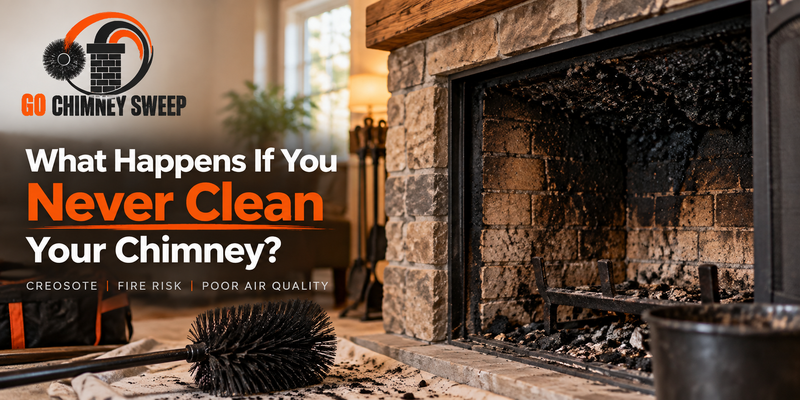
A chimney may look like a simple passageway for smoke, but it plays an important role in helping your fireplace or heating appliance vent combustion gases safely out of your home. Over time, soot, creosote, ash, debris, and even animal nesting materials can collect inside the chimney. If the chimney is never cleaned, that buildup can gradually create airflow problems, odors, staining, and potentially more serious safety concerns.
For homeowners throughout Texas and surrounding areas, chimney maintenance can be easy to overlook, especially in places where fireplaces may only be used during part of the year. However, even occasional fireplace use can leave deposits behind. Understanding what can happen when a chimney is neglected can help you make better decisions about inspection and maintenance.
Creosote Can Continue to Build Up
One of the most common substances found inside wood-burning chimneys is creosote. Creosote forms when smoke, gases, and moisture from burning wood cool and condense against the inside walls of the chimney.
At first, creosote may appear as a light, powdery coating. With continued use, it can become thicker, sticky, or hardened. The longer a chimney goes without cleaning, the more difficult this material may become to remove.
Creosote is also combustible, which is one reason chimney professionals pay close attention to buildup during inspections and cleanings. Regular maintenance helps keep these deposits from accumulating excessively.
Your Chimney May Develop Poor Airflow
A chimney needs a clear passage to move smoke and combustion gases upward and outside. When soot, creosote, leaves, nesting material, or other debris narrows that passage, airflow can become restricted.
Poor chimney draft may cause smoke to move slowly or even drift back into the room instead of exiting properly. You may notice excessive smoke near the fireplace, difficulty starting or maintaining a fire, or unusual smoky odors indoors.
Restricted airflow can also make a fireplace less pleasant and less efficient to use.
Smoke May Enter Your Home
If a chimney becomes heavily obstructed, smoke may not be able to travel upward as intended. Instead, some of it may enter the living area.
This can create unpleasant odors and may leave soot deposits around the fireplace opening, walls, ceilings, curtains, or nearby furniture.
Smoke entering the home should not be ignored. It can indicate a draft problem, blockage, damaged chimney component, or another issue that should be inspected before the fireplace is used again.
Animals and Debris Can Create Blockages
Chimneys can sometimes attract birds, squirrels, insects, and other small animals. Leaves, twigs, nesting materials, and windblown debris may also enter through an uncovered or damaged chimney top.
If the chimney is never inspected or cleaned, these materials can remain hidden inside the flue.
A significant blockage can interfere with ventilation. In some cases, homeowners may not realize there is a nest or obstruction until they begin using the fireplace again.
A chimney cap can help reduce the amount of debris and animal activity entering the chimney, but it does not eliminate the need for periodic inspection.
Unpleasant Chimney Odors Can Become Stronger
A neglected chimney can develop a noticeable smoky or musty smell. Creosote absorbs moisture and can produce strong odors, especially during warm or humid weather.
In many parts of Texas, heat and humidity can make chimney odors more noticeable inside the home.
Odors may also be caused by animal activity, moisture problems, leaves, or debris. Cleaning the chimney can remove some odor-producing material, although persistent smells may require additional inspection to identify the source.
Soot Can Stain the Fireplace and Surrounding Area
Soot is a fine black residue created during combustion. Without regular cleaning, soot can collect inside the chimney and around the fireplace.
Eventually, homeowners may notice dark stains on the firebox, fireplace opening, chimney components, or nearby surfaces.
These stains are not only cosmetic. Heavy soot accumulation can sometimes be a sign that combustion or airflow is not working as efficiently as it should.
Chimney Problems May Go Unnoticed
Chimney cleaning and chimney inspection are closely related, but they are not exactly the same service. Cleaning removes deposits and debris, while an inspection evaluates the condition of the chimney system.
When a chimney is ignored for years, other problems may also go unnoticed, including cracked masonry, damaged flue liners, deteriorating mortar, water intrusion, damaged chimney caps, or worn flashing.
Finding these problems earlier may make them easier to address before they contribute to additional deterioration.
Moisture Can Make Chimney Damage Worse
Water is one of the biggest long-term concerns for masonry chimneys. Rain can enter through damaged caps, deteriorated crowns, cracked mortar joints, or flashing problems.
If moisture remains inside the chimney system, it can contribute to masonry deterioration, rusting components, staining, odors, and damage to some types of flue liners.
A chimney that is never inspected may develop moisture-related problems without obvious warning signs inside the home.
Fireplace Performance May Decline
A clean, unobstructed chimney generally allows smoke to move more freely. When deposits and debris build up, the fireplace may not perform the way it once did.
You might notice fires that are more difficult to maintain, increased smoke, slower drafting, or unusual odors.
While cleaning cannot correct every fireplace problem, keeping the chimney clear is an important part of maintaining proper ventilation.
How Often Should a Chimney Be Checked?
The right maintenance schedule depends on several factors, including how often the fireplace is used, the type of fuel being burned, the condition of the chimney, and whether there have been previous problems.
Even homeowners who only use their fireplace occasionally can benefit from periodic chimney inspections because animals, weather, moisture, and debris can affect the chimney even when it is not being used.
If you notice strong odors, visible soot, poor drafting, falling debris, water stains, or smoke entering the home, it is a good idea to have the chimney evaluated before continuing to use the fireplace.
A Dirty Chimney Can Affect Indoor Air Quality
When a chimney is heavily coated with soot, creosote, or other debris, odors and small particles may become more noticeable inside the home. If the chimney is not drafting properly, smoke and combustion byproducts may also have a harder time leaving the house efficiently.
Keeping the chimney cleaner can support better airflow and help reduce the chance of smoky odors entering your living space. This is especially important during the colder months when windows and doors may remain closed for longer periods.
Neglected Chimneys Can Become More Difficult to Clean
The longer creosote and soot remain inside a chimney, the harder they may become to remove. Some deposits can become thick, glazed, and strongly attached to the chimney liner.
This can make the cleaning process more involved than routine maintenance. Regular chimney cleaning helps prevent buildup from becoming excessive and allows potential problems to be noticed before they develop further.
Chimney Buildup Can Increase Fire Risk
One of the most important reasons to maintain a chimney is the combustible nature of creosote. If enough creosote accumulates and is exposed to high temperatures or sparks, it can contribute to a chimney fire.
Chimney fires may sometimes be obvious, with loud noises or visible flames, but others can occur without being immediately noticed. Even a small chimney fire can potentially damage the flue liner or other components of the chimney system.
Your Chimney Cap and Crown Also Need Attention
Cleaning the inside of the chimney is only one part of chimney care. Components at the top of the chimney, including the chimney cap and crown, also play an important role in protecting the system.
A damaged or missing chimney cap can allow rain, debris, and animals to enter the flue. Cracks in the chimney crown can also allow moisture to penetrate the masonry. Periodic inspections can help identify these problems before they cause more extensive damage.
Know When to Stop Using Your Fireplace
Certain warning signs should not be ignored. If smoke is entering the room, you notice falling pieces of masonry, there is a strong creosote odor, or you hear unusual sounds coming from the chimney, it may be best to stop using the fireplace until the system has been inspected.
Visible cracks, water stains, rust, or excessive soot can also indicate that the chimney needs attention. Having these concerns evaluated early can help prevent further damage.
Keep Your Chimney Ready for Use
Ignoring a chimney for years can allow creosote, soot, debris, moisture, and hidden damage to accumulate. Routine chimney cleaning and inspection can help identify these issues and keep the fireplace system in better working condition.
If you need professional chimney cleaning or inspection services across Texas and surrounding areas, Go Chimney Sweep is ready to help. Our team provides chimney cleaning, inspections, and routine maintenance to help homeowners keep their fireplace and chimney systems cleaner, safer, and better prepared for seasonal use.
Keep Your Chimney Ready for Use
Ignoring a chimney for years can allow creosote, soot, debris, moisture, and hidden damage to accumulate. Routine chimney cleaning and inspection can help identify these issues and keep the fireplace system in better working condition. If you need professional chimney cleaning or inspection services across Texas and surrounding areas, Go Chimney Sweep is ready to help. Our team provides chimney cleaning, inspections, and maintenance designed to help homeowners keep their fireplace and chimney systems cleaner and better prepared for use. 🔥🏠
