
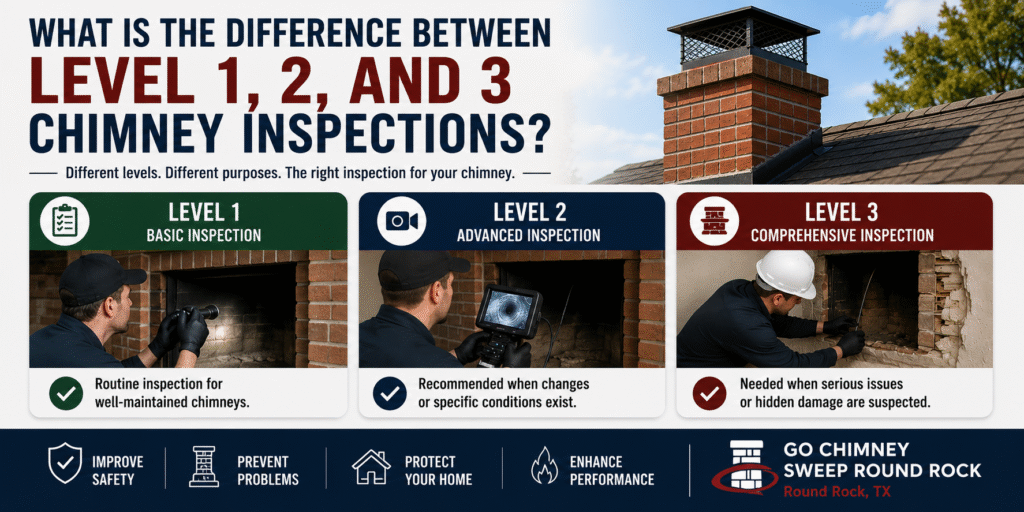
Regular chimney inspections are an important part of maintaining a safe and efficient fireplace system. Chimney inspections help identify potential issues, assess the condition of chimney components, and ensure the system is operating as intended. The chimney industry generally recognizes three levels of inspections: Level 1, Level 2, and Level 3. Each level involves a different scope of evaluation depending on the condition of the chimney and the circumstances surrounding the inspection.
Why Chimney Inspections Are Important
Over time, chimneys can experience wear, weather exposure, creosote buildup, and structural changes. Routine inspections help identify concerns before they become larger problems and allow homeowners to make informed decisions regarding maintenance and repairs.
What Is a Level 1 Chimney Inspection?
A Level 1 inspection is the most basic type of chimney inspection and is typically recommended when the chimney has been regularly maintained and there have been no significant changes to the system.
What a Level 1 Inspection Includes
- Visual examination of readily accessible chimney components
- Inspection of the fireplace and firebox
- Evaluation of the chimney exterior
- Assessment of the flue and chimney structure
- Identification of obvious signs of damage or obstruction
A Level 1 inspection is often performed as part of routine annual chimney maintenance when no known issues exist.
When Is a Level 1 Inspection Recommended?
A Level 1 inspection may be appropriate when:
- The chimney is being used in the same manner as before
- No major modifications have been made
- No significant weather or structural events have occurred
- Routine maintenance is being performed
What Is a Level 2 Chimney Inspection?
A Level 2 inspection is more detailed than a Level 1 inspection and is commonly recommended when changes have occurred that could affect the chimney system.
What a Level 2 Inspection Includes
In addition to everything covered in a Level 1 inspection, a Level 2 inspection may include:
- Video scanning of the flue interior
- Inspection of accessible attic, crawlspace, and chimney connections
- Evaluation of concealed areas that may impact chimney performance
- Documentation of any visible defects or concerns
Specialized inspection equipment allows technicians to view areas that cannot be adequately assessed during a basic visual inspection.
When Is a Level 2 Inspection Recommended?
A Level 2 inspection is often recommended when:
- A property is being bought or sold
- A new appliance is being connected to the chimney
- A chimney liner is being installed or replaced
- Significant weather events have occurred
- A chimney fire is suspected
- Structural changes have been made to the home
What Is a Level 3 Chimney Inspection?
A Level 3 inspection is the most comprehensive type of chimney inspection. It is typically performed when a Level 1 or Level 2 inspection identifies a concern that requires further investigation.
What a Level 3 Inspection Includes
A Level 3 inspection may involve:
- Accessing concealed areas of the chimney system
- Removal of certain building materials when necessary
- Detailed evaluation of structural components
- Investigation of suspected damage that cannot be fully assessed through less invasive methods
Because Level 3 inspections are more extensive, they are generally reserved for situations where serious issues are suspected.
When Is a Level 3 Inspection Recommended?
A Level 3 inspection may be necessary when:
- Significant structural damage is suspected
- A major chimney fire has occurred
- Severe weather or impact damage is present
- Hidden defects require further evaluation
- Previous inspections reveal conditions that cannot be fully assessed visually
Comparing the Three Inspection Levels
| Inspection Type | Purpose | Scope |
|---|---|---|
| Level 1 | Routine annual evaluation | Basic visual inspection of accessible areas |
| Level 2 | More detailed assessment after changes or special circumstances | Includes video scanning and expanded evaluation |
| Level 3 | Investigation of suspected serious issues | May require access to concealed areas |
How Often Should Chimneys Be Inspected?
Many homeowners schedule chimney inspections on a regular basis to help identify maintenance needs and monitor overall chimney condition. The appropriate inspection level depends on the chimney’s history, usage, and any events that may affect its performance or structure.
Benefits of Professional Chimney Inspections
Professional chimney inspections can help homeowners:
- Identify maintenance needs early
- Detect obstructions and buildup
- Evaluate chimney condition
- Support efficient fireplace operation
- Gain a better understanding of the overall system
Routine inspections are an important part of responsible chimney ownership and long-term system maintenance.
Professional Chimney Inspection Services in Round Rock, TX
If you’re unsure which chimney inspection level is appropriate for your home, Go Chimney Sweep Round Rock is here to help. We provide professional chimney inspections, chimney cleaning, and chimney maintenance services throughout Round Rock, TX. Our experienced team can evaluate your chimney system and recommend the appropriate inspection based on its condition and history. At Go Chimney Sweep Round Rock, we are committed to helping homeowners in Round Rock, TX maintain clean, efficient, and properly functioning chimney systems.
