
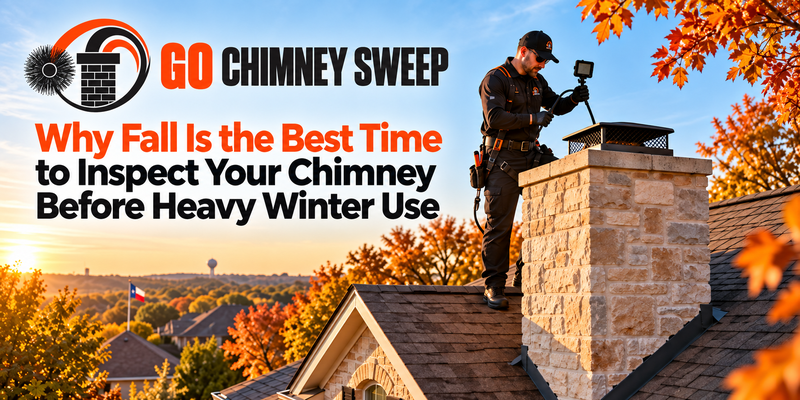
As temperatures begin to cool across Texas, many homeowners start preparing their fireplaces for the colder months ahead. Even though Texas winters can vary from mild to surprisingly cold, fireplaces and chimneys often see their heaviest use between late fall and winter. Before lighting the first fire of the season, fall is an ideal time to have your chimney professionally inspected.
A chimney may look fine from the outside while still hiding buildup, damage, blockages, or other problems inside the flue. Scheduling an inspection before winter gives homeowners time to identify these issues before the fireplace becomes part of their regular routine.
Catch Chimney Problems Before Winter
Months of heat, rain, wind, and changing weather conditions can affect different parts of a chimney. Mortar joints may deteriorate, flashing can loosen, chimney caps can become damaged, and small cracks may develop in masonry or the flue system.
These problems are not always noticeable from the ground. A professional chimney inspection helps identify areas that may require attention before colder weather arrives.
Taking care of minor chimney concerns during fall can also help prevent them from becoming larger repair projects later in the season.
Check for Creosote and Soot Buildup
Wood-burning fireplaces naturally create smoke, soot, and creosote. Over time, these materials can collect along the interior walls of the chimney.
Creosote buildup can restrict airflow and may create a potential fire hazard when exposed to high temperatures. Even if the fireplace was not used frequently last winter, checking the chimney before using it again is a smart part of seasonal home maintenance.
During an inspection, a chimney professional can evaluate the condition of the flue and determine whether chimney sweeping is recommended before the upcoming heating season.
Remove Possible Chimney Blockages
A chimney can become blocked even when the fireplace has not been used for several months.
Leaves, twigs, nesting materials, debris, and other objects can enter an unprotected or damaged chimney. Birds and small animals may also attempt to build nests inside or around chimney openings.
A blockage can interfere with proper airflow when the fireplace is operating. Inspecting the chimney in fall allows these issues to be discovered before homeowners begin using their fireplace more frequently.
Make Sure the Chimney Cap Is Doing Its Job
The chimney cap serves as an important protective barrier at the top of the chimney. It helps reduce the amount of rain, debris, and animals entering the chimney system.
If the cap is damaged, loose, rusted, or missing, the chimney may be more exposed to moisture and unwanted debris.
Fall is a convenient time to inspect the chimney cap and determine whether repairs or replacement should be considered before winter weather arrives.
Look for Signs of Moisture Damage
Moisture is one of the most common sources of chimney deterioration. Rainwater entering cracks, damaged flashing, or an uncovered chimney can gradually affect masonry and other chimney components.
Some signs of moisture problems may include:
- Cracked or deteriorating mortar
- Discoloration around the chimney
- Water stains near the fireplace
- Rust on metal components
- Damaged flashing
- Cracks in the chimney crown
- Musty odors coming from the fireplace
Finding moisture-related problems in fall gives homeowners an opportunity to address them before another season of changing temperatures and winter weather.
Prepare for Better Fireplace Performance
A clean and properly maintained chimney helps support the airflow needed for fireplace operation.
When soot, creosote, nesting material, or debris restricts the chimney, smoke may not move through the flue as effectively as it should. Homeowners may notice excessive smoke, unpleasant odors, or difficulty maintaining a fire.
Having the chimney inspected before the fireplace is used heavily can help identify airflow problems and other maintenance needs ahead of time.
Fall Gives You Time to Schedule Repairs
Another advantage of scheduling an inspection during fall is preparation.
If an inspection discovers damaged masonry, a deteriorating chimney crown, problems with flashing, a damaged chimney cap, or another repair need, there is still time to address the problem before the coldest part of winter.
Waiting until the fireplace is needed every day can make chimney problems far more inconvenient.
A fall inspection allows homeowners to enter the winter season knowing the condition of their chimney rather than discovering an unexpected problem after the first cold front arrives.
Include Your Chimney in Your Fall Home Maintenance
Homeowners often prepare their HVAC systems, gutters, roofing, insulation, and outdoor plumbing before winter. The chimney deserves a place on that seasonal checklist as well.
Even fireplaces that are only used occasionally should be inspected periodically because chimney problems can develop from weather exposure, moisture, animals, and normal deterioration—not just from burning fires.
Adding a chimney inspection to your fall maintenance routine is a simple way to identify potential problems before winter fireplace season begins.
Schedule Your Fall Chimney Service With Go Chimney Sweep
Before you light your fireplace this winter, make sure your chimney is ready for the season. Go Chimney Sweep proudly provides professional chimney services throughout Texas, including chimney inspections, chimney sweeping, cleaning, repairs, and other chimney maintenance services. Our team can evaluate your chimney, identify potential concerns, and help prepare your fireplace system for heavier winter use. Schedule your fall chimney service with Go Chimney Sweep today and enjoy your fireplace with greater confidence when the colder Texas weather arrives.
