
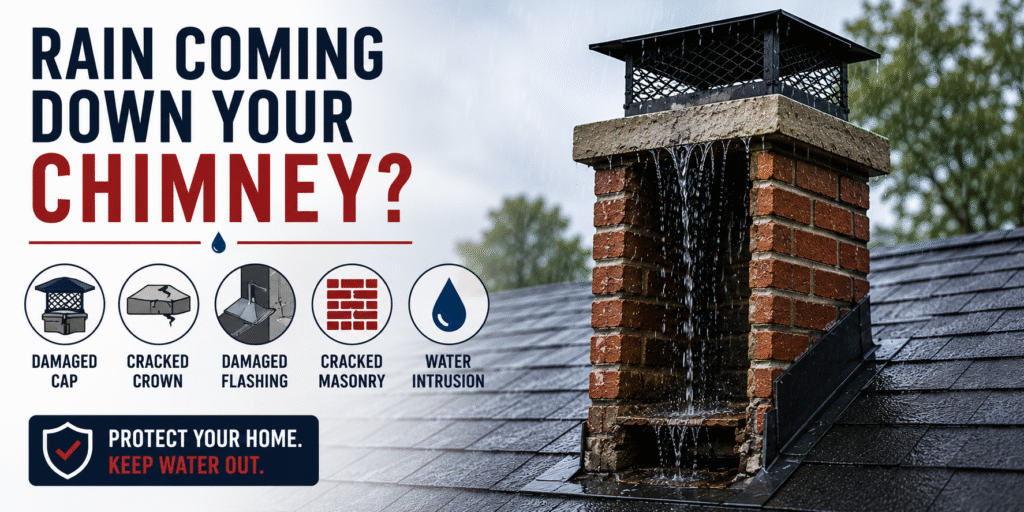
If you’ve noticed water dripping into your fireplace or rainwater appearing inside your chimney, you’re not alone. Chimney leaks are a common issue for homeowners and can occur for several reasons. While a chimney is designed to safely vent smoke and gases out of your home, it is also exposed to the elements year-round. When certain chimney components become damaged, worn, or improperly installed, rainwater can find its way inside. Understanding the causes of chimney leaks can help you address the problem before it leads to more extensive damage.
How Water Gets Into a Chimney
A properly functioning chimney system includes several components designed to keep water out while allowing smoke and gases to escape. When one or more of these components fail, rainwater can enter through the top of the chimney, around the roofline, or through damaged masonry.
Missing or Damaged Chimney Cap
A chimney cap is one of the first lines of defense against rain. Installed at the top of the chimney, the cap helps prevent water, leaves, debris, and animals from entering the flue. If the cap is missing, damaged, or improperly fitted, rain can fall directly into the chimney and eventually reach the fireplace below.
Cracked Chimney Crown
The chimney crown is the concrete surface that covers the top of the chimney around the flue opening. Its purpose is to direct water away from the chimney structure. Over time, weather exposure can cause the crown to crack or deteriorate. Once cracks develop, water can seep into the masonry and contribute to moisture-related issues inside the chimney.
Damaged Flashing Around the Roofline
Flashing is the metal material installed where the chimney meets the roof. It creates a waterproof seal that helps prevent rainwater from entering the home. If the flashing becomes loose, rusted, or damaged, water can leak through gaps and travel into the chimney or surrounding areas.
Deteriorating Brick and Mortar
Chimneys are constantly exposed to rain, sunlight, wind, and temperature changes. As masonry ages, bricks and mortar joints can develop cracks or begin to deteriorate. Water can penetrate these openings and become trapped inside the chimney structure, leading to further damage over time.
Chimney Liner Damage
A damaged chimney liner can contribute to moisture problems within the chimney system. While the liner’s primary role is to protect the chimney from heat and combustion byproducts, damage to the liner may allow water to affect areas that would otherwise remain protected.
Porous Masonry Absorbing Rainwater
Brick is naturally porous and can absorb water if it is not properly protected. When masonry absorbs excessive moisture, it can gradually allow water to move deeper into the chimney structure. Waterproofing treatments designed specifically for masonry can help reduce water absorption while allowing the chimney to breathe properly.
Signs That Water Is Entering Your Chimney
Water intrusion can present itself in several ways. Common warning signs include:
- Water dripping into the fireplace
- Damp odors near the hearth
- Rust on fireplace or damper components
- White staining (efflorescence) on chimney bricks
- Cracked masonry or mortar joints
- Stains on ceilings or walls near the chimney
- Peeling paint or wallpaper around the fireplace
Problems Caused by Chimney Leaks
Ignoring a chimney leak can lead to a variety of issues. Moisture can damage masonry, metal components, fireplace parts, and surrounding building materials. Over time, water intrusion may contribute to costly repairs and reduce the overall lifespan of the chimney system.
How to Prevent Rain From Entering Your Chimney
Homeowners can help protect their chimneys by:
- Installing a quality chimney cap
- Scheduling regular chimney inspections
- Repairing damaged flashing promptly
- Addressing masonry cracks early
- Maintaining the chimney crown
- Applying professional waterproofing when appropriate
Routine maintenance can help identify potential problems before they become more serious.
The Importance of Professional Chimney Inspections
Because chimney leaks can originate from multiple sources, determining the exact cause often requires a professional evaluation. A chimney inspection allows technicians to assess the condition of the cap, crown, flashing, masonry, liner, and other components. Early detection can help prevent more extensive water damage and maintain the overall performance of the chimney system.
Go Chimney Sweep Round Rock Can Help
If rain is coming down your chimney, Go Chimney Sweep Round Rock is here to help. We provide professional chimney inspections, chimney cleaning, chimney repair, and chimney maintenance services throughout Round Rock, TX.
Our experienced team can identify the source of water intrusion and recommend solutions tailored to your chimney’s needs. Whether you’re dealing with a minor leak or want a complete chimney evaluation, Go Chimney Sweep Round Rock is committed to helping homeowners throughout Round Rock, TX maintain clean, efficient, and properly functioning chimney systems.
